Famous Concrete Wall Panels Equipment Factories & Company

An Executive Engineering Whitepaper on Precast Concrete Technology, Automated EPS Sandwich Production Lines, High-Capacity Wall Panel Machinery, and Global Procurement Benchmarks

Featured Concrete & Building Material Equipment (Part I)

Explore primary production systems engineered by global leading machinery manufacturers. Designed for industrial-scale throughput, energy conservation, and strict structural compliance across international building codes.

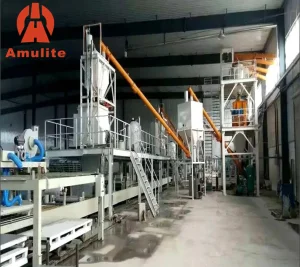
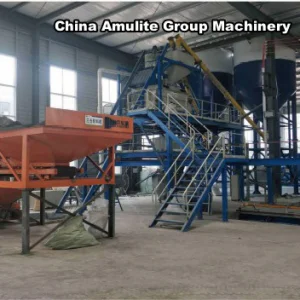
OEM EPS Sandwich Cement Wall Panels Production Line Companies, Products
View Technical Details
Buy Gypsum Powder Production Line Supplier, Product
View Technical Details
Best Precast Concrete Products Machinery Manufacturers, Products
View Technical Details
OEM Lithium Battery Recycling Equipment Factory, Company
View Technical Details
Best XPS Insulation Tile Backer Production Line Supplier, Companies
View Technical Details
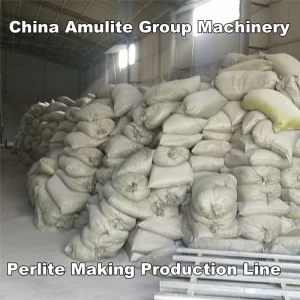
Buy Perlite Production Line Manufacturers, Company
View Technical Details
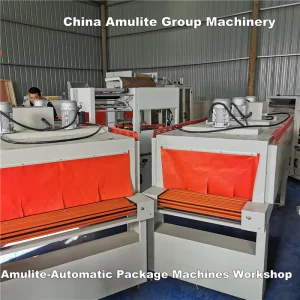
Famous Automatic Package Machines Workshop Factory, Company
View Technical Details
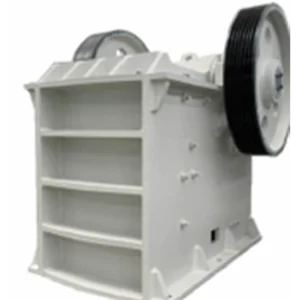
Buy Stone Hammer Crusher 6CX Euro Series Jaw Crusher Company, Product
View Technical Details
MARKET & INDUSTRY INSIGHTS

Global Trends & Technological Evolution in Concrete Wall Panel Machinery

The global construction landscape is undergoing a monumental paradigm shift toward modern methods of construction (MMC), off-site prefabrication, and volumetric modular building systems. As urban centers expand and labor costs escalate, real estate developers, industrial conglomerate buyers, and EPC (Engineering, Procurement, and Construction) contractors are abandoning traditional field-cast masonry in favor of high-precision factory-manufactured precast concrete wall panels, lightweight EPS (Expanded Polystyrene) cement sandwich panels, and autoclaved hollow core wall units.

At the epicenter of this industrial revolution are specialized equipment manufacturers and machinery engineering companies. Today's concrete wall panel factories are no longer mere manual casting yards; they are fully automated, sensor-driven industrial plants governed by Programmable Logic Controllers (PLC), Supervisory Control and Data Acquisition (SCADA) networks, and integrated robotic handling systems. Key structural developments reshaping the industry include:

High-Frequency Extrusion & Slipforming

Modern hollow-core extrusion lines utilize multi-stage high-frequency vibrators and precision augers to achieve dense cement compaction with lower water-cement ratios (w/c < 0.32), yielding extraordinary early-age compressive strength and minimum thermal curing cycles.

Automated EPS & Slurry Dosing

Next-generation EPS sandwich panel machinery integrates loss-in-weight continuous metering units, ensuring uniform bead dispersion within lightweight cellular concrete slurries. This eliminates density segregation and guarantees consistent fire-resistance and thermal conductivity.

Decarbonized Material Compatibility

Leading equipment lines are engineered to process low-carbon cement chemistry, incorporating high proportions of industrial byproducts such as blast-furnace slag (GGBS), fly ash, calcined clay, and recycled aggregates without compromising panel flexural toughness.

Industrial Footprint & Technical Capabilities

Quantifiable engineering metrics delivered across global turnkey concrete wall panel production installations.

3.5M+
Square Meters Annual Capacity
< 0.5%
Dimensional Variation Tolerance
40%
Reduction in Thermal Curing Energy
60+
Countries Deployed Worldwide
PROCUREMENT & SUPPLY CHAIN STRATEGY

Global Enterprise Sourcing Demands & Procurement Benchmarks

Procuring industrial equipment for precast concrete and wall panel production lines requires rigorous evaluation far beyond initial capital expenditure (CAPEX). Corporate procurement officers, chief technical officers (CTOs), and factory owners face complex technical trade-offs when selecting machine suppliers and machinery engineering factories.

1. Modular Plant Scalability

Global buyers demand modular machinery frameworks that permit incremental capital expansion. Entry-level semi-automated vertical battery mold systems must be designed for seamless upgrading to fully automated, rail-guided carousel production lines with minimal structural modification to factory civil foundations.

2. Raw Material Adaptability

Sand grading, cement hydration profiles, and mineral filler availability vary dramatically across geographical regions. Premier machinery manufacturers perform comprehensive rheological testing on regional raw materials (e.g., dune sand, crushed granite dust, pozzolanic ash) prior to final extrusion or mold design.

3. Total Cost of Ownership (TCO)

Operational Expenditure (OPEX) accounts for up to 80% of a plant’s lifetime costs. Key procurement criteria include electric drive efficiency ratings (IE3/IE4 motors), hydraulic circuit energy-recovery valves, hardened wear-resistant alloy coatings on mixing paddles, and automated mold oiling systems.

SYSTEM ARCHITECTURE

Macro-Level Turnkey Ecosystems for Wall Panel Factories

A famous concrete wall panel equipment factory provides comprehensive enterprise engineering ecosystems rather than standalone machinery. Designing an optimal panel manufacturing plant involves integrating six primary technical subsystems into a cohesive, uninterrupted workflow:

A. Batching & Mixing Plant

Planetary twin-shaft intensive mixers equipped with microwave moisture sensors and automated chemical additive dosing systems ensure absolute batch-to-batch slurry homogeny.

B. Formwork & Molding Systems

Precision-machined steel battery molds and automated horizontal carousel lines featuring hydraulic opening/closing, pneumatic compaction, and integrated core-pulling mechanisms.

C. Curing Tunnels & Heat Recovery

Accelerated steam-curing chambers utilizing thermodynamic heat recirculation systems, maintaining uniform temperature (±2°C) and relative humidity (>90%) for rapid strength development.

D. Automated Demolding & Handling

Vacuum suction lifters, 180-degree panel tilters, and automated transfer cars (finger cars) designed to prevent panel micro-cracking during early-stage green strength handling.

E. Automated Precision Cutting

CNC multi-blade edge cutters and calibrating saws equipped with laser alignment tools, capable of sizing fiber cement and precast panels with millimeter precision.

F. Packaging & Stacking Lines

Fully automatic robotic palletizers, corner protectors, and stretch-wrapping machines engineered for rugged export transport and jobsite handling protection.

COMPLIANCE & LOCAL SUPPORT

Localization Support, Quality Assurance & Global Compliance

Establishing an international wall panel manufacturing plant requires compliance with rigorous regional safety, environmental, and structural performance standards. Leading equipment vendors partner with clients to navigate complex regulatory landscapes, offering full lifecycle support:

  • International Standard Certification: Equipment electrical systems, pressure vessels (autoclaves), and structural steel structures must adhere to European CE Directives (2006/42/EC Machine Directive, Low Voltage Directive), ASME Section VIII pressure vessel codes, and ISO 9001 quality frameworks.
  • Structural Code Compliance for Finished Panels: Machinery must output panels meeting ASTM C129 (Non-Load-Bearing Concrete Masonry Units), ASTM C90 (Load-Bearing), EN 12467 (Fiber-Cement Flat Sheets), and localized seismic structural performance standards.
  • On-Site Engineering Commissioning & Training: Dedicated field service teams conduct installation supervision, hydraulic pressure testing, PLC calibration, and extensive hands-on operator training until plant efficiency reaches specified contractual guarantees.
  • Remote PLC Diagnostics & Lifecycle Maintenance: Cloud-connected Siemens/Schneider automation interfaces allow equipment engineers in headquarters to perform real-time troubleshooting, software patches, and predictive component wear analysis.
FUTURE OUTLOOK

Technology Roadmap: Smart Manufacturing & Carbon Neutrality (2025–2035)

The concrete panel machinery sector is advancing toward ultra-smart, low-carbon manufacturing ecosystems. The next decade will redefine production economics through advanced digital integration and material science breakthroughs.

2025 - 2027

AI Vision Quality Monitoring & Digital Twins

Implementation of real-time computer vision systems inspects demolded panels for micro-fissures, edge chipping, and surface void ratios. Digital twin software models factory energy consumption and optimizes curing kiln heat allocation dynamically.

2028 - 2030

Direct Carbon Sequestration Curing Systems

Integration of carbon capture and utilization (CCU) technology directly into concrete curing chambers. Injection of industrial CO2 during early hydration permanently mineralizes gaseous carbon into solid calcium carbonate, accelerating early compressive strength while achieving net-zero carbon panel production.

2031 - 2035

Autonomous Volumetric Modular Robotics

Full transition from 2D wall panel casting to autonomous 3D volumetric precast concrete module assembly lines, featuring robotic rebar tying, integrated MEP conduit placement, and automated surface finishing systems.

Advanced Processing & Auxiliary Machinery Matrix (Part II)

Discover high-performance auxiliary processing equipment, edge trimming systems, board calibrators, and continuous production machinery engineered for specialty building material manufacturing.
High-Quality Embossed Metal Composite Exterior Panels Production Line Manufacturers, Company
View Technical Details
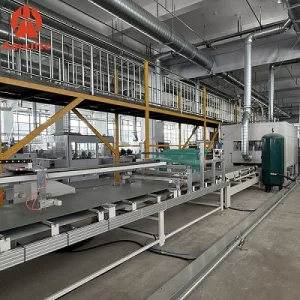
Buy Hollow Core Wall Panels Production Line Factory, Factories
View Technical Details
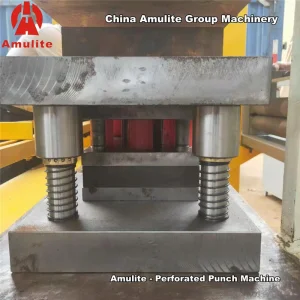
High-Quality Amulite Perforated Punch Machine System Technical Data Manufacturer, Suppliers
View Technical Details
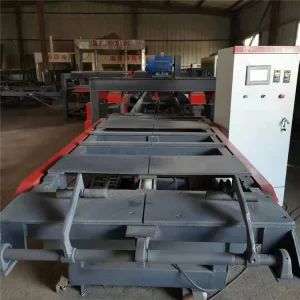
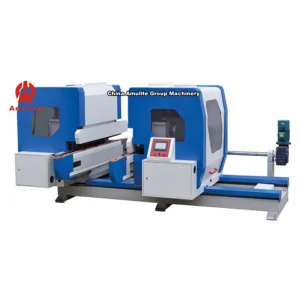
OEM 1300 II Type Automatic Four Side Edge Cutting Machine Factory, Companies
View Technical Details
Best Flexible Clay Ceramic Tile Production Line Manufacturer, Companies
View Technical Details
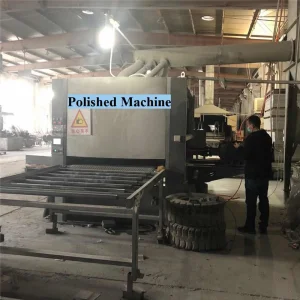
China Single Face Polished Machine Manufacturers, Suppliers
View Technical Details
China Fiber Cement Board /Calcium Silicate Board Production Line Factory, Companies
View Technical Details
Best AM806BH-10 Technical Parameters Manufacturer, Products
View Technical Details
TECHNICAL FAQ & KNOWLEDGE BASE

Frequently Asked Questions: Concrete Wall Panel Equipment Procurement

Detailed technical responses engineered to address key operational, engineering, and financial inquiries from factory investors and procurement teams.

What is the structural difference between EPS Sandwich Cement Wall Panels and Traditional Precast Hollow Core Panels?
EPS Sandwich Cement Wall Panels feature thin calcium silicate or fiber cement face boards bonded to a lightweight core composed of expanded polystyrene beads, Portland cement, sand, and foaming agents. They provide exceptional acoustic dampening, rapid installation, and light dead weight (typically 45-65 kg/m²). Precast Hollow Core Panels, manufactured via slipforming or extruding heavy concrete, feature continuous longitudinal voids that reduce weight while preserving immense load-bearing structural integrity suitable for high-rise shear walls and structural floor/roof decks.
How much land area and utility infrastructure is required for a complete turnkey concrete wall panel production line?
A standard automated production line (yielding 500,000 to 1,500,000 m² of panel output annually) typically requires a covered industrial factory floor space of 3,500 to 8,000 square meters, plus a dedicated outdoor yard of 5,000+ m² for panel curing and stock storage. Utility requirements generally encompass an installed electrical capacity of 250 kW to 600 kW, a 2 to 4 ton/hour industrial steam boiler (for accelerated curing tunnels), and an industrial water supply offering 30 to 50 cubic meters per day with closed-loop recycling filtration.
Can one machinery line produce wall panels of varying thicknesses and dimensions?
Yes. Modern vertical battery mold systems and continuous EPS panel casting machines feature adjustable side formwork, modular boundary dividers, and quick-change core tubes. This engineering flexibility allows plant operators to manufacture panels ranging from 60mm to 200mm in thickness and up to 3000mm in length on the same core machinery line with minimal retooling downtime (typically under 45 minutes per changeover).
What degree of automation is recommended for new wall panel factories in emerging markets?
For entry into emerging markets, a semi-automated vertical battery mold setup is frequently optimal. This configuration automates heavy, quality-critical steps—such as concrete batching, planetary mixing, core pulling, and hydraulic mold clamping—while utilizing manual labor for rebar cage placement and surface troweling. As sales volumes grow, factory owners can seamlessly introduce automated finger-car transfer systems, vacuum demolding robots, and automatic packaging lines.
How do famous equipment manufacturers guarantee panel flatness and surface quality?
Top-tier machinery factories engineer formwork plates using high-tensile Q355B structural steel plates machined via CNC gantry milling machines to flatness tolerances within ±0.5mm across 3000mm spans. Additionally, high-frequency electric vibrators installed directly on mold walls ensure complete air bubble evacuation (void reduction), resulting in smooth, plaster-ready panel surfaces that bypass expensive wet-plastering stages on construction sites.
What raw material formulations are used in lightweight cement panel machinery?
Standard formulations consist of Ordinary Portland Cement (OPC 42.5N or 52.5N) comprising 35-45% of core volume, fine silica sand or fly ash (30-40%), pre-expanded EPS beads (density 12-15 g/L) taking up 15-25% volume, along with specialized foaming agents, plasticizers, and water-reducing admixtures. Machinery vendors supply custom mix designs tailored directly to the chemical composition of local raw materials.