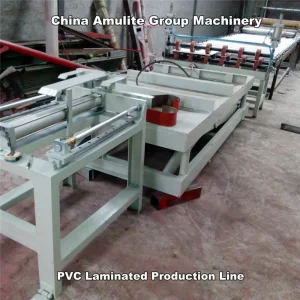
Explore our core engineering portfolio designed for building material production, coating lines, and heavy-duty recycling plant infrastructure.
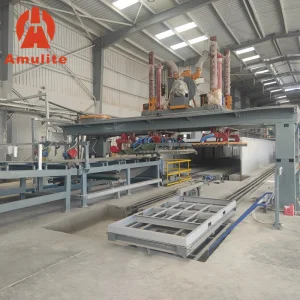
China Non-Asbestos/Asbestos Cement Corrugated Roof Sheets Production Line Company, Product
View DetailsA comprehensive analysis of hydrothermal reaction kinetics, slurry dewatering efficiency, and structural integrity optimization in modern board production lines.
The global construction sector is undergoing a monumental paradigm shift toward lightweight, A1-class fireproof, and highly durable building enclosures. Central to this evolution is the Calcium Silicate Board Machine, an advanced industrial manufacturing line designed to convert siliceous materials, calcareous substances, and reinforcing pulp fibers into dense, high-strength structural matrixes. Operating at the intersection of colloidal chemistry and heavy mechanical automation, premier manufacturing facilities must achieve precise hydrothermal synthesis to produce board products that comply with rigorous international codes such as ASTM C1186 and EN 12467.
To evaluate a famous calcium silicate board machine factory, one must understand the underlying crystal phase chemistry. The ultimate structural performance of the cured sheet relies on the formation of Tobermorite crystals (C5S6H5) during high-pressure steam autoclaving. Unlike conventional air-cured concrete or gypsum plasterboards, autoclaved calcium silicate matrixes undergo a hydrothermal reaction between quartz sand ($\text{SiO}_2$) and lime ($\text{Ca(OH)}_2$) at temperatures exceeding 180°C and pressures of 1.0 to 1.3 MPa. Factories capable of manufacturing precision-engineered machinery must control slurry dispersion, sheet formation thickness tolerances, and autoclave thermal gradients to eliminate micro-cracking and density variance.
Leading machine builders integrate automated slurry dosing systems with ultra-precise Hatschek forming cylinders. By maintaining a slurry consistency of 6% to 10% solid content in the vat section, the fiber-matrix mesh layers are built up incrementally (layer by layer at 0.2mm to 0.3mm per cylinder revolution) under vacuum dewatering. This continuous laminar film deposition eliminates internal voids, ensuring that the finished board achieves superior flexural strength ($\ge 16\text{ MPa}$ for Class 4 high-density structural sheets) and exceptional dimensional stability under extreme moisture fluctuation.
Detailed technical breakdown of the multi-stage manufacturing sequence engineered by top-tier Calcium Silicate Board Machine Manufacturers.
Controlled mechanical refining of unbleached kraft pulp or cellulose fibers combined with wet grinding of silica quartz sand ($>95\%\ \text{SiO}_2$, fineness $<200\text{ mesh}$). Dynamic weight metering ensures exact stoichiometry between calcium hydroxide and silica particles.
Multi-vat slurry filtration with high-vacuum box suction. High-speed running felt transports thin wet films to the accumulating forming drum, where hydraulic nip-rollers compress layers to target thickness (4mm to 30mm) under continuous PLC load cell regulation.
Green boards undergo initial ambient hydration on template plates within a temperature-controlled pre-curing tunnel (45°C - 55°C) for 4–6 hours. Robotic vacuum stackers automatically separate green sheets onto heavy-duty autoclave trolleys.
Industrial steam autoclaves operating at 1.2 MPa for 10–12 hours drive the crystallization process, converting raw pastes into dense C-S-H phase (Tobermorite). This phase change eliminates post-installation shrinkage and guarantees zero moisture expansion.
Automated 4-side edge saws cut the cured boards to standard dimensions (1220x2440mm / 1200x2400mm). Double-face thick sanding machines equalize surface calibration to $\pm0.1\text{mm}$ variance for architectural coating readiness.
Ultrasonic internal void detectors and flexural stress testers evaluate board strength offline. Automatic film shrink wrappers and wood-pallet strapping units pack finished products for safe global maritime logistics.
Unpacking the industrial agglomeration, raw material integration, and high-precision machinery fabrication advantages of China's leading OEM suppliers.
Procuring a complete calcium silicate board production plant requires significant capital expenditure (CAPEX). China's modern heavy machinery equipment manufacturing sector has emerged as the global benchmark for high-volume, reliable building material plant engineering. This leadership is built on three core pillars: integrated industrial clusters, superior steel component manufacturing, and digital twin engineering capabilities.
| Evaluation Vector | China Leading Machinery Plants | European Equipment Makers | Standard Regional Suppliers |
|---|---|---|---|
| CAPEX ROI (Plant Cost) | Optimal (30%-50% Savings) | Extremely High CAPEX | Moderate Cost / Limited Features |
| Forming Machine Machining Tolerance | $\pm0.02\text{ mm}$ CNC Bored Cylinders | $\pm0.015\text{ mm}$ Precision | $\pm0.08\text{ mm}$ Manual Machining |
| Delivery Lead Time (Turnkey) | 120 - 150 Days | 240 - 360 Days | 180 - 210 Days |
| PLC Automation & Interoperability | Siemens / Schneider / SCADA Open Arch | Proprietary Closed System | Basic Relay / Low PLC Logic |
| Custom Raw Material Adaptation | Full Lab Formulations (Fly-ash, Sand, Slag) | Strict Standard Raw Material Requirements | No In-House Chemistry Support |
Top-tier Chinese factories utilize 10-meter CNC floor-type boring and milling machines to process autoclave flanges and massive sheet forming rollers in-house. By controlling the complete machining workflow—from steel plate cutting to stress-relief heat treatment—Chinese OEMs ensure structural rigidity capable of supporting 24/7 continuous operation for decades. Furthermore, Chinese manufacturers offer seamless integration with downstream systems like UV Coating Production Lines and Automatic Four Side Edge Cutting Machines under one unified control protocol.
A rigorous economic breakdown for industrial project developers, procurement officers, and plant operators seeking long-term operational profitability.
When calculating the payback horizon of a commercial calcium silicate board line, operational expenses (OPEX) vastly exceed initial capital outlay over a 5-year operating window. Energy recovery, slurry recycling efficiency, and pulp dispersion technology are the key drivers of line profitability. Premier equipment manufacturers integrate multi-stage heat exchangers that recapture autoclave blow-down steam to pre-heat boiler feed water, reducing thermal fuel consumption by up to 22%.
Advanced slurry agitation prevents quartz sedimentation. Closed-loop water circulation ensures zero effluent discharge, returning unused cementitious particles back into the mixing vat without altering hydration kinetics.
Variable Frequency Drives (VFDs) on heavy slurry pumps and forming cylinder drives dynamically adjust torque based on viscosity sensors, minimizing kilowatt-hour consumption per sheet cubic meter.
Capable of processing local industrial by-products such as fly ash from power plants and blast-furnace slag, replacing up to 30% of virgin silica sand while maintaining Tobermorite crystal yield.
How top factories bridge international technical standards and provide seamless on-site commissioning across worldwide markets.
Deploying heavy manufacturing machinery in overseas jurisdictions requires strict compliance with local grid voltages, environmental dust suppression standards, and pressure vessel certifications. Leading calcium silicate board machine factories maintain international engineering divisions qualified to deliver full turnkey support across North America, Southeast Asia, the Middle East, South America, and Europe.
Autoclaves manufactured and tested in accordance with ASME Section VIII Div 1, CE-PED (Pressure Equipment Directive), and SQL (China Special Equipment License) standards, complete with X-ray weld diagnostics and hydraulic pressure test certificates.
Custom cabinet wiring configured for 380V-480V, 50Hz/60Hz supplies. Full compliance with UL 508A and CE EN 60204-1 safety standards, utilizing dual-channel safety relays and emergency stops across all dangerous nip-points.
Resident engineering teams oversee foundation civil check, mechanical erection, PLC program loading, raw material trial mix development, and local operator hands-on training until commercial capacity is verified.
Understanding how machine configurations tailor physical board properties for specialized building performance requirements.
Low-density boards ($0.9 - 1.1\text{ g/cm}^3$) engineered for sag-free performance in tropical, high-humidity environments. Zero water absorption degradation makes them ideal for marine and coastal ceiling systems.
Medium-to-high density boards ($1.2 - 1.4\text{ g/cm}^3$) specified for elevator shaft enclosures, commercial ducting wraps, and fire wall partitions capable of maintaining structural integrity at 1000°C for up to 240 minutes.
High-density boards ($1.4 - 1.7\text{ g/cm}^3$) pressed under 7000-ton hydraulic presses, replacing timber plywood flooring in prefabricated modular housing due to superior point-load capacity and rot resistance.
Deep-embossed timber-grain and stone-textured exterior panels combined with fluorocarbon (PVDF) UV coatings for weather-resistant commercial facade cladding systems in high-seismic zones.
How AI-driven predictive control, zero-asbestos eco-matrices, and carbon-capture curing are shaping the future of building material plants.
Real-time optical laser scanners continuously sample wet-sheet thickness across 32 data points prior to the cutter. Closed-loop AI algorithms dynamically adjust cylinder nip-roller pressure, eliminating human error and manual caliper checks.
Replacing traditional organic fibers with high-tenacity PVA (Polyvinyl Alcohol) and Wollastonite micro-needles. Advanced machine mixing drums prevent fiber shearing, maximizing tensile stress transfer across the matrix.
Innovations in pre-autoclave carbonation chambers allow industrial plant operators to inject captured $\text{CO}_2$ into the green board matrix during pre-curing, accelerating strength development while permanently sequestering carbon.
Direct technical answers from senior process engineers regarding plant footprint, raw material demands, and operational guarantees.
While both machines utilize similar Hatschek wet-forming processes, the key distinction lies in the hydrothermal chemistry and curing mechanism. Calcium silicate board machines rely on high-pressure autoclaving ($1.2\text{ MPa}$, 180°C) to synthesize Tobermorite crystals from lime and silica sand. Fiber cement boards can be either air-cured or autoclaved using a higher proportion of Portland cement. Calcium silicate boards offer superior fireproofing, lower thermal conductivity, and better dimensional stability under humid conditions.
A standard 5 million m²/year calcium silicate board manufacturing line requires a minimum covered industrial workshop of 15,000 to 18,000 square meters. Utility demands include a boiler steam capacity of 10-15 tons/hour, electrical connected load of approximately 1,200 kW, and a raw water supply of $30\text{ m}^3/\text{hour}$ (operated under a 95%+ closed-loop recycle system).
Yes. Premier Chinese machine builders conduct raw material laboratory analysis prior to equipment sizing. The quartz sand must have an $\text{SiO}_2$ purity $>85\%$ and be ground via a wet ball mill to a fineness where less than 15% remains on a 200-mesh sieve. Fly ash from coal power plants can replace 20%-35% of silica sand, significantly reducing raw material costs in industrial regions.
Thickness precision is achieved through a 3-tier control framework: First, high-precision machined forming cylinders with zero runout tolerances; second, load-cell integrated nip-rollers on the accumulating drum operating under closed-loop PLC hydraulic feedback; and third, downstream double-face thick calibration sanding machines that grind the cured boards to exact decimal tolerances.
Reputable factories provide a 12-to-24 month comprehensive mechanical warranty, 24/7 remote PLC diagnostic support via industrial IoT gateways, guaranteed spare parts supply, and lifetime access to formulation optimization support when switching raw material suppliers or developing new product lines.
Expand your manufacturing capabilities with our specialized panel forming, cutting, surface treating, and recycling plant equipment.
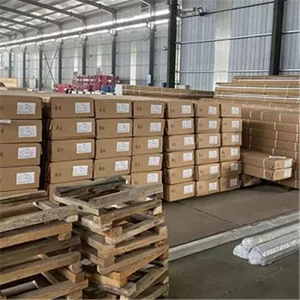
High-Quality Embossed Metal Composite Exterior Panels Production Line Manufacturers, Company
View Details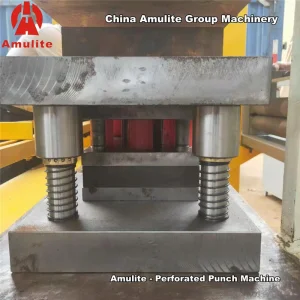
High-Quality Amulite Perforated Punch Machine System Technical Data Manufacturer, Suppliers
View DetailsConnect with our senior process engineers to receive a customized plant layout proposal, utility consumption study, and commercial quotation within 24 hours.
Request Technical Consultation