Explore our industrial-grade processing equipment, custom continuous panel production machinery, and heavy-duty auxiliary systems engineered for global building material manufacturing plants.
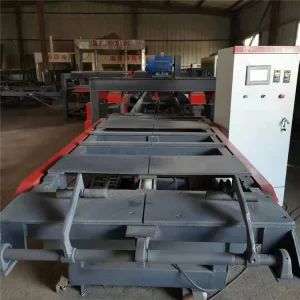
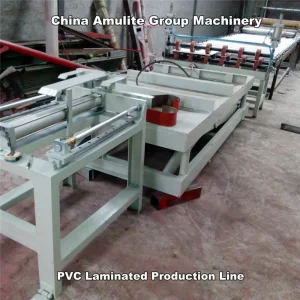
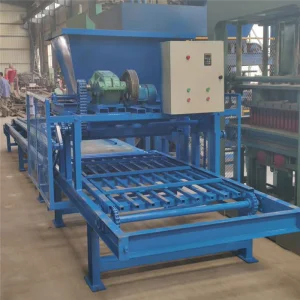
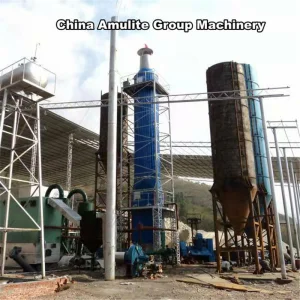
How shifting building codes, energy efficiency mandates, and prefabricated construction tech are reshaping demand for automated continuous lamination lines.
The global demand for high-performance thermal insulation and lightweight structural materials has catalyzed a structural shift in modern construction engineering. Central to this transformation is the modern automatic sandwich panel machine—a sophisticated industrial manufacturing line capable of producing continuous insulated panels combining structural metallic/non-metallic facings with high-density cores like Polyisocyanurate (PIR), Polyurethane (PUR), Mineral Rockwool, Expanded Polystyrene (EPS), and lightweight cement composites.
Driven by strict net-zero carbon goals in Europe, North America, and East Asia, commercial real estate developers, industrial facility operators, and cold-chain logistics hubs now require building envelopes featuring exceptional thermal resistance ($U$-values lower than 0.15 W/m²K), certified fire resistance (Class A / EI120 standards), and rapid modular assembly. Traditional manual or semi-automated discontinuous panel production methods are no longer economically viable due to high labor costs, inconsistent foam density distribution, and thermal bridging flaws.
In continuous PIR/PUR panel production, a variance of just 1.5 kg/m³ in core density can lead to structural delamination under extreme thermal stress. Advanced automatic sandwich panel machines utilize high-pressure multi-component metering pumps coupled with dynamic closed-loop temperature control across the double-caterpillar conveyor to maintain tight micro-cellular uniform distribution.
Why leading global building material conglomerates partner with top-tier Chinese original equipment manufacturers like Amulite Group for turnkey plant automation.
Chinese OEM machinery leaders leverage domestic heavy steel casting, precision CNC machining centers, and localized heat treatment plants. Core double-belt caterpillar slats are machined to micrometer tolerances, preventing panel surface ripples and structural distortion over extended high-temperature operating cycles.
By integrating servo roll-forming units, high-pressure polyurethane foaming units, Rockwool band-saw slitters, and automatic cross-cutting flying saws under a unified PLC control architecture, Chinese manufacturers dramatically compress line integration testing timelines compared to fragmented Western supply chains.
From compact discontinuous block-pressing lines designed for start-up modular housing builders to ultra-high-speed 60-meter continuous double-caterpillar PIR lines operating at 30,000 m²/day, Chinese manufacturers excel at custom civil engineering matching, power grid adaptation, and modular shipping setup.
When procuring heavy industrial building material machinery, understanding the structural differences between manufacturing architectures is essential for long-term Total Cost of Ownership (TCO) evaluation.
| Performance Metric | Legacy Discontinuous Pressing Lines | Standard Semi-Automatic Lines | Next-Gen Continuous Double-Belt Lines (Amulite Standard) |
|---|---|---|---|
| Daily Output Capacity | 500 - 1,200 m² / shift | 2,000 - 4,500 m² / shift | 8,000 - 25,000+ m² / shift |
| Line Operating Speed | N/A (Batch process) | 4 - 12 m/min | 15 - 45 m/min (Variable Servo) |
| Core Material Compatibility | EPS / PUR Blocks only | EPS / Rockwool hand-fed | PIR / PUR / Rockwool / Glasswool / EPS / Cement |
| Double-Belt Conveyor Length | None (Stationary Daylight Press) | 6m - 12m Caterpillar | 24m - 42m Precision Temperature-Controlled Slat Conveyor |
| Dosing & Injection Tech | Low-pressure mechanical mixer | Medium-pressure 2-component pump | High-pressure (200+ bar) Multi-Component Pentane / HFC Foaming |
| Labor Requirement | 12 - 18 operators / line | 6 - 10 operators / line | 2 - 4 supervisory technicians (Fully Automated Downstream) |
Detailed technical analysis of how customized automatic sandwich panel machinery outputs serve diverse structural, thermal, and hygienic environments.
Cold storage facilities operate under harsh thermal differentials ($\Delta T$ exceeding 60°C). Automatic PIR/PUR sandwich panel lines for cold chain applications are equipped with specialized roll-forming dies that form deep cam-lock structural grooves, labyrinth tongue-and-groove joint profiles, and anti-thermal-bridge soft PVC gasket insertion units.
Key Spec: Panel thickness 100mm–250mm, Core Density 40–45 kg/m³, Closed-cell ratio >95%.
Semiconductor fabs and pharmaceutical production lines require non-dusting, easily sanitized walls. Automated machinery lines configure non-metallic facings—such as Fiber Cement Boards, Calcium Silicate Boards, or high-gloss antibacterial steel sheets—laminated over non-combustible Rockwool or Aluminum Honeycomb cores.
Key Spec: Flush joint geometry, Class 0 flame spread, zero volatile organic compound (VOC) outgassing.
Roof panels must endure severe snow loads, wind uplift, and rainwater penetration. Roofing sandwich panel machines integrate multi-rib cold roll-forming units (3-rib or 5-rib profiles) with automatic overlap trimming, seam-sealing gel injection, and optional standing-seam cap clip forming for hidden fastener assemblies.
Key Spec: Outer sheet 0.5–0.8mm pre-painted galvanized steel (PPGI/PPGL), water-tight overlap lock.
From zero-ODP environmentally friendly foaming agents to AI-driven vision inspection and continuous servo-synchronization.
Environmental regulations worldwide have mandated the phase-out of HCFC blowing agents in rigid foam insulation. Next-generation automatic polyurethane sandwich panel machines feature fully enclosed, explosion-proof Cyclopentane (C5H10) foaming stations. These systems incorporate multi-stage gas detection sensors, automated nitrogen purging, and flameproof motor enclosures to ensure zero Ozone Depletion Potential (ODP) and negligible Global Warming Potential (GWP).
The core component of continuous lamination is the double-caterpillar belt, which applies uniform heat and mechanical restraint while the polyurethane foam expands or the Rockwool adhesive cures. Modern machinery utilizes continuous precision block steel plates coated with temperature-resistant synthetic materials, driven by multi-axis motion-synchronized servo drives. Operating temperatures inside the caterpillar tunnels are controlled across 6 to 12 independent heating zones via recirculating hot air or thermal oil loops.
To eliminate manual batch checking, advanced lines incorporate dual-axis laser triangulation sensors immediately following the continuous flying band-saw cutter. These optical sensors scan top, bottom, and side dimensions in real-time, detecting micro-variations in panel thickness ($\pm 0.5\text{ mm}$ limit) or surface flatness flaws. Data is fed back directly into the PLC master control to auto-adjust foam metering rates or roll-former gap clearances.
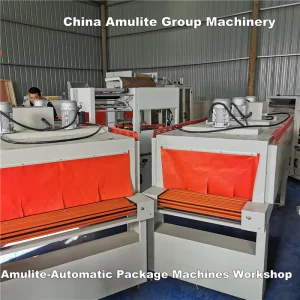
A continuous sandwich panel machine operating at 35 meters/minute generates a panel every 10 seconds. Manual handling causes severe factory bottlenecks. Modern complete lines must integrate continuous cooling conveyors (curing turners), automatic shrink-wrap packaging machines, automated vacuum stackers, and heavy-duty strapping stations to maintain uninterrupted 24/7 output.
A systematic framework for plant directors, engineering consultants, and investors evaluating sandwich panel production equipment purchases.
Verify frame steel thickness and caterpillar slat tensile strength. Insufficient beam stiffness leads to center deflection under 200 kPa foaming pressure, resulting in uneven panel core thickness.
Ensure chemical dosing units utilize high-pressure axial piston pumps (such as Rexroth or KraussMaffei compatibility) with magnetic couplings to prevent ISO/POLY chemical leakage and ensure precise component ratios.
For complex architectural steel joint profiles, ensure the roll-former features 18 to 28 forming stations with heavy-duty chrome-plated 45# forged steel rollers to prevent sheet paint scratching and edge spring-back.
Demand full compliance with European CE directives (Machinery Directive 2006/42/EC, ATEX explosive atmosphere compliance for Pentane systems) and ISO 9001 quality management standards.
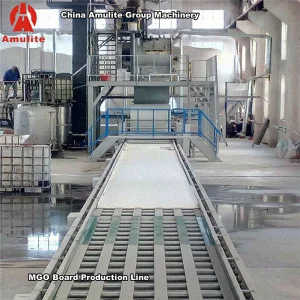
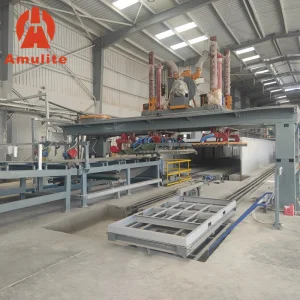
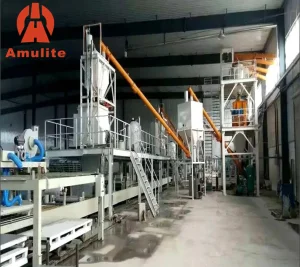
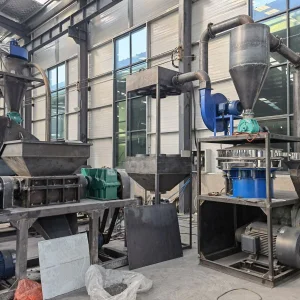
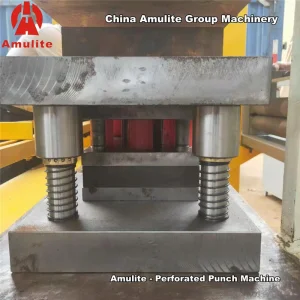
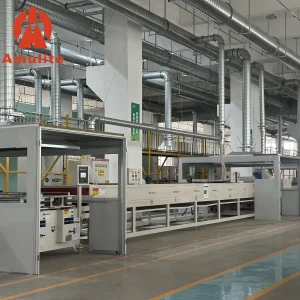
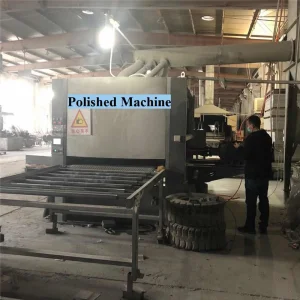
Explore our extended series of continuous board lines, recycling equipment, and high-precision board surface processing machinery built to global engineering standards.
Authoritative technical answers to common queries regarding line installation, raw material formulation, output optimization, and maintenance protocols.