Explore our foundational manufacturing portfolio engineered for global structural building materials and high-capacity production line deployment.
Modern industrial architecture demands thermal performance, fire resilience, and seamless structural integration that traditional lap-joint wall systems can no longer satisfy. The China Z-Lock Sandwich Panel Line represents a technological paradigm shift in continuous insulated panel production. Designed specifically to eliminate thermal bridging, eliminate visible screw fastenings, and deliver superior water tightness under severe wind pressures, the Z-Lock joint geometry (often called the secret-fix joint) has become the global benchmark for cold storage infrastructure, cleanrooms, and architectural facades.
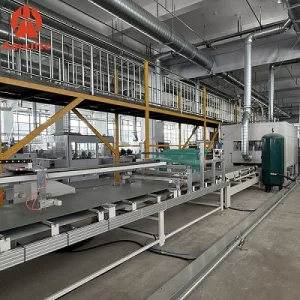
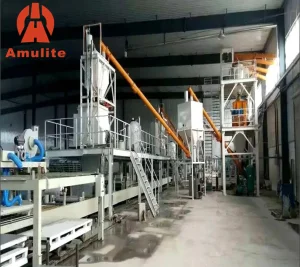
A continuous Z-Lock production line seamlessly integrates high-precision roll forming, high-pressure polyurethane (PU) or polyisocyanurate (PIR) chemical metering, mineral wool / rockwool slab inserting, continuous double-belt lamination, and automated flying band-saw cutting into a single high-speed automated workflow. By manufacturing panels with concealed interlocking grooves, engineers can achieve continuous thermal resistance values ($\text{U-values} \le 0.018 \text{ W/m}^2\text{K}$) while protecting structural fasteners from ambient corrosion.
As global infrastructure projects demand tighter lead times and superior cost-to-performance ratios, Chinese OEMs have transformed from low-cost machinery assemblers into elite engineering authority centers. Leading Chinese Z-Lock sandwich panel line manufacturers combine robust heavy metallurgical fabrication with European-tier automation integration (Siemens S7-1500 PLC, Beckhoff control architecture, and KraussMaffei high-pressure dosing systems).
China controls the full vertical supply chain—from high-tensile galvanised steel coil production to eco-friendly Pentane blowing agent chemical formulation. This localized synergy cuts machinery unit costs by 35% to 50% compared to European OEMs while retaining identical technical tolerances.
Equipped with multi-axis CNC machining centers, Chinese plants fabricate heavy-duty double-belt caterpillar laminators up to 36 meters in length. Flatness tolerances are held within $\pm 0.1\text{mm}$, ensuring zero delamination or surface waviness under thermal stress.
Leading vendors do not simply deliver equipment; they dispatch multidisciplinary field engineers to supervise foundation preparation, perform trial chemical foaming with local polyol/isocyanate batches, and train operators to achieve ISO and CE standard output.
A high-gain SEO whitepaper requires granular technological breakdown. The continuous Z-Lock manufacturing process involves six fully synchronized sub-systems optimized for non-stop multi-shift operational environments.
Utilizing hydraulic twin-head decoilers (5 to 10-ton capacity) coupled with automatic film-laminating units. Steel sheets pass through micro-embossing and pre-cutting stations to prepare exact coil feeding widths.
Engineered with 18 to 28 stand roll-forming stations driven by independent servo motors. Cr-12 steel rollers form the complex male-female Z-Lock secret joint profile with sub-millimeter precision, ensuring flawless interlock snugness.
Features 4-component or 6-component high-pressure metering units (operating at 150-200 bar). Utilizes environmentally compliant Pentane ($C_5H_{10}$) blowing systems to create fine closed-cell rigid foam ($>93\%$ closed-cell content).
The core curing zone. A 24m to 36m long heavy-duty double conveyor belt with heated dynamic plates ($50^\circ\text{C}-65^\circ\text{C}$). Maintained under hydraulic pressure to guarantee uniform foam density ($40-42 \text{ kg/m}^3$) and strong skin-to-core bonding.
For fire-proof A-class requirement panels, an integrated mineral wool slab feeder automatically turns, staggers, cuts, and sprays adhesive on structural wool lamellas, seamlessly blending them into the Z-Lock profile edge.
Servo-driven band saw or disc saw equipped with dust extraction units. Tracks the moving continuous panel at speeds up to 30 m/min, making clean perpendicular cuts to pre-programmed lengths without burrs.
The utility of Z-Lock sandwich panels stretches across diverse industrial segments. Procurement teams must select line configurations tailored to their target regional regulatory standards and functional requirements.
Cold storage facilities demand thick panels (150mm - 250mm) with absolute vapor barriers. The Z-Lock tongue-and-groove design, combined with injected sealant in the joint groove, eliminates moisture ingress and frost formation. Lines configured for this segment require extra-wide double-belt clearance and extended curing zones.
Cleanroom environments require completely smooth flush joints that resist particle accumulation and tolerate harsh chemical sanitization. Z-Lock panels configured with aluminum or stainless steel skins provide non-porous walling with flush-fit gaskets, compliant with ISO 14644 cleanroom classes.
Concealed-fastener Z-Lock panels allow architects to build striking smooth exteriors without visible screw heads disrupting aesthetic lines. Lines built for architectural supply feature integrated micro-ribbing, wave-profiling, and quick-change roll cassettes to switch between panel designs rapidly.
Investing in an automated continuous Z-Lock sandwich panel line involves significant capital expenditure ($800,000 to $3,500,000 USD depending on automation depth). EPC contractors and plant investors must evaluate suppliers using strict financial and engineering risk metrics.
Look for lines featuring continuous Pentane pre-heating and energy-recuperating double-belt ovens. Efficient thermal management reduces electricity costs during chemical curing by up to 22% annually.
Precision high-pressure mixing heads eliminate polyol/isocyanate dripping and foam density variance. A 1% chemical savings through precision metering can yield over $150,000 USD in raw material savings per year at peak capacity.
Ensure the manufacturer uses standardized global electrical and pneumatic components (SMC, Schneider, Siemens, Festo). This guarantees immediate off-the-shelf component replacement anywhere in the world, mitigating downtime risks.
The next decade of Z-Lock sandwich panel manufacturing is defined by smart automation, real-time IoT quality diagnostic systems, and eco-friendly chemistry transition.
Modern Chinese panel lines come equipped with cloud-connected SCADA software. Engineers from the factory can perform real-time PLC updates, chemical flow debugging, and predictive maintenance alerts remotely via encrypted VPN channels.
With environmental regulations tightening globally, lines are engineered to handle zero-Ozone Depletion Potential (ODP) and ultra-low Global Warming Potential (GWP) blowing agents such as Hydrofluoroolefins (HFO-1336mzz) alongside Pentane systems.
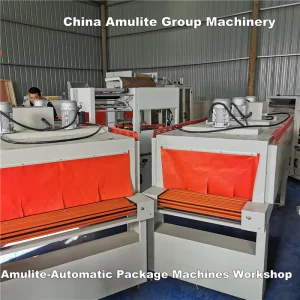
Eliminating manual labor at the exit table. Heavy-duty vacuum-gantry robots lift finished 18-meter Z-Lock panels, flip them for space-saving interlocking storage, and feed them into continuous automatic stretch-wrapping machines.
Technical clarity provided by senior process engineers to streamline your plant acquisition evaluation.
The Z-Lock profile creates a concealed interlocking joint (secret-fix) where fasteners are completely hidden within the side joint overlap. This prevents weather exposure to screws, eliminates thermal bridging paths, provides superior structural wind resistance, and ensures an unbroken hygienic surface ideal for cleanrooms and high-end industrial facades.
Yes. We offer 2-in-1 hybrid continuous production lines. These lines incorporate both a mineral wool automatic feeding/turning unit and high-pressure PU/PIR liquid chemical injection heads. The operator can switch between 100% PUR/PIR panels and Mineral Wool core panels with PU side-sealing edges directly via the HMI control screen.
A standard continuous Z-Lock panel line requires a factory workshop length of 100 to 160 meters, a minimum width of 12 to 18 meters, and clear hook height under cranes of 6 to 8 meters. Electrical power requirements range from 250 kW to 450 kW depending on double-belt heating power and continuous line operating speed.
Pentane ($C_5H_{10}$) is a highly cost-effective, environmentally friendly blowing agent with zero ODP. However, because it is flammable, our panel lines are built with comprehensive explosion-proof safety systems. This includes gas leakage sensor networks, automated nitrogen purging stations, forced ventilation ducts, and ATEX-certified chemical metering pumps.
Manufacturing lead time is typically 90 to 120 days. On-site mechanical installation takes 45 to 60 days. Following mechanical setup, our process engineers conduct 15 to 30 days of chemical calibration, trial production runs, and operator safety training until your team achieves stable output and target panel mechanical strength.
Panels produced on our continuous lines meet international structural and thermal standards, including BS EN 13501-1 (Fire Classification Class B-s1,d0 for PIR; Class A1 for Rockwool), ASTM C518 thermal resistance testing, ISO 9001 compliance, and FM Global (Factory Mutual) fire and wind uplift structural standard benchmarks.
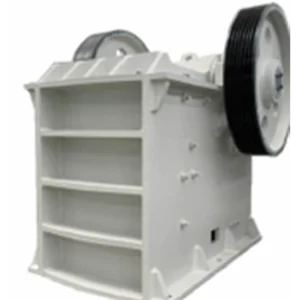
Complete your manufacturing plant setup with our comprehensive specialized machinery solutions.