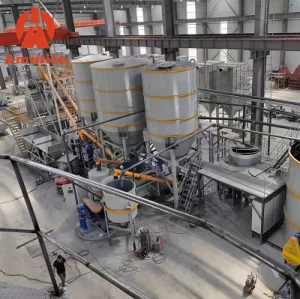
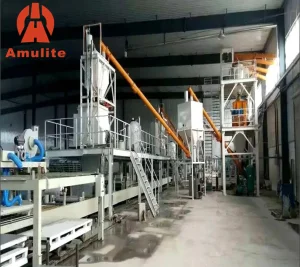
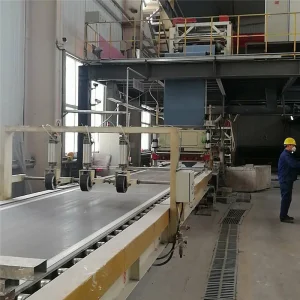
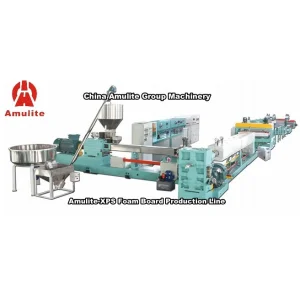
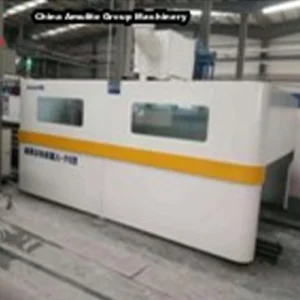
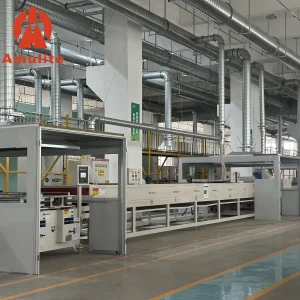
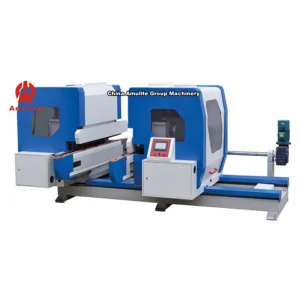
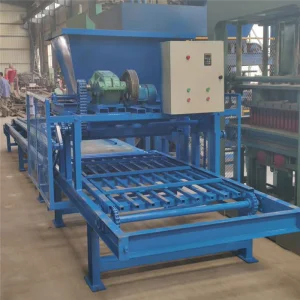
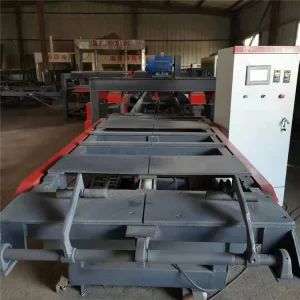
Featured industrial manufacturing lines and processing equipment engineered for cellular concrete, sandwich panels, and thermal insulation solutions.
Understanding the Macro shift toward lightweight precast concrete systems and Chinese industrial manufacturing capability.
Modern architectural engineering demands structural materials that optimize thermal efficiency, acoustics, fire safety, and speed of erection. Cellular concrete—encompassing Autoclaved Aerated Concrete (AAC), Cellular Lightweight Concrete (CLC), and EPS Cement Sandwich Panels—has emerged as the definitive material class to satisfy these rigorous global standards. Driven by stringent net-zero building regulations across Europe, the Middle East, North America, and Asia-Pacific, developers are phasing out traditional dense concrete blocks in favor of precast cellular concrete wall panels.
Key Insight: Precast cellular concrete panels reduce structural dead weight by up to 65%, lowering foundation costs while providing an EN 13501-1 Class A1 fire rating and thermal conductivity lower than 0.11 W/(m·K).
China’s industrial transformation has positioned its machinery factories at the pinnacle of automated cellular concrete production. Chinese original equipment manufacturers (OEMs) and turnkey solution providers offer unparalleled competitive advantages: mature mechanical design, high-precision hydraulic systems, custom PLC integration, and superior capital expenditure (CapEx) efficiency. Procuring complete production lines from top Chinese manufacturers enables global EPC contractors and building material companies to achieve operational break-even up to 40% faster than traditional European machinery counterparts without compromising output quality or structural precision.
A step-by-step engineering breakdown of slurry chemistry, expansion mechanisms, precise cutting, and hydrothermal autoclaving.
The manufacturing process begins with accurate batching of siliceous materials (silica sand or pulverized fly ash with SiO₂ content > 65%) and calcareous materials (Ordinary Portland Cement and quicklime/CaO). These ingredients are milled to a specific surface area (Blaine fineness > 3500 cm²/g) and mixed with water, gypsum, and microscopic aluminum powder paste inside a high-speed micro-slurry mixer. The aluminum powder reacts with calcium hydroxide [Ca(OH)₂] generated during cement hydration, releasing micro hydrogen gas bubbles:
2Al + 3Ca(OH)₂ + 6H₂O → 3CaO·Al₂O₃·6H₂O + 3H₂↑
This reaction creates millions of uniformly distributed closed air cells throughout the cementitious matrix, expanding the slurry volume by 200% to 300% within the pre-curing mold.
The aerated slurry is poured into high-precision steel mold boxes. For structural wall panels, automated mesh-weaving machines insert anti-corrosion treated steel wire reinforcement cages into the mold prior to pouring. The filled molds enter a temperature-controlled pre-curing tunnel maintained at 45°C to 55°C for 2 to 3.5 hours. During this phase, the slurry undergoes preliminary setting, reaching a semi-solid green cake state (penetration resistance of 0.2–0.4 MPa). Advanced optical sensors verify cake consistency before an automated crane lifts the mold and rotates the green cake 90 degrees onto a cutting cart.
Precision cutting is a hallmark of top Chinese cellular concrete equipment. The green cake passes through a cross-cutting and longitudinal cutting machine utilizing oscillating high-tension steel wires (diameter 0.4–0.6 mm). These machines achieve dimensional tolerances within ±1.0 mm. Tongue-and-groove (T&G) edge profiles or bevels are milled onto the panel sides simultaneously using specialized side-milling cutters. Excess top-crust material (waste cake) is vacuum-scraped and automatically recycled back into the slurry preparation tank, establishing a zero-waste closed-loop process.
The cut green panels are loaded onto heavy-duty autoclaving ferry carts and transferred into high-pressure horizontal autoclaves. The chamber is sealed and subjected to saturated steam curing at temperatures of 185°C to 195°C and pressures of 1.2 to 1.3 MPa for 10 to 12 hours. This hydrothermal reaction converts the free silica and calcium hydrate into 11-Å Tobermorite crystalline structures [Ca₅Si₆O₁₆(OH)₂·4H₂O]. This specific micro-crystalline synthesis imparts high compressive strength (up to 7.5 MPa for CS-0.6 density class), low drying shrinkage (<0.2 mm/m), and permanent dimensional stability to the finished cellular concrete panels.
Upon exiting the autoclave, the cured panels undergo automated mechanical separation to prevent inter-panel adhesion. Advanced plant layouts integrate automated inspection stations equipped with laser scanners to detect surface defects or micro-cracks. Panels pass through optional hydrophobic surface coating units or UV painting lines before proceeding to an automatic shrink-wrapping and wooden pallet packaging station, ready for containerized sea shipment or immediate transport to job sites.
Evaluating material properties, factory line configurations, and optimal application scenarios for global buyers.
| Performance Parameter | Autoclaved Aerated Concrete (AAC) Panel | Cellular Lightweight Concrete (CLC) Board | EPS Cement Sandwich Wall Panel |
|---|---|---|---|
| Curing Technology | High-pressure hydrothermal steam autoclave (1.3 MPa) | Ambient moist air curing / low-pressure steam tunnel | Natural hydraulic curing / vertical mold heat-curing |
| Dry Density Range | 400 – 650 kg/m³ (B04, B05, B06 grade) | 600 – 1200 kg/m³ | 550 – 800 kg/m³ |
| Compressive Strength | 3.5 – 7.5 MPa | 2.5 – 5.0 MPa | 3.5 – 5.0 MPa |
| Thermal Conductivity (λ) | 0.09 – 0.13 W/(m·K) | 0.14 – 0.22 W/(m·K) | 0.06 – 0.10 W/(m·K) (Superior EPS insulation) |
| Fire Resistance (100mm) | > 4 Hours (EN 13501-1 Class A1) | ~ 3 to 4 Hours (Class A1) | 2 to 4 Hours (Class A1 with Fibre Cement face) |
| Steel Reinforcement | Internal welded steel mesh with anti-corrosion coating | Optional synthetic fiber addition | Double-sided Fibre Cement / Calcium Silicate skins |
| Typical Factory CapEx | $3,500,000 – $12,000,000 (Fully Automated) | $500,000 – $2,000,000 (Modular) | $300,000 – $1,500,000 (Flexible Vertical Mold) |
Incorporating Industry 4.0 automation, SCADA control systems, and low-carbon manufacturing ecosystems.
Modern Chinese cellular concrete factories integrate Siemens or Schneider SCADA hardware coupled with proprietary algorithms. Centralized control rooms oversee raw material dosing tolerances within ±0.1%, monitor autoclave thermodynamic curves in real-time, and manage robotic arm demolding systems, minimizing human operational error and maximizing yield rates above 98%.
To address industrial energy costs, advanced Chinese plant engineering incorporates multi-stage steam recovery systems. Residual high-pressure steam exhausted from cured autoclaves is transferred into adjacent autoclaves entering the pre-heating phase. Autoclave condensate is filtered and recycled back into slurry mixing tanks, lowering overall thermal fuel consumption by 22% to 30%.
Chinese machinery exporters emphasize modular engineering. Plants can be initially commissioned at 100,000 m³ annual capacity and later expanded to 300,000 m³ or 500,000 m³ by installing parallel cutting lines and expanding autoclave batteries without interrupting live production, providing strategic flexibility to growing building material enterprises.
Assuring operational compliance, certification standards, and on-site engineering lifecycle support globally.
Cellular concrete panels exported from or produced via Chinese equipment adhere strictly to international structural codes. Top tier machinery factories engineer equipment to produce panels compliant with:
Leading Chinese manufacturers maintain dedicated international service teams comprising civil engineers, PLC automation specialists, and master ceramists. Field services include:
Pioneering the next decade of ultra-lightweight, zero-cement, and carbon-negative cellular concrete technology.
R&D institutes in China are pioneering cement-free alkali-activated geopolymer cellular concrete. By substituting Portland cement with ground granulated blast-furnace slag (GGBS) and volcanic ash activated by sodium silicate, embodied carbon emissions are reduced by up to 70%, creating a truly sustainable green building material.
Next-gen factories incorporate AI computer vision along cutting lines to detect micro-cracks at 100 meters/minute. Machine learning algorithms analyze acoustic emissions during autoclaving, dynamically adjusting steam pressure curves to eliminate internal matrix micro-fissuring.
Advanced chemical foaming agents combined with nano-silica reinforcement are enabling the commercial production of B03 grade AAC panels (density ~300 kg/m³). These hyper-insulating panels eliminate the need for secondary thermal insulation layers in modern building envelopes.
Expert engineering answers addressing common questions regarding procurement, installation, and operation of cellular concrete panel lines.
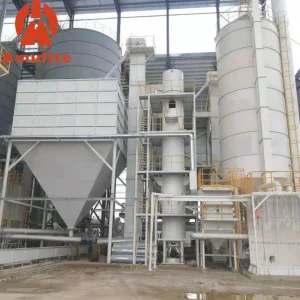
A standard turnkey 300,000 cubic meter annual capacity AAC panel factory requires approximately 25,000 to 40,000 square meters of industrial land. This encompasses raw material storage silos (sand/fly ash, cement, lime), slurry preparation bays, static pre-curing tunnels, cutting machine lines, autoclave batteries (typically 6 to 8 autoclaves measuring 2.85m x 31.5m), finished goods stacking yards, and administrative offices.
Fly ash utilized in AAC panel formation should meet Class F standards under ASTM C618, with a reactive SiO₂ content greater than 60%, loss on ignition (LOI) under 6%, and SO₃ content under 3%. High unburnt carbon content (high LOI) destabilizes the micro-foaming process caused by aluminum powder, leading to collapsed slurries or non-uniform void distributions.
Yes. Modern AAC panel production machinery automatically inserts welded steel wire mesh cages (typically 4mm to 8mm wire diameter) into green cake molds. The steel mesh is pre-coated with a water-based anti-corrosion lacquer (alkyd resin or epoxy polymer) to protect against hydrothermal degradation during high-pressure autoclaving and ensure long-term structural integrity inside external wall cladding.
Equipment manufacturing at top Chinese factories typically takes 90 to 120 days depending on customization scale. Ocean freight delivery requires 20 to 45 days based on destination ports. On-site installation, mechanical alignment, electrical integration, and trial commissioning take approximately 60 to 90 days under the direct supervision of Chinese dispatch engineers.
AAC panel lines require autoclaves, boiler systems, and high-tension wire cutters to induce hydrothermal crystalline reactions. In contrast, EPS sandwich wall panel lines utilize fiber cement or calcium silicate pre-made boards as facings and inject a lightweight core mixture of cement, expanded polystyrene (EPS) beads, sand, and foaming agents into vertical mold cars. EPS lines require lower initial CapEx because autoclaves are not necessary.
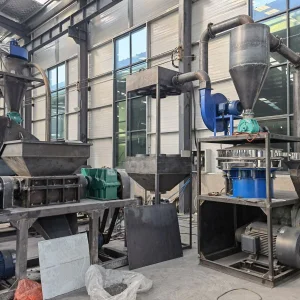
Explore auxiliary equipment, automated processing systems, and specialized recycling machinery for comprehensive industrial installations.