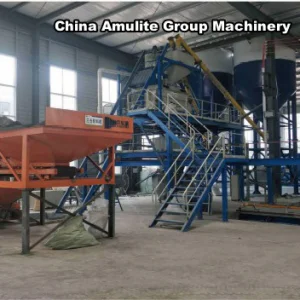
Engineered to international mechanical specifications, providing optimized duty-cycle automation, structural rigidity, and precision dimensional tolerances for heavy-duty commercial deployment.
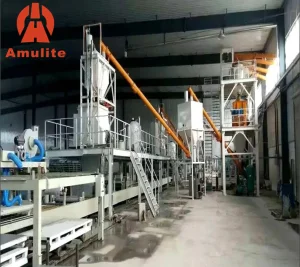
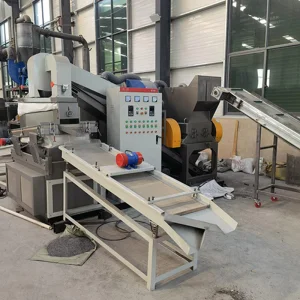
Evaluating bilateral engineering trade, capital expenditure advantages, metallurgical superiorities, and collaborative industrial equipment deployments in modern South Asian manufacturing.
Indian industrial fabricators require a pragmatic balance between machinery durability and initial capital outlay. Advanced China-engineered roll forming lines deliver equivalent structural yields and automation tolerances to Western European equipment at a 42% to 58% lower CapEx base, drastically reducing payback amortizations.
The core performance of any roll former hinges on roll tooling wear resistance. Our verified Chinese manufacturing partners utilize authentic vacuum-quenched Cr12MoV (D2 grade) alloy steel with deep cryo-treatment, establishing roll surface hardnesses of HRC 58-62, hard chrome plating up to 0.05 mm, and lifecycle limits exceeding 15 million linear meters.
Meeting Indian infrastructure timelines under PM Gati Shakti necessitates shortened machinery procurement lead times. While European lead times hover between 9 to 14 months, our modular CNC fabrication hubs deliver customized, multi-station cold roll forming systems within 45 to 75 days, fully pre-commissioned prior to sea-freight dispatch.
Assessing shift dynamics from mechanical brake stamping to high-speed continuous progressive roll profiling across global manufacturing corridors.
The global metal forming machinery ecosystem has reached a definitive pivot point. According to verified industry data, the worldwide market for cold roll forming machinery is projected to expand past USD 4.8 Billion by 2030, registering a compound annual growth rate (CAGR) of 4.9%. This expansion is primarily catalyzed by South Asian infrastructure projects, green energy initiatives (solar racking), and the worldwide shift toward automated pre-engineered structural steel buildings (PEBs).
Traditional manufacturing frameworks in India historically relied on multi-step brake press operations for purlin, bracket, and sheet metal manufacturing. This paradigm created systemic production bottlenecks: high labor dependency, dimensional discrepancies across long profile sections, unacceptable scrap rates (often exceeding 6.5%), and severe physical workspace constraints. Continuous cold roll forming addresses these issues systematically by integrating continuous decoiling, hydraulic level-flattening, servo-driven high-speed multi-stage punching, precision incremental profiling, and flying shear cutoff within an uninterrupted footprint.
In the contemporary landscape, cold roll forming machinery is no longer treated merely as a standalone mechanical assembly; it functions as an integrated cyber-physical production cell. By incorporating high-precision encoder tracking, closed-loop servo feedback loops, and automated hydraulic station pressure leveling, modern production lines achieve zero scrap start-up cycles and deliver finished tolerance bands strictly compliant with European (EN 10162) and Indian (IS 801 / IS 811) engineering codes.
Furthermore, raw material adaptability has become the primary operational differentiator. High-performance rollformers are now configured to process an expansive metallurgical spectrum without structural delamination or surface micro-fissuring, accommodating cold-rolled steel, hot-rolled pickled & oiled (HRPO) coils, Galvalume (AZ150), galvanized coils (zinc coats up to 275 g/m²), and high-strength steels up to 550 MPa yield limits.
| Evaluation Parameter | Conventional Press Brake Stamping | Standard Low-Cost Indian Rollformers | Advanced China-Engineered Export Solutions |
|---|---|---|---|
| Continuous Throughput | Low (2 - 5 m/min intermittent) | Moderate (10 - 20 m/min fixed) | High-Speed (35 - 65 m/min with flying shear) |
| Tooling Metallurgy | Standard High Carbon Cr | En8 / En31 locally flame hardened | Vacuum Quenched Cr12MoV / SKD11 (HRC 58-62) |
| Purlin Size Changeover | Manual die setting (3 - 6 hours) | Manual spacer repositioning (1 - 2 hours) | Fully Automated PLC Servo Adjustment (< 3 mins) |
| Dimensional Tolerance | ±1.5 mm to ±2.5 mm per bend | ±0.8 mm to ±1.2 mm cross section | ±0.3 mm profile, ±0.5 mm overall length |
| Scrap & Trim Loss | 5.0% - 8.5% off-cut wastage | 2.5% - 4.0% startup tail loss | < 0.5% (continuous flying punch/cut logic) |
A granular deconstruction of mechanical subsystems, electronic synchronization architectures, and structural configurations ensuring vibration-free operational longevity.
Vibration dampening is critical for maintaining high-tolerance profilometry. Our machine chassis are built using 30 mm to 45 mm solid hot-rolled steel sidewalls, interlocked with heavy H-beam structural bases, heat-treated for stress relief, and planar-machined in a single clamping on 12-meter CNC gantry milling centers.
Roll forming shafts are precision-turned from forged 40Cr / 42CrMo alloy steel, induction hardened to HRC 28-32, ground to runout tolerances within 0.01 mm, and fitted with dual-row spherical roller bearings or high-load cylindrical needle bearings capable of absorbing intense radial forming loads.
Eliminating start-stop inertia protects drive motors and increases output by 40%. The system features an ultra-responsive Yaskawa / Delta servo-driven rack-and-pinion carriage that tracks the traveling profile, synchronizes speed dynamically, and shears via hydraulic die tooling with zero profile deformation.
Targeted mechanical adaptations engineered specifically for the physical, meteorological, and supply constraints of key Indian manufacturing sectors.
High-yield stepless C/Z Purlin lines configured for quick transitions. Designed to process high-tensile hot-dip galvanized steel (yield strength up to 450 MPa) with pre-hole punching for bolt connection holes according to standard structural designs.
Dedicated high-speed rolling lines for Hat channels, C-channels, and Omega profiles used in mega-solar parks across Gujarat and Rajasthan, featuring automated multi-punch dies for hot-dip galvanized coil with high zinc coatings.
Precision cold-formed steel lines with web notchers, lip cuts, swage holes, and chamfer dies, driving high-speed modular construction for residential housing, schools, and defense installations under India's affordable housing initiatives.
Heavy-duty, high-load rollformers for W-beam and Thrie-beam highway crash barriers fabricated from 3.0 mm high-strength structural steel, meeting national highway guidelines and international safety standards.
Ensuring trouble-free operational longevity within Indian industrial power networks and seamless integration with domestic coil grades.
Indian industrial power corridors regularly experience harmonic distortions, voltage fluctuations (380V to 440V surges), and high ambient plant temperatures reaching 48°C. Our lines incorporate tropicalized IP54 electrical enclosures, isolated harmonic reactors, continuous servo line conditioners, and closed-circuit forced oil cooling for hydraulic power stations.
Our profile stations are calculated using customized finite element roll forming simulation software to account for springback variations in domestically produced Indian steel (Tata Steel, JSW, Jindal, AM/NS) conforming to IS 2062, IS 277, and IS 14246 standards, completely preventing sheet slippage or coating galling.
We eliminate operational downtime risks through localized technical partnerships. Our deployment infrastructure provides on-site mechanical anchoring, laser leveling, PLC programming in bilingual interfaces (English and Hindi), and regional spare part inventories (bearings, cutters, sensors, relays) dispatched directly from warehouse hubs across India.
Strategic technological trajectory transitioning cold profile engineering toward carbon-conscious, closed-loop intelligent automation.
Integrating downstream laser profile scanners that continuously measure section angles and dimensions in real time. The industrial controller calculates deviations against target CAD models and triggers high-precision micro-stepper motors on calibration forming stands to dynamically adjust roller clearance, eliminating material scrap during batch coil switches.
Phasing out hydraulic systems in favor of high-force synchronous servo-electric presses for punching and shearing operations. This eliminates hydraulic oil degradation in hot climates, reduces operational noise below 68 dB, decreases electrical baseline consumption by 34%, and speeds up cycle response to over 110 strokes per minute.
Deploying continuous tri-axial vibration sensors and thermal monitoring arrays at critical roller shaft bearings and main gearboxes. High-frequency telemetry feeds into local AI edge gateways to diagnose bearing fatigue, lubrication breakdown, and shaft alignment drifts weeks before a mechanical seizure can occur.
Direct technical responses addressing common engineering, procurement, and logistical specifications for cross-border machinery deployment.
Using vacuum-quenched Cr12MoV (D2 grade) alloy steel rollers treated to HRC 58-62 with a 0.05 mm hard chrome surface layer, typical tooling lifecycles exceed 15 million linear meters under standard preventative lubrication protocols before needing re-grinding.
Our automated C/Z quick-change lines utilize precision servo motors coordinated via an industrial PLC touch panel. Operators simply select the desired profile dimension (web width 80-350 mm, flange height 40-100 mm), and motorized gear-lead screws reposition the roller cassettes within 3 minutes without manual spacer changes.
Every industrial export package includes complete shipping and regulatory documentation: Form A/COO, commercial invoices, packing lists, CE Machinery Directive compliance declarations, factory acceptance test (FAT) inspection reports, electrical schematic dossiers, and foundational load requirement prints.
Control cabinets are equipped with centralized magnetic line conditioners, independent 24V DC regulated power supplies, thermal-magnetic circuit breakers, and Schneider/Siemens variable frequency drives with wide operational voltage tolerances (±15%), ensuring resilient operation on local industrial grids.
Heavy-duty, precision-engineered industrial systems designed to provide end-to-end processing efficiency for modular building, insulation, and material preparation plants.