Explore China's leading automated machinery and modular wall panel manufacturing solutions engineered for high-throughput, energy-efficient building component production.
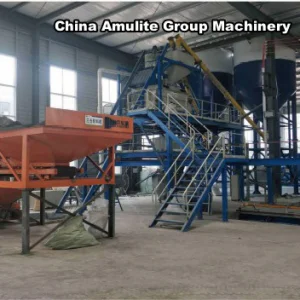
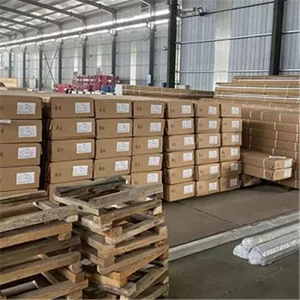
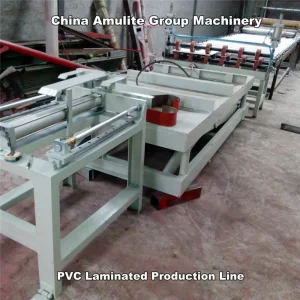
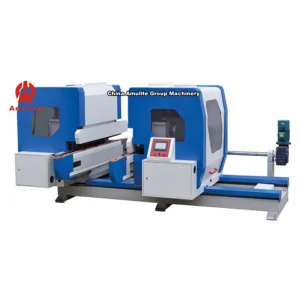
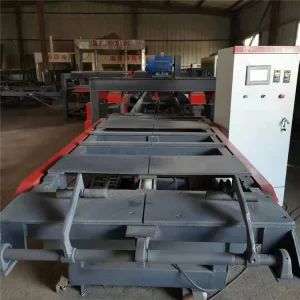
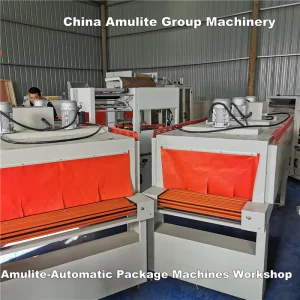
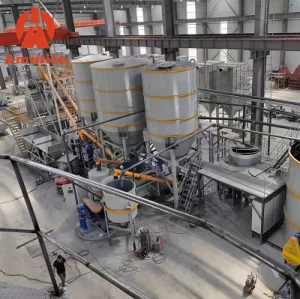
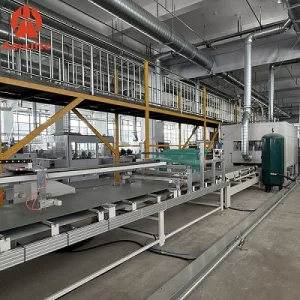
Examining the structural conversion from labor-intensive masonry to high-performance, automated precast cementitious hollow core panels.
The global construction ecosystem is experiencing a profound paradigm shift driven by urban acceleration, labor shortages, stringent decarbonization mandates, and the imperative for accelerated project delivery cycles. Within this evolving industrial matrix, Hollow Core Panels (HCP)—crafted from lightweight cementitious matrices, prestressed concrete, or fiber-reinforced calcium silicate compositions—have emerged as a cornerstone of modern Industrialized Building Systems (IBS) and Off-site Construction (OSC).
Chinese OEM suppliers and machinery manufacturers stand at the nexus of this technological evolution. By combining advanced extrusion dynamics, automated slip-forming technology, and high-volume raw material throughput, Chinese suppliers deliver industrial-scale manufacturing equipment that radically reduces capital expenditure while exceeding international structural standards.
Hollow core wall panels possess longitudinally continuous cylindrical cores that significantly attenuate total dead weight without sacrificing structural flexural rigidity or load-bearing capability. The internal void ratio—typically calculated between 28% and 48% of total cross-sectional volume—serves a dual operational function: it substantially decreases shipping mass and structural loads on building foundations while providing internal raceways for electrical conduits, plumbing lines, and thermal insulation inserts.
By engineering internal tubular voids, hollow core panels reduce overall mass to as low as 60–90 kg/m², yielding massive savings in foundational piling, structural steel tonnage, and crane lifting requirements.
The encapsulated longitudinal air channels act as natural acoustic damping chambers, achieving Sound Transmission Class (STC) ratings up to 48 dB while dramatically lowering thermal transmittance ($\lambda$-value).
With tongue-and-groove joint profiles, tongue-locking adhesive systems, and pre-cut lengths, site installation speeds exceed 35–50 m² per worker shift, replacing up to 1,500 traditional clay bricks.
A rigorous comparative analysis of slurry rheology, compaction physics, thermal curing profiles, and mechanical properties across modern production methodologies.
| Performance Metric | High-Speed Extrusion Line | Slip-Forming Continuous System | Vertical Battery Mold Casting |
|---|---|---|---|
| Core Slurry Rheology | Dry-hard low-slump concrete (W/C ratio 0.28–0.32) | Semi-dry stiff mixture (W/C ratio 0.32–0.36) | Fluid slurry / Lightweight EPS cement wet mix |
| Compaction Mechanism | High-frequency internal augers & vibration dynamic shear | External panel vibrators & traveling side-form compactors | Hydraulic compaction & vertical gravitational flow |
| Daily Line Throughput | 800 – 1,500 m² / shift | 500 – 900 m² / shift | 300 – 600 m² / shift |
| Void Hole Configuration | Precision circular longitudinal tubes | Elliptical or rectangular continuous voids | Custom engineered tubular core inserts |
| Flexural Toughness (MPa) | 12.5 – 18.0 MPa (Prestressed wire compatible) | 9.0 – 14.0 MPa | 4.5 – 8.5 MPa |
| Dimensional Tolerance | $\pm 1.0\text{ mm}$ thickness, high surface flat index | $\pm 2.0\text{ mm}$ thickness | $\pm 1.5\text{ mm}$ thickness |
Achieving structural resilience and lightweight performance requires precise raw material dosing. Modern Chinese suppliers engineer fully automated batching stations that dynamically adjust water-to-cement ratios via microwave moisture sensors embedded in aggregate hoppers.
Navigating global building codes, seismic engineering standards, and region-specific environmental mandates.
Replaces heavy masonry in non-loadbearing interior wall partitions. Interlocking male-female grooves allow rapid sealant insertion, passing rigorous inter-story drift angle tests for seismic Zone 4 active regions.
Configured as continuous vertical or horizontal exterior curtain walls. Designed to withstand wind suction forces up to 2.4 kPa and comply with EN 13501-1 Class A1 non-combustible building codes.
Leading suppliers ensure machinery and end-products fulfill ASTM C1693 (AAC/Lightweight Concrete), CE Marking under CPR (EU 305/2011), ISO 9001 quality management, and ISO 14001 environmental protocols.
Deploying a production line in foreign markets (e.g., Southeast Asia, the Middle East, Latin America, or Africa) presents unique localized challenges: fluctuating grid voltages, high ambient humidity, aggregate moisture variances, and local labor skill levels.
Top-tier Chinese OEM manufacturers provide comprehensive localized engineering packages, including: tailor-made foundation civil engineering blueprints; dual-frequency transformer cabinets (50Hz/60Hz, 380V–480V); localized raw material laboratory testing; on-site installation supervision by experienced commissioning technicians; and complete operator certification programs.
Pioneering AI-assisted process control, autonomous edge profiling, digital twin quality assurance, and zero-carbon formulations.
Embedded pressure transducers and laser displacement sensors dynamically adjust auger rotational velocities (RPM) in real time to compensate for micro-fluctuations in cement slurry hydration.
Fully automated 4-side chamfering and cutting stations eliminate manual finishing, while Autonomous Guided Vehicles (AGVs) stack, cure, and transport panels to finished-goods yards.
Transitioning from pure OPC to alkali-activated blast furnace slag (GGBFS) and metakaolin binders, reducing carbon intensity per square meter by up to 65%.
Financial modelling, factory footprint requirements, utility loads, and critical criteria for selecting top-tier Chinese OEM manufacturers.
Evaluating an investment in a hollow core panel manufacturing plant requires a comprehensive analysis of Capital Expenditure (CAPEX), Operational Expenditure (OPEX), site infrastructure requirements, and expected payback periods. A standard 500,000 m²/year automated extrusion facility typically demonstrates a payback horizon between 14 to 22 months depending on regional panel sales prices and local cement costs.
| Plant Capacity (Annual Output) | Required Factory Footprint | Electrical Utility Load | Estimated CAPEX (Equipment) | Estimated Payback Period |
|---|---|---|---|---|
| 300,000 m² / year | 4,500 – 6,000 m² | 180 kW – 240 kW | $280,000 – $420,000 | 18 – 24 Months |
| 600,000 m² / year | 8,000 – 11,000 m² | 320 kW – 450 kW | $550,000 – $780,000 | 14 – 18 Months |
| 1,200,000 m² / year | 15,000 – 20,000 m² | 650 kW – 850 kW | $1,100,000 – $1,650,000 | 11 – 15 Months |
When selecting a Chinese machinery supplier for hollow core wall panel equipment, procurement teams must look beyond initial equipment pricing and audit the engineering maturity of the factory:
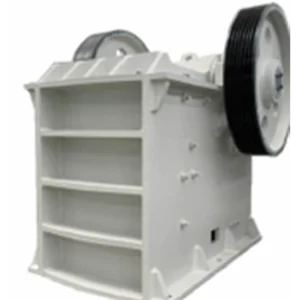
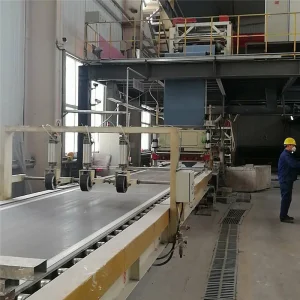
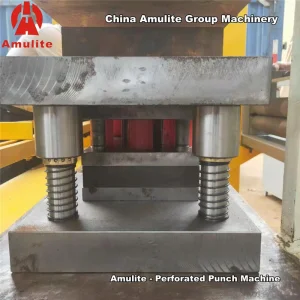
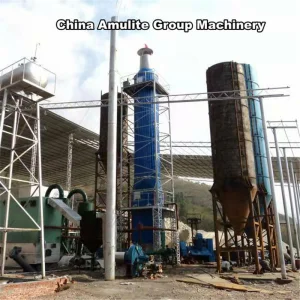
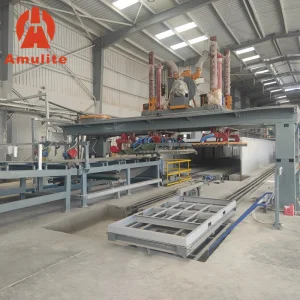
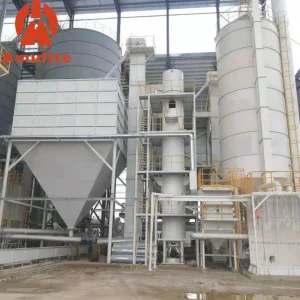
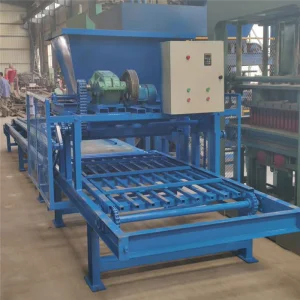
Browse peripheral crushing, batching, trimming, and specialized panel line systems available from verified Chinese industrial manufacturers.
Direct answers from senior process engineers regarding plant design, material formulation, installation timelines, and operational maintenance.
An automated high-speed extrusion machine operates at a linear forming speed of 1.2 to 2.4 meters per minute depending on panel thickness (ranging from 75mm to 200mm) and aggregate density. In a standard 8-hour shift, a single continuous production line yields between 800 and 1,500 square meters of finished hollow core wall panels.
Hollow core panels reduce total wall dead weight by 40% to 60% compared to solid brick masonry (averaging 65-90 kg/m² vs 180-240 kg/m²). Installation efficiency is roughly 3.5 to 5 times faster: a team of three installers can construct 120-160 m² of hollow core wall per day, whereas traditional bricklaying requires significantly higher labor counts for equal coverage.
Yes. Leading Chinese OEM suppliers design custom slurry batching systems capable of substituting up to 35%–50% of Ordinary Portland Cement with Class F fly ash, ground granulated blast-furnace slag (GGBFS), or crushed quarry dust. Our process engineers perform laboratory sieve and pozzolanic activity tests on your local raw materials to calibrate the ideal chemical binder formulation.
Standard 90mm to 120mm thick lightweight hollow core panels achieve a 2 to 4-hour fire endurance rating under EN 1364-1 / ASTM E119 testing standards without structural collapse or ignition on the unexposed face. Sound Transmission Class (STC) ratings range from 38 dB to 48 dB, which can be further elevated by injecting core channels with acoustic mineral wool insulation inserts.
Factory equipment manufacturing typically requires 60 to 90 days. Ocean logistics and customs clearance depend on destination ports (approx. 20-40 days). On-site mechanical assembly, electrical wiring, PLC integration, and dry/wet trial commissioning under the guidance of resident Chinese field engineers require approximately 30 to 45 days on site.
Early micro-cracking is prevented through a three-tier quality strategy: adding alkali-resistant (AR) glass fibers or micro-polypropylene fibers into the dry mix; applying automated fine-water misting sprays inside climate-controlled steam curing tunnels (50°C–65°C); and maintaining precision control over the water-binder ratio using automated microwave moisture sensors in the concrete mixer.