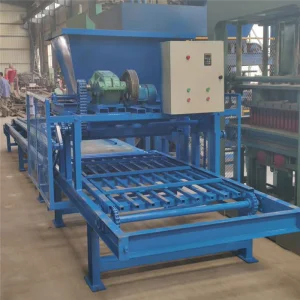
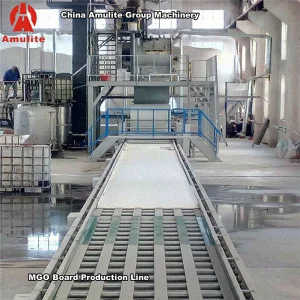
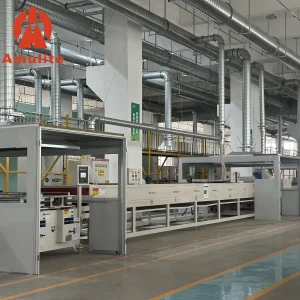
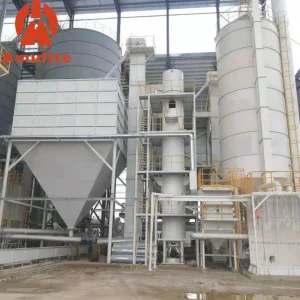
Explore our industrial portfolio of heavy-duty extrusion, flow-on slurry, and laminating equipment built for high-throughput modern building material plants.
Analyzing global demand, decarbonization directives, and the transition from traditional Hatschek processes to high-solids Direct Flow-On Slurry deposition.
In the modern structural building materials sector, the global demand for fireproof, non-asbestos fiber cement boards and high-density calcium silicate sheets has seen unprecedented growth. Driven by stringent municipal fire safety codes (Class A1 non-combustibility standard according to EN 13501-1) and the rapid global expansion of industrialized prefabricated construction, manufacturers require production equipment that offers continuous high-speed output, strict thickness control, and low raw-material waste.
Historically, the wet Hatschek forming process—adapted from 19th-century paper-making techniques—dominated fiber cement manufacturing. However, as plant owners strive to process higher solid concentrations, increase board density beyond 1.40 g/cm³, and process alternative reinforcement fibers (such as cellulose pulp, PVA, and PP fibers), traditional rotating wire mesh vats present mechanical bottlenecks. This has propelled the adoption of Flow-On Slurry Cement Sheet Machines built by specialized engineering pioneers in China.
Replaces open rotary cylinders with a pressurized, hydrodynamically modeled headbox. Cementitious slurry with a high solids-to-water ratio (35–45% solid content) is evenly deposited onto a continuous moving felt canvas, ensuring uniform transverse fiber orientation.
Integrates high-efficiency, progressive vacuum dewatering boxes underneath the felt belt. Dynamic vacuum pressure zones extract excess moisture systematically, delivering green sheet moisture levels below 22% before the accumulator drum.
Configured with automated steam autoclaves operating at 180°C to 195°C and 1.0–1.3 MPa. This accelerates the quartz-lime reaction to synthesize stable Tobermorite ($C_5S_6H_5$) crystalline structures within 12–14 hours.
An engineering analysis comparing mechanical throughput, raw material tolerances, and structural board parameters across major industrial processes.
Selecting the optimal sheet-forming line dictates plant profitability, product compliance, and operational flexibility. The Flow-On Slurry (Direct Slurry Deposition) method bridges the gap between low-solid wet processes and rigid dry-pressing lines by combining continuous high-volume production with versatile raw material formulation.
| Parameter / Feature | Flow-On Slurry Machine (Amulite) | Traditional Hatschek Process | Extrusion-Pressing Process |
|---|---|---|---|
| Slurry Solids Concentration | High Solids (35% – 45% dry weight) | Low Solids (8% – 12% wet suspension) | Ultra-High Paste (70% – 85% damp clay) |
| Sheet Thickness Capability | 4 mm to 30 mm (Continuous calibration) | 3 mm to 20 mm (Layer accumulation) | 12 mm to 50 mm (Fixed die mold) |
| Felt Speed & Line Throughput | 60 – 110 meters / min | 40 – 70 meters / min | 10 – 25 meters / min |
| Raw Fiber Tolerance | Unbleached Kraft Pulp, PVA, Glass Fiber, Slag | Strictly refined Kraft Pulp & Asbestos/PVA | Short Fibers, Synthetic Fillers, Fly Ash |
| Flexural Strength (MOR) | ≥ 16 - 24 MPa (Autoclaved Class 4/5) | ≥ 14 - 18 MPa (Air-cured / Autoclaved) | ≥ 12 - 16 MPa (Heavy structural) |
| Thickness Precision (Green Board) | ± 0.15 mm (Laser controlled headbox) | ± 0.30 mm (Drum layer deviation) | ± 0.50 mm (Die swelling variation) |
| Vacuum Dewatering Power Demand | Optimized (30% lower energy / m²) | High (Requires large water recycling pumps) | Low (Mechanical pressing reliant) |
The superior dimensional stability and moisture-impermeability of boards produced by Amulite Flow-On Slurry lines stem from hydrothermal synthesis during autoclaving. When finely ground silica sand ($SiO_2 > 95\%$, mesh size < 200) reacts with hydrated lime ($Ca(OH)_2$) under 1.2 MPa saturated steam at 190°C, it forms 11Å Tobermorite crystals. This crystalline lattice reduces free water absorption sites, ensuring zero delamination even under freezing-thawing cycles (ASTM C1185 compliant).
How fiber cement and calcium silicate sheets engineered via Flow-On Slurry technology serve diverse climatic and regulatory markets across the globe.
Density: 1.30 – 1.65 g/cm³
Flow-On Slurry machines produce high-density exterior cladding panels resistant to UV degradation, extreme wind pressures, and thermal shock. Sealed with UV-curable fluorocarbon coatings, these panels serve as durable building skins across Europe, North America, and East Asia.
Density: 1.15 – 1.30 g/cm³
Engineered specifically for high-humidity interiors such as commercial kitchens, hospital cleanrooms, and bathroom pods. These boards exhibit near-zero dimensional swelling when submerged and prevent mold growth in tropical regions across Southeast Asia and Latin America.
Density: 0.95 – 1.10 g/cm³ (Calcium Silicate)
Low-density calcium silicate boards formed on Flow-On lines are tailored for 2-hour to 4-hour fireproof wall partitions, cable trays, and structural steel fireproofing, complying fully with BS 476 Part 20/22 and EN 1364-1.
Density: 1.50 – 1.75 g/cm³
Extra-thick sheets (18 mm to 25 mm) pressed under high-tonnage hydraulic presses provide ultra-high flexural strength (MOR > 22 MPa) and high point-load capacity for steel-structure mezzanine floors and modular container houses.
Density: 0.80 – 1.00 g/cm³
Micro-perforated lightweight calcium silicate boards integrated with sound-absorbing tissue backings deliver high NRC (Noise Reduction Coefficient) performance for airport terminals, auditoriums, and corporate offices.
Density: 1.05 – 1.20 g/cm³
Thin 4.5 mm to 6 mm fiber cement sheets produced at high speeds act as tough outer skins for lightweight core sandwich panels (cement + EPS beads), revolutionizing rapid housing construction across Africa and the Middle East.
Full lifecycle plant commissioning, raw material formulation analysis, and adherence to international industrial machinery standards.
Investing in a modern Flow-On Slurry plant requires more than purchasing standalone machinery; it demands end-to-end process integration. China Amulite Group delivers complete turnkey projects, taking ownership from initial mineral assay testing of local raw materials to full-scale commercial operation.
Our in-house analytical laboratories evaluate your local Portland cement, silica sand, fly ash, and pulp fibers to formulate custom recipes. We calibrate slurry rheology, setting acceleration, and green sheet strength before shipping the machinery.
All control systems are engineered with Siemens S7-1500 PLCs, Schneider Electric switchgear, and SEW-Eurodrive geared motors. Mechanical pressure vessels (autoclaves and vacuum tanks) carry full CE, ASME, and ISO 9001 certifications.
Experienced field engineering teams manage foundation setting, mechanical installation, electrical wiring, and trial production on site. Integrated IoT edge gateways enable 24/7 remote PLC diagnostics and software updates from our headquarters.
Strategic R&D initiatives shaping energy reduction, carbon reduction, and AI-driven automated quality control.
Expert insights regarding procurement, technical specifications, operational costs, and plant engineering.
Complementary processing equipment, recycling machinery, and secondary finishing lines to extend your plant manufacturing capabilities.