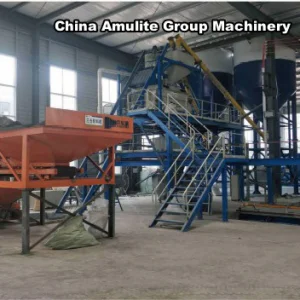
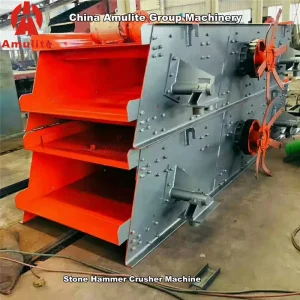
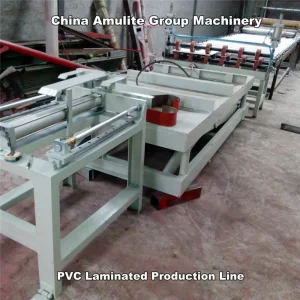
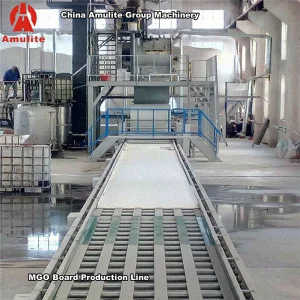
Turnkey industrial solutions engineered for maximum volumetric output, strict structural tolerances, and long-term mechanical reliability.
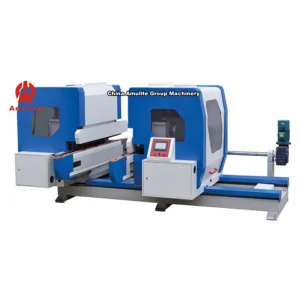
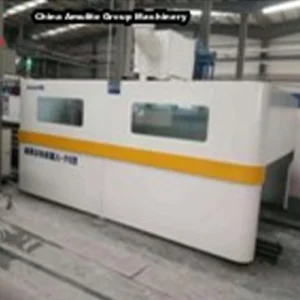
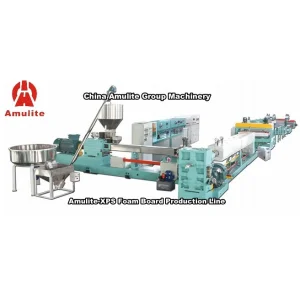
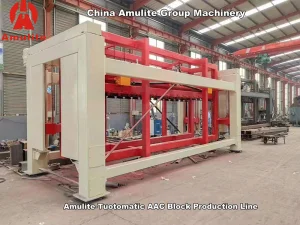
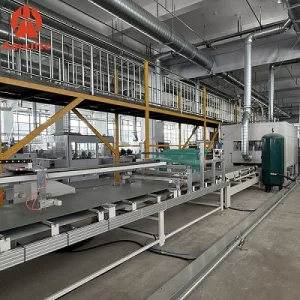
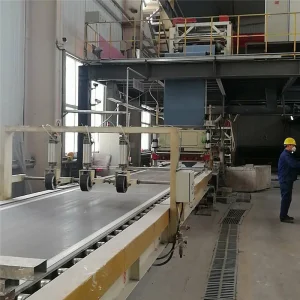
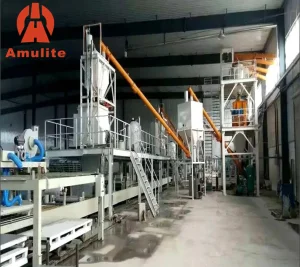
The global modern construction paradigm is undergoing a fundamental shift toward sustainable, fire-resistant, high-durability modular building materials. Within this evolution, China fibre cement sheets machinery suppliers stand at the absolute center of machine innovation, offering advanced Hatschek wet-process engineering, high-pressure steam autoclave curing systems, and fully integrated automated batching lines. Fiber cement boards (FCB) and Calcium Silicate Boards (CSB) have become essential components for exterior cladding, interior drywall partitioning, ceiling tiles, and fire-rated soffit assemblies across commercial and residential developments worldwide.
Achieving superior structural integrity and dimensional stability in fiber cement manufacturing requires rigorous control over physical chemical reactions. Raw materials—primarily Portland cement, finely ground quartz silica sand, cellulose pulp fibers, and functional mineral additives—must be combined in ultra-precise mass ratios. Chinese machinery manufacturers have transformed this process by replacing manual feeding with computerized gravimetric loss-in-weight dosing systems connected directly to high-shear slurry pulpers and dynamic refining tanks.
Tracking the shift from traditional wet-process manufacturing to intelligent, low-carbon automated lines.
Transitioning from virgin kraft wood pulp to recycled agricultural waste fibers, basalt fibers, and synthetic polyvinyl alcohol (PVA) matrices to enhance flexural strength while lowering material input costs.
Next-generation multi-stage vacuum recovery networks recirculate 98% of process water back into pulping units, drastically reducing freshwater intake and eliminating slurry effluent discharge.
Utilizing high-efficiency heat exchangers to harvest residual steam energy from pressure vessels, pre-heating boiler feedwater and reducing natural gas/coal energy footprints by up to 22%.
| Process Characteristic | Air-Cured Fibre Cement Line | Autoclaved Calcium Silicate Line | Hybrid Multi-Layer Board Line |
|---|---|---|---|
| Curing Mechanics | Ambient air hydration (28 Days) or accelerated tunnel (24h) | High-pressure steam (1.2 MPa, 185°C for 10-12 hours) | Combined pre-curing tunnel + steam thermal box |
| Primary Crystal Phase | Calcium Silicate Hydrate (C-S-H) Gel | Tobermorite Crystalline Structure (Ca5Si6O16(OH)2·4H2O) | Dual Matrix C-S-H & Ettringite Binding |
| Density Class | 1.30 – 1.65 g/cm³ | 0.90 – 1.25 g/cm³ | 1.10 – 1.45 g/cm³ |
| Linear Thermal Expansion | < 0.25% | < 0.12% (Ultra-low shrinkage) | < 0.18% |
| Target Applications | Heavy-duty exterior facades, siding, roofing slates | Interior fireproof partitions, ceiling tiles, cleanrooms | Sandwich panel skin sheets, wet-area backer boards |
How localized manufacturing ecosystems deliver world-class machine quality at unmatched capital investment efficiency.
The global dominance of China Fibre Cement Sheets Machinery Suppliers stems directly from the robust industrial ecosystem integrated across key manufacturing hubs such as Hebei, Jiangsu, and Shandong. Unlike regional equipment integrators who outsource core fabrication, leading Chinese OEMs maintain complete control over raw material procurement, heavy steel machining, precision cylinder turning, and electrical control assembly inside 100,000+ square-meter production facilities.
Equipped with multi-axis CNC portal milling machines and 12-meter horizontal lathes, Chinese factories ensure format rollers, press cylinders, and cutter shafts achieve concentric tolerances within ±0.02mm, eliminating operational vibration during high-speed rotation.
To maintain strict international compliance, machines combine heavy domestic steel frames with premium global components: Siemens PLC systems, Schneider electrics, SEW Eurodrive gear motors, Rexroth hydraulics, and Parker pneumatic valving.
Every line undergoes full dry-run assembly, electrical wiring verification, and mechanical testing prior to export packing. This rigorous factory acceptance testing (FAT) drastically reduces on-site installation timelines by up to 40%.
A structured framework for EPC contractors, building material conglomerates, and factory investors to mitigate capital investment risk.
When investing in a multi-million dollar fiber cement board or wall panel production line, international engineering procurement managers must systematically evaluate suppliers across four core pillars: Engineering Competence, Raw Material Adaptability, Automated Quality Assurance, and Lifetime Total Cost of Ownership (TCO).
From initial site civil planning to continuous spare parts provisioning and formula tuning.
Full engineering packages including 3D plant layout drawings, foundation loading requirements, steam pipe network schematics, and electrical load distribution calculations.
Senior mechanical specialists, electrical engineers, and chemical process technicians sent directly to client facilities across Southeast Asia, Middle East, Africa, Latin America, and Europe.
Dedicated global spare parts inventory—from custom-woven felt belts and stainless wire mesh cylinders to hydraulic seals and PLC replacement cards—ensuring zero unexpected downtime.
Detailed answers regarding technical specifications, installation timelines, and raw material requirements.
Complementary machinery solutions designed for auxiliary wall panel processing, finishing, and recycled material handling.