High-yield manufacturing lines engineered by China's leading OEM factories for modern prefab construction.
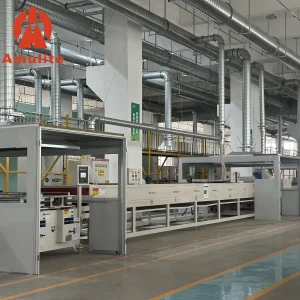
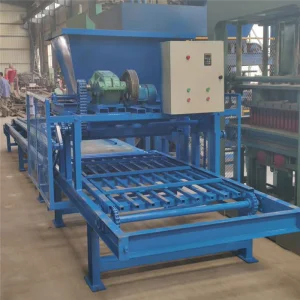
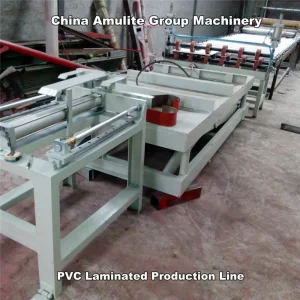
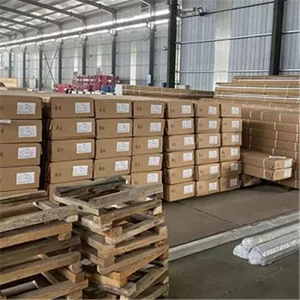
An authoritative engineering breakdown of modern lightweight wall panel production technology and economic displacement dynamics in global construction.
Executive Summary: The global shift toward modular prefabricated architecture has driven an unprecedented surge in demand for Fiber Cement Board EPS Sandwich Panels. By combining fiber cement board (FCB) or calcium silicate board as facings with a lightweight aggregate core (expanded polystyrene beads, Portland cement, fly ash, and foaming agents), modern building envelope manufacturers achieve Class A1 fire resistance, high thermal resistance (R-values), superior sound transmission class (STC) ratings, and rapid structural assembly. Automated machinery designed and engineered in China now underpins over 65% of global capacity expansion across emerging markets.
Traditional wet-construction methods involving bricklaying, manual plastering, and heavy curing are increasingly unviable due to soaring labor costs, prolonged construction schedules, and strict carbon footprint mandates. A fiber cement sandwich wall panel line replaces labor-intensive field operations with factory-controlled precision engineering.
Compared to conventional concrete blocks or hollow core wall systems, composite fiber cement EPS sandwich panels deliver profound structural savings. Because the panels weigh approximately 1/5th of standard brick masonry (600–700 kg/m³ density vs. 2400 kg/m³ for reinforced concrete), structural engineers can reduce foundation load requirements by up to 25-30%, yielding massive CAPEX savings on steel rebar and concrete framing in high-rise developments.
| Performance Metric | Fiber Cement EPS Sandwich Panel | Autoclaved Aerated Concrete (AAC) | Traditional Clay Hollow Brick |
|---|---|---|---|
| Dry Bulk Density (kg/m³) | 550 – 700 kg/m³ | 500 – 650 kg/m³ | 1200 – 1400 kg/m³ |
| Compressive Strength (MPa) | 3.5 – 5.0 MPa | 3.5 – 4.0 MPa | 2.5 – 3.5 MPa |
| Hanging Strength (N) | > 1000 N (Single Point) | 400 – 600 N | 300 – 500 N |
| Thermal Conductivity (W/m·K) | 0.045 – 0.065 W/m·K | 0.11 – 0.16 W/m·K | 0.45 – 0.60 W/m·K |
| Fire Resistance Rating | 2 – 4 Hours (1000°C) | 3 – 4 Hours | 1 – 2 Hours |
| Installation Efficiency | 35 – 40 m²/day/worker | 15 – 20 m²/day/worker | 5 – 8 m²/day/worker |
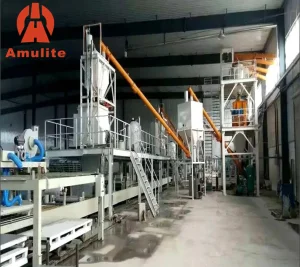
From Hatschek process substrate manufacturing to continuous core slurry injection and automated demolding systems.
High-density non-asbestos fiber cement boards or calcium silicate boards (4mm–6mm) are processed through automated de-stackers, surface cleaning, and primer coating units to guarantee optimal interfacial bond strength with the cementitious core slurry.
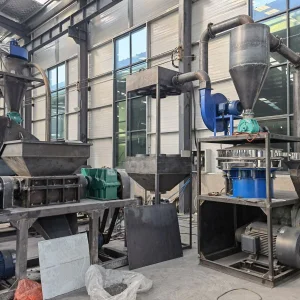
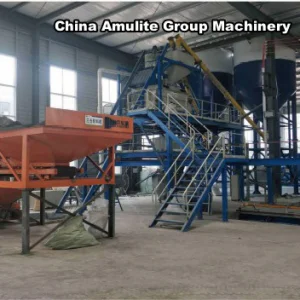
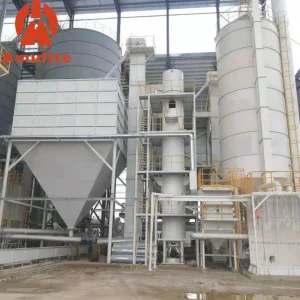
Computerized PLC gravimetric feeding systems precisely proportion OPC cement, silica sand, industrial fly ash, pre-expanded EPS beads, and proprietary chemical additives. High-shear multi-stage mixing creates a homogenous core matrix without crushing EPS beads.
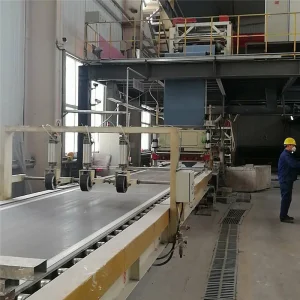
Fully automated vertical mould cars with hydraulic clamping and side-sealing plates accept precise slurry pressure injection. Vertical casting ensures uniform density distribution, eliminates air pockets, and produces perfect tongue-and-groove joint profiles.
Eliminating human error in powder batching via loss-in-weight feeders, pneumatic conveying systems, and closed-loop ultrasonic moisture feedback loops for consistent core density (±1.5% margin).
Automated transfer cars cycle mold batteries through temperature-controlled steam curing chambers (50–65°C), accelerating early matrix hydration and allowing 3 to 4-hour mold turnover cycles.
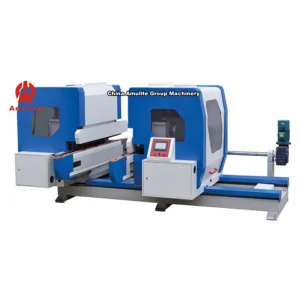
Integrated 6-axis industrial robots perform precision board demolding, automatically trimming peripheral flash, milling accurate interlocking male/female joints, and stretch-wrapping pallet loads.
Why Tier-1 international project developers partner with Chinese machinery manufacturers for turnkey line deployment.
From structural steel laser cutting, CNC machining of mould plates, and dynamic balancing of slurries, Chinese factories control 95%+ of core component manufacturing under ISO9001 certified conditions.
Machine design is engineered around local raw material availability. Whether utilizing river sand, crushed granite dust, pozzolanic volcanic ash, or industrial fly ash, slurry formulations are tailored to local economics.
Delivering 100% equivalent throughput and precision tolerance to European machinery brands at 40%–60% lower capital expenditure, drastically shortening plant payback periods to 12–18 months.
Tailoring fiber cement sandwich board plants to regional climatic conditions, building regulations, and seismic codes.
Regions: Southeast Asia, Central America, Coastal Africa.
Engineering Optimization: Anti-efflorescence board surface sealing and waterproof synthetic foaming agent additives prevent moisture absorption, fungus expansion, and core delamination under 90%+ relative humidity.
Regions: Pacific Ring of Fire, Middle East, Andean Fault Belts.
Engineering Optimization: Male-female interlocking joint geometry integrated with anti-seismic steel clip anchors permits structural flexure up to 8.5 Richter scale acceleration without panel detachment.
Regions: Central Asia, Middle East Deserts, Eastern Europe.
Engineering Optimization: Core mix formulations incorporating micro-air entraining agents maintain structural integrity across -30°C to +50°C thermal cycles without micro-cracking.
Full-lifecycle support from plant layout civil engineering to local workforce upskilling and international certification.
Machinery manufactured in compliance with EU CE directives, ISO 9001 quality management, ISO 14001 environmental standards, and localized electrical norms (NEMA/IEC standard motors & PLC panels).
In-house chemical and physical testing of client raw material samples (cement grade, sand sieve curve, fly ash reactive silica content) to formulate optimized batch ratios prior to plant shipment.
Dedicated mechanical, electrical, and chemical commissioning engineers dispatched on site for foundation layout oversight, mechanical alignment, automated cabling, and trial production runs.
Integrated VPN cloud gateways allow factory automation engineers to perform real-time PLC diagnostics, code optimization, and predictive maintenance monitoring worldwide.
Expand your industrial output with our specialized machinery line solutions.
Detailed answers prepared by senior process control engineers for global factory investors.
Annual capacity ranges from 300,000 m² to over 3,000,000 m² per year depending on plant automation level, the number of mold battery cars (e.g., 20 to 120 cars), and curing cycle efficiency. Lines can be configured in semi-automatic models for initial CAPEX control or fully automatic Industry 4.0 continuous tracks for high-volume output.
Our sandwich panel production lines are designed to process compressed fiber cement boards (FCB), non-asbestos calcium silicate boards, magnesium oxide (MGO) boards, and cement bonded particle boards in standard thickness ranges from 4.5mm to 8mm, ensuring seamless adhesion with the core matrix.
Our engineering team performs complete chemical composition analysis (XRF/XRD) of your local raw materials prior to equipment delivery. The automated PLC dosing system is then programmed with customized chemical ratio algorithms, compensating for silica purity, particle size distribution, and cement hydration rates.
A standard 1 Million m²/year line requires an installed electrical capacity of approximately 150 kW - 220 kW, a 1-2 Ton/hour low-pressure steam boiler for curing acceleration (or hot water curing circuit in warm climates), and water consumption of ~15-20 m³/day, 80% of which is recycled through our closed-loop water treatment system.
Manufacturing lead time is typically 60 to 90 days. Site installation, electrical wiring, mechanical alignment, and trial batch commissioning take an additional 30 to 45 days guided by our resident field engineers. Full operator training and quality certification are included in the turnkey contract SLA.