Explore our high-performance automated production systems engineered for exceptional reliability, resource efficiency, and global standards compliance.
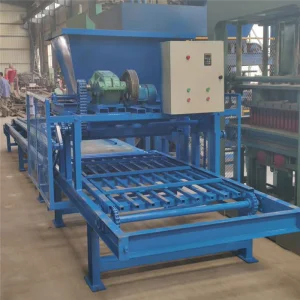
China Automatic Bricks Making Production Line Manufacturers, Products
View Details →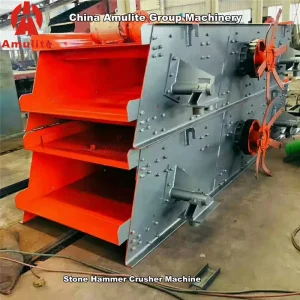
OEM Stone Hammer Crusher Machine Suppliers, Factory
View Details →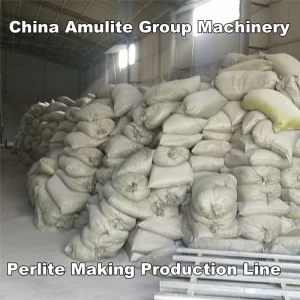
Buy Perlite Production Line Manufacturers, Company
View Details →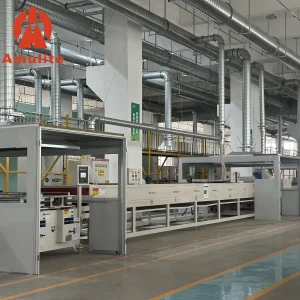
OEM UV Coating/Painting Production Line Manufacturer, Factories
View Details →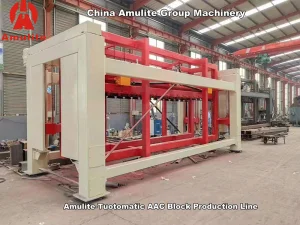
High-Quality Amulite Automatic AAC Block Production Line Manufacturers, Companies
View Details →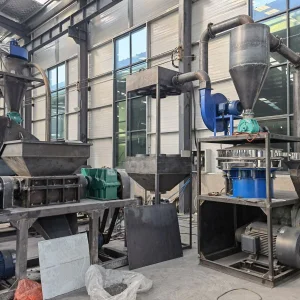
OEM Lithium Battery Recycling Equipment Factory, Company
View Details →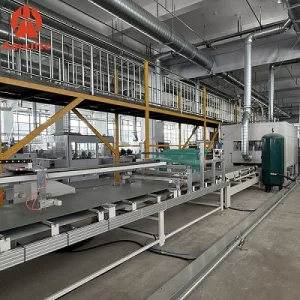
Best Flexible Clay Ceramic Tile Production Line Manufacturer, Companies
View Details →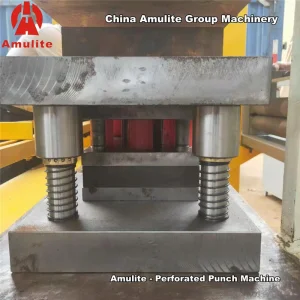
High-Quality Amulite Perforated Punch Machine System Technical Data Manufacturer, Suppliers
View Details →A comprehensive analysis of hydrothermal synthesis, mineral matrix formation, and ionization surface processing in modern industrial board manufacturing.
The global demand for non-combustible, lightweight, and moisture-resistant building materials has accelerated the evolution of Calcium Silicate (CS) Board Plants. As leading China CS Board Ion Plant Manufacturers, our engineering teams have pioneered the integration of high-pressure hydrothermal reaction systems with advanced ionized electrostatic surface conditioning technology. This dual-technology synergy addresses long-standing challenges in fiber-matrix adhesion, sheet delamination, static charge accumulation during ultra-high-speed forming, and mechanical flexural strength degradation.
At the core of CS Board manufacturing is the chemical synthesis of Tobermorite crystalline structures (C5S6H5). Raw materials comprising siliceous materials (quartz powder, fly ash, silica sand) and calcareous materials (slaked lime, Portland cement), reinforced with cellulose pulp fibers, undergo high-energy slurry blending. The slurry is processed through multi-cylinder Hatschek forming machines or flow-on sheet accumulators, pre-pressed under hydraulic pressure up to 30 MPa, and cured in autoclaves at saturated steam pressures between 1.0 and 1.3 MPa (temperatures ranging from 180°C to 195°C) for 10 to 14 hours.
Modern automated high-speed production lines operating above 80 meters per minute face micro-static interference and micro-particle contamination during dry trimming, sanding, and surface stack transfer. The integration of high-frequency ion ionization bars and plasma surface treaters within the line neutralizes electrostatic charges on green and cured boards. This process delivers major engineering advantages:
Analyzing international supply dynamics, regional application shifts, and energy transition mandates driving plant upgrades worldwide.
The global market for calcium silicate and fiber cement board machinery is undergoing a structural transition driven by strict building fire safety codes (such as EN 13501-1 A1 ratings and ASTM E136) and net-zero carbon construction policies. Traditional gypsum wallboards and organic timber panels are increasingly replaced by calcium silicate boards in high-rise commercial structures, subway stations, industrial facilities, and prefabricated modular housing.
Rapid urbanization in India, Southeast Asia, and China drives massive demand for 8-20mm exterior siding and ceiling boards. China suppliers lead turnkey production technology with localized raw material adaptability.
Strict energy efficiency directives require low thermal conductivity facade cladding. European producers face soaring machinery replacement costs, positioning top-tier Chinese manufacturers as premier partners for complete plant turnkeys.
Off-site modular construction across North and South America requires precision-cut, light-density (0.9–1.2 g/cm³) and heavy-density (1.4–1.7 g/cm³) boards with ultra-low moisture movement (< 0.15%).
As a leading China CS Board Ion Plant Factory, our facilities bridge the gap between high capital investment costs and precision industrial engineering. By standardizing component manufacturing while customizing slurry formulas to locally available quartz sand, fly ash, and recycled mineral waste, Chinese plants offer an unmatched return on investment (ROI) within 18 to 28 months of commercial commissioning.
Quantitative benchmarks demonstrating information gain and technical parameters engineered into our full-scale plants.
| Performance Parameter | Standard CS Board Line | Amulite Advanced Ion CS Board Plant | Engineering Benefit |
|---|---|---|---|
| Annual Line Capacity | 2 Million – 5 Million m² | 3 Million – 30 Million m² | Scalable modular design for phase-by-phase expansion |
| Static Charge Density | High (> 15 kV residual) | Neutralized (< 0.5 kV with Ionizer) | Prevents board sticking, micro-cracking & dust accumulation |
| Board Density Range | 0.95 – 1.30 g/cm³ | 0.80 – 1.75 g/cm³ Configurable | Covers ultralight ceilings to heavy structural facade panels |
| Bending Strength (Cross) | ≥ 12 MPa | ≥ 18 - 28 MPa | Superior impact resistance & wind-load performance |
| Autoclave Cycle Efficiency | 14 - 16 Hours per batch | 10 - 12 Hours (Thermal Recovery) | 22% steam energy reduction via heat recycling |
| PLC & Automation Level | Semi-Automatic / Discrete Control | Full Industry 4.0 SCADA + AI Vision | Real-time thickness control, auto-rejection & remote diagnosis |
The evolutionary trajectory of calcium silicate machinery, smart automation, zero-waste processing, and carbon-capture curing.
The next decade of CS board plant engineering will focus on three core technological pillars: smart automation via IoT sensors, deep decarbonization through mineral carbonation, and ultra-high-speed continuous forming using pulse-ion dewatering systems.
Traditional Hatschek vacuum dewatering consumes significant electrical power to achieve green sheet moisture targets of 28-32%. Future ion plants utilize micro-pulse electrostatic fields integrated within the vacuum felts. This ion-assisted electro-osmotic dewatering accelerates water extraction by 35%, reducing vacuum pump energy consumption while producing a denser, uniform green cake ready for high-tonnage hydraulic pressing.
As global carbon regulations tighten, next-generation CS board autoclaves are designed to inject industrial CO2 waste streams into the hydrothermal curing chamber. The controlled reaction of CO2 with unhydrated calcium hydroxide forms stable calcium carbonate (CaCO3) micro-crystals within the pore structure, sealing capillary voids, reducing water absorption below 18%, and permanently sequestering carbon inside the building material matrix.
By embedding laser thickness gauges, infrared moisture meters, and ultrasonic density scanners across the wet line and drying kilns, the continuous data stream is processed by an AI Digital Twin. The system automatically adjusts slurry pump speeds, pulp refining freeness degrees, and hydraulic cutter timing in real time, achieving operational zero-defect production.
Tailoring CS board plants to regional raw materials, climate extremes, and specialized structural requirements.
Target Markets: Southeast Asia, Central America, Coastal Africa.
Engineering Challenge: Board warping and biological mold growth under 95%+ relative humidity.
Plant Solution: High-density autoclaving with silica fume additives producing zero capillary water absorption boards (<15% after 24h immersion). Ionized surface sealing ensures complete hydrophobic sealer penetration.
Target Markets: Japan, West Coast Americas, New Zealand.
Engineering Challenge: High shear stress, seismic vibration, and dynamic flexural fatigue.
Plant Solution: Multi-layer fiber mesh insertion during forming, combined with high-freeness unbleached kraft pulp. Yields high flexural strength (>24 MPa) panels suitable for earthquake-resistant curtain walls.
Target Markets: Northern Europe, Central Asia, Canada.
Engineering Challenge: Freeze-thaw cycling causing structural spalling and thermal energy loss.
Plant Solution: Production of low-density calcium silicate boards (0.8–0.95 g/cm³) incorporating micro-expanded perlite or aerated foaming agents. Delivers freeze-thaw resistance over 100 cycles.
Target Markets: Semiconductor fabs, pharmaceutical cleanrooms, hospital ORs.
Engineering Challenge: Static accumulation attracting sub-micron dust and risking electronic damage.
Plant Solution: Ionization plant configuration producing conductive anti-static CS boards with surface resistivity calibrated precisely to 10^6 - 10^9 ohms/sq.
Why sourcing from premier China CS Board Ion Plant manufacturers delivers unmatched lifecycle value, operational agility, and engineering precision.
The manufacturing ecosystem in Hebei, China represents the world's most densely integrated supply chain cluster for non-metallic building material machinery. As an established OEM manufacturer operating a 100,000m² heavy industrial base, China Amulite Group leverages vertical integration across every phase of machinery engineering.
Unlike European suppliers who outsource key components to third-party sub-contractors, 100% of critical plant machinery—including sheet-forming cylinders, 1600mm diameter precision stainless steel mesh vats, 7000-ton hydraulic multi-opening presses, and ASME-certified pressure vessel autoclaves—is manufactured directly in our own CNC machining centers.
Demonstrating Experience, Expertise, Authoritativeness, and Trustworthiness in every global project execution.
Investing in a multi-million-dollar calcium silicate board plant requires complete confidence in local regulatory compliance, civil engineering alignment, process technology transfer, and long-term after-sales reliability.
Our machinery designs strictly adhere to CE Electrical Safety directives, ISO 9001 Quality Assurance Systems, ISO 14001 Environmental Standards, and ASME / PED Pressure Vessel certifications for all industrial autoclaves.
We do not just ship hardware; we deliver complete raw-material formulation recipes. Our resident process engineers test your local silica sand, lime, cement, and fiber sources to formulate the exact slurry mix for targeted board specs.
With 27 dedicated field service engineering teams deployed across Southeast Asia, the Middle East, Africa, Central Asia, and South America, we provide on-site foundation layout supervision, mechanical erection, PLC commissioning, and operator training.
Direct answers from our senior project engineering directors regarding plant ROI, raw material requirements, and operational setup.
Expand your manufacturing capabilities with our full range of automated processing systems, crushers, coating lines, and specialized equipment.
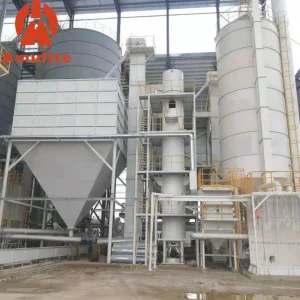
China Expanded perlite production line Supplier, Products
View Details →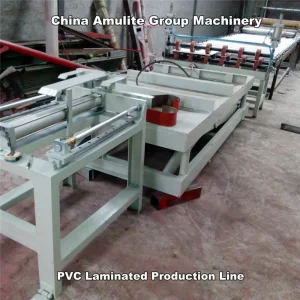
China PVC Laminated Production Line Factories, Products
View Details →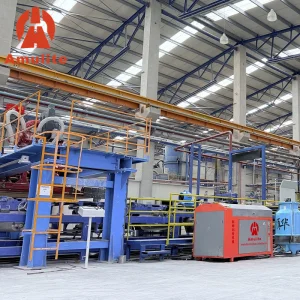
China Fiber Cement Board /Calcium Silicate Board Production Line Factory, Companies
View Details →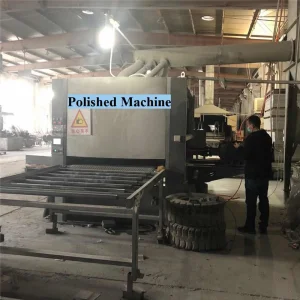
China Single Face Polished Machine Manufacturers, Suppliers
View Details →
High-Quality Embossed Metal Composite Exterior Panels Production Line Manufacturers, Company
View Details →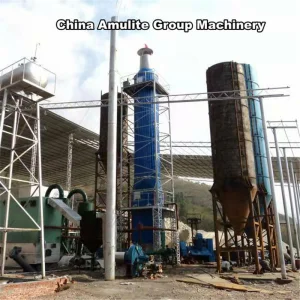
Buy Gypsum Powder Production Line Supplier, Product
View Details →
Buy Stone Hammer Crusher 6CX Euro Series Jaw Crusher Company, Product
View Details →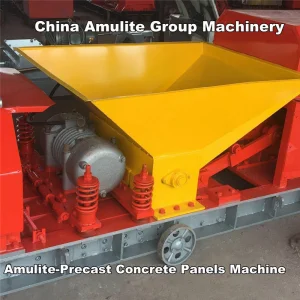
Best Precast Concrete Products Machinery Manufacturers, Products
View Details →From initial raw material feasibility testing and civil layout design to custom machinery manufacturing, installation, and formulation optimization—our engineering team delivers turnkey industrial solutions configured to your market demand.