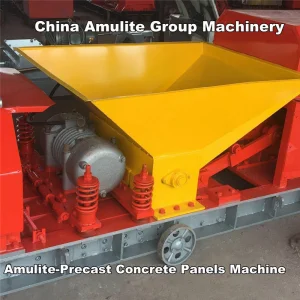
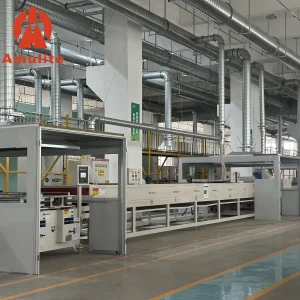
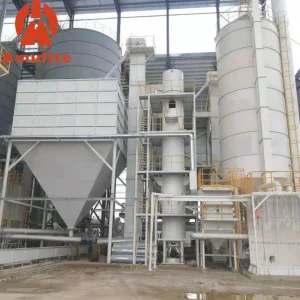
Explore China's flagship industrial production lines for structural cladding, fireproof calcium silicate matrices, and automated wall panel manufacturing.
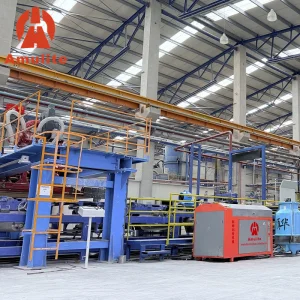
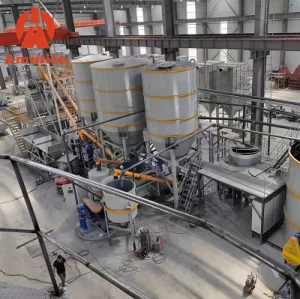
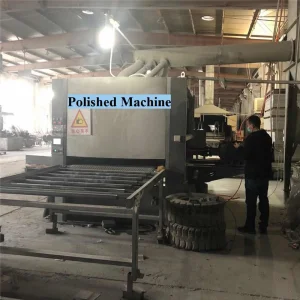
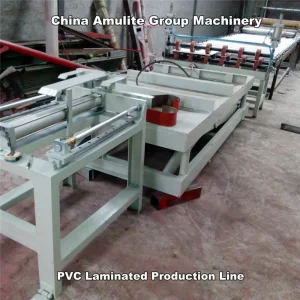
An executive overview of non-metallic mineral board manufacturing, supply chain dynamics, and China's strategic manufacturing leadership.
The global market for fiber cement sheet production equipment has underwent a paradigm shift driven by stringent building energy efficiency mandates, rapid urbanization across emerging markets, and the universal phasing out of hazardous asbestos-containing building materials. Fiber cement sheets—engineered from a blend of Portland cement, silica sand, cellulose fibers, and synthetic reinforcing polymers—have established themselves as the premier material for exterior rainscreen cladding, interior fire-rated partitions, soffits, and wet-area backerboards.
In major growth corridors—specifically Southeast Asia, the Middle East, Latin America, and Sub-Saharan Africa—demand for lightweight, fireproof, and rot-resistant building panels has surged at a CAGR exceeding 7.2%. Traditional masonry construction is increasingly superseded by dry-wall modular panel systems. Consequently, cement sheet manufacturers require turnkey machinery platforms capable of producing diverse board profiles: from thin 4mm ceiling panels to ultra-dense 30mm structural floor boards and heavy-duty calcium silicate fire barrier plates.
A rigorous engineering comparison of primary manufacturing methodologies utilized in modern cement sheet plants.
The gold standard for high-density, high-flexural-strength fiber cement sheets. Dilute aqueous slurry (7–10% solid concentration) is picked up by rotating sieve cylinders (3 to 5 vats), transferred to a continuous felt belt, vacuum dewatered, and wrapped around a accumulation cylinder to achieve precise thickness before cutting.
Engineered for high-volume production of medium-density calcium silicate boards and thick cement wall panels. Slurry with a higher dry-substance concentration (20–30%) is distributed directly onto a forming wire via a headbox.
Autoclaved board lines utilize high-pressure saturated steam (10–12 bar, 180°C–190°C) for 8 to 12 hours. This triggers a chemical reaction between finely ground quartz sand SiO₂ and lime/cement Ca(OH)₂, forming crystalline Tobermorite ($C_5S_6H_5$).
| Parameter / Specification | Hatschek Autoclaved (Fiber Cement) | Hatschek Air-Cured (PVA Fiber) | Flow-On Calcium Silicate |
|---|---|---|---|
| Raw Materials | Cement + Quartz Powder + Kraft Pulp | Portland Cement + PVA Fiber + Micro-Silica | Lime + Quartz Sand + Cellulose + Cement |
| Curing Method | High-Pressure Autoclave (1.0–1.2 MPa) | Air / Moist Pre-curing chamber (28 days equivalent) | High-Pressure Steam Autoclave |
| Density Range | 1.2 – 1.6 g/cm³ | 1.4 – 1.8 g/cm³ | 0.8 – 1.2 g/cm³ |
| Flexural Strength (Bending) | 14 – 22 MPa | 16 – 28 MPa | 8 – 14 MPa |
| Primary Application | Exterior Cladding, Facades, Shiplap | Heavy-Duty Flooring, High-Impact Walls | Fireproof Ceiling, Interior Partition, Passive Fire protection |
How China cement sheet machine manufacturers customize plant parameters for diverse global climatic conditions and material availability.
Deploying a fiber cement board production line requires extensive engineering adaptations to match local raw material chemistry, environmental conditions, and regional building codes. China's top equipment manufacturers excel at tailoring machine design to localized operating constraints:
High ambient humidity and heavy rainfall require exterior panels with non-delaminating hydrophobic performance. Machine lines engineered for these regions incorporate post-autoclave silicone emulsion dipping units and multi-pass infrared drying tunnels to ensure equilibrium moisture remains below 10%.
Extreme diurnal temperature swings demand high fire resistance and thermal insulation. Lines supplied to the MEA region emphasize EPS Sandwich Cement Wall Panel Systems and lightweight calcium silicate insulation boards, integrating specialized foaming agents and light aggregate dosers.
Seismic mitigation codes prioritize lightweight drywall systems with high flexural toughness. Machinery is configured for multi-layer fiber orientation during the Hatschek accumulation stage, producing boards with superior impact resistance (KJA resistance class).
Frost heave and moisture expansion can destroy exterior cladding. Plants built for northern latitudes incorporate high-density hydraulic post-pressing presses (reaching 10,000–12,000 tons total press force) to compress raw sheets before autoclaving, eliminating capillary pores.
The evolutionary trajectory of fiber cement machinery towards Industry 4.0 automation, carbon-neutral matrices, and AI-driven quality assurance.
Transitioning from traditional OPC (Ordinary Portland Cement) to Calcined Clay (LC³), Alkali-Activated Slag, and Fly-Ash matrices. Modern Chinese sheet machines feature updated wet-end agitation systems designed to handle thixotropic non-ordinary slurries without clogging filter mesh.
Integrating optical vision sensors and ultrasonic thickness gauges right at the accumulation roll. Machine learning algorithms dynamically adjust vacuum box suction pressure and vat agitator RPM in real-time, eliminating sheet thickness drift across 24/7 continuous runs.
Next-generation autoclaves are being re-engineered to inject captured industrial CO₂ gas during the pre-curing and steam-curing phase. This accelerates carbonation hardening, permanently sequestering CO₂ inside the $CaCO_3$ matrix while increasing board surface hardness.
How leading Chinese machinery manufacturers de-risk capital investments through end-to-end engineering rigor.
Investing in a complete fiber cement or calcium silicate board factory represents a major CAPEX decision (typically ranging from $3 million to $25 million depending on automation level and output capacity). Establishing long-term operational success requires a machine supplier with proven Experience, Expertise, Authoritativeness, and Trustworthiness (E-E-A-T).
In-depth technical answers addressing core procurement, engineering, and operational questions.
Discover complete manufacturing systems for lightweight foam boards, AAC blocks, decorative tiles, and surface treatment lines.