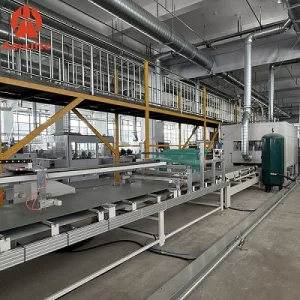
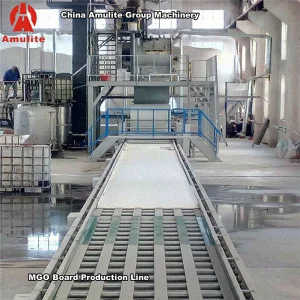
The global construction ecosystem is undergoing a structural paradigm shift from traditional wet-construction methods (such as site-cast masonry and brickwork) toward prefabricated, lightweight energy-efficient modular building components. At the center of this transformation is the EPS (Expanded Polystyrene) Cement Sandwich Wall Panel and its specialized production machinery. Engineered to integrate dual facing boards (fiber cement or calcium silicate sheets) with a lightweight core matrix of Portland cement, expanded polystyrene beads, fly ash, and chemical foaming agents, modern sandwich wall panels offer structural integrity, high thermal insulation, and exceptional acoustic damping.
As global developers strive to hit net-zero operational carbon targets and mitigate escalating labor expenditures, Chinese machinery OEMs have emerged as the leading structural partners for industrial plants worldwide. By combining advanced mechanical automation with material science research, China cement sandwich wall panel concrete machine suppliers deliver highly reliable, high-yield manufacturing plants capable of scalable annual output ranging from 200,000 to over 3,000,000 square meters per line.
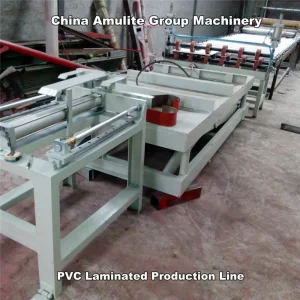
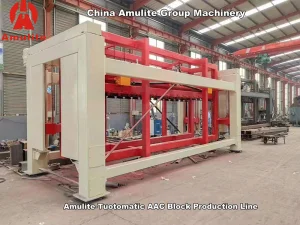
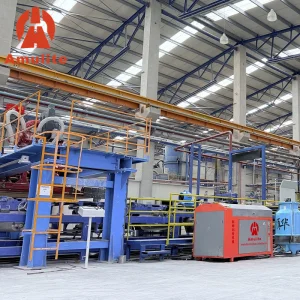
A modern automatic EPS cement sandwich wall panel line is not a single apparatus, but an integrated multi-stage process engineering system. Complete factory solutions offered by top China suppliers encapsulate several fully automated technical modules designed for seamless material flow and zero-defect quality assurance:
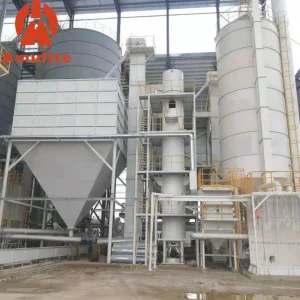
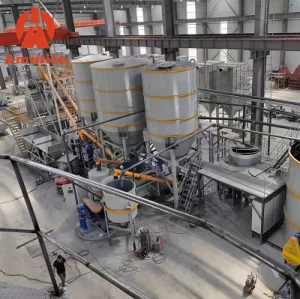
PLC-controlled gravimetric dosing silos weigh Portland cement, silica sand, and fly ash with precise tolerances (±0.5%). High-shear planetary mixers homogenize the slurry alongside expanding agents, water reducers, and chemical foam to guarantee void-free density distribution.
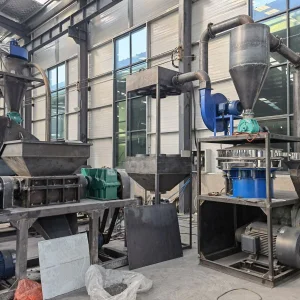
Primary fluid-bed steam expanders transform raw polystyrene resin beads into uniform, light-density core spheres (8–15 kg/m³). Secondary aging silos stabilize internal pressure to prevent core contraction during panel hydration.
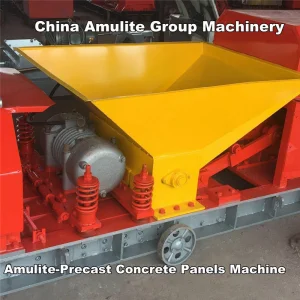
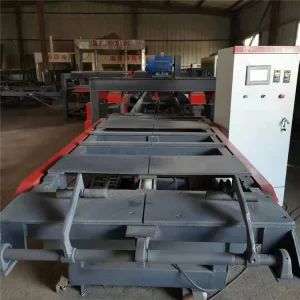
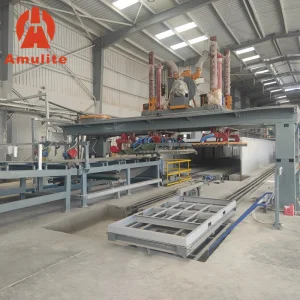
Motorized vertical mould cars feature precise hydraulic locking systems. Fiber cement skin boards are positioned on both outer walls while automated top-filling pumps inject the core slurry into up to 40 panel slots simultaneously, maximizing structural throughput.
Fast thermal setting chambers accelerate early compressive strength development (reaching 5 MPa within 8 hours). Automated vacuum manipulators demould the cured panels, feeding them directly into 4-side trimming and palletizing lines.
The dominance of Chinese engineering companies in the precast concrete machinery market stems from robust industrial ecosystem clustering, relentless R&D in automated PLC controls, and direct integration with raw material science centers. Compared to traditional European machinery builders whose capital costs often prohibit quick ROI for regional manufacturers, China machinery suppliers offer scalable modular machinery with equivalent accuracy at optimized CAPEX levels.
| Performance Metric | China Advanced Automated Line | European Legacy Line | Manual / Small-Scale Setup |
|---|---|---|---|
| Annual Output Capacity | 500,000 – 3,000,000 m² | 400,000 – 1,500,000 m² | < 100,000 m² |
| Initial Machinery CAPEX | Optimized ($180k – $650k) | High ($1.2M – $4.5M) | Low ($30k – $80k) |
| Panel Core Density Control | Precision ± 1.5% (PLC Dosing) | Precision ± 1.0% | Manual ± 8.0% |
| Labor Requirement per Shift | 4 – 6 Technicians | 3 – 5 Technicians | 18 – 25 Workers |
| Compatibility with Formulations | High (Fly ash, Slag, EPS, Perlite) | Medium (Strict material specs) | Low (High risk of delamination) |
| Commissioning & Support | Global Turnkey Service + Remote Telemetry | High-cost field visits | Self-managed / None |
Sandwich concrete panels manufactured by modern automated machinery serve as structural and non-structural elements across multiple climates and urban conditions. Key localized use-cases include:
Due to low volumetric weight (typically 550–650 kg/m³, roughly 1/6th the weight of traditional brick walls), panels reduce structural dead loads, enabling structural engineers to optimize foundation steel and concrete costs in commercial skyscrapers.
Interlocking tongue-and-groove joint profiles, reinforced with anti-crack polymer mortar and steel pins, provide superior ductile shear resistance. Tested to withstand seismic accelerations up to Grade 9 without structural panel collapse.
With an integrated EPS foam matrix, panels prevent thermal bridging. Combined with fireproof A-class fiber cement facings, they deliver 4-hour fire ratings (GB/T 9978 / EN 1363-1 compliant) ideal for industrial warehouses.
As international building codes mandate strict embodied carbon metrics, leading Chinese equipment manufacturers are pioneering several critical advancements in wall panel machinery design:
1. Low-Carbon Geopolymer Slurry Processing: Next-generation batching plants are optimized to mix zero-clinker alkali-activated geopolymers using blast furnace slag, pozzolans, and industrial waste byproducts, reducing embodied carbon by up to 70% compared to OPC formulations.
2. AI-Assisted Viscosity & Rheology Sensing: Real-time microwave inline sensors monitor slurry moisture levels and viscosity directly within the high-shear mixer, automatically adjusting water-to-cement ratios to eliminate air pockets before injection into mould cars.
3. Integrated Robotics for Facade Profiling: Robotic end-effectors are being integrated into demoulding lines to automatically router electrical conduit channels, structural anchor slots, and decorative exterior brick textures directly onto panel surfaces.
Evaluating potential machinery partners in China requires a systematic due diligence process based on empirical metrics rather than promotional claims. Global project owners should verify the following five critical engineering benchmarks before contract execution:
Inspect the planarity and thickness tolerance of vertical mould partitions. Premium suppliers utilize large-scale gantry CNC milling machines to keep core panel thickness variance within ± 0.5 mm across a 3-meter length.
Ensure the electrical automation panel uses globally serviceable PLC architectures (e.g., Siemens, Schneider, Omron) and high-duty hydraulic systems (Yuken/Rexroth) to guarantee spare-part availability over a 15-year lifecycle.
A trustworthy OEM must conduct pre-contract lab verification testing using your local cement, aggregate, silica sand, and fly ash samples to establish ideal water-binder ratios and curing curves.