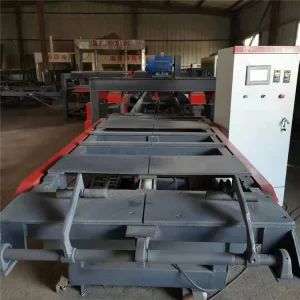
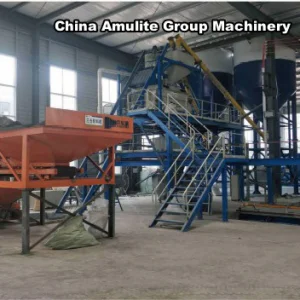
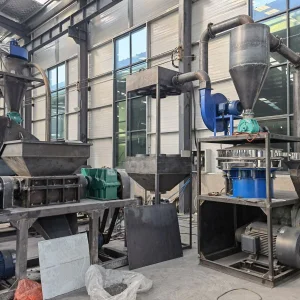
Explore our industrial-grade processing lines and machinery engineered for heavy-duty manufacturing and high operational efficiency.
Strategic insights into global construction trends, thermal insulation mandates, and polymer extrusion advancements.
The global construction sector is undergoing a massive paradigm shift toward lightweight, moisture-resistant, flame-retardant, and low-maintenance interior architectural components. Central to this transformation is the market demand for PVC ceiling profiles, wall panels, and hollow soffit boards. When procurement directors and factory investors seek to buy PVC ceiling profile production lines, they are not merely investing in hardware; they are securing a strategic advantage in cost-per-meter output, material rheology control, and operational sustainability.
Polyvinyl Chloride (PVC) ceiling profiles have rapidly superseded traditional gypsum boards, wooden paneling, and heavy fiber-cement panels across commercial, industrial, and residential sectors. Key attributes driving this global transition include exceptional dimensional stability, zero water absorption (unlike porous gypsum), superior resistance to termite degradation, and superior fire-retardant parameters compliant with international safety standards.
A critical technical advantage provided by modern turnkey extrusion plants is the precise regulation of PVC formulation rheology. Conventional profile lines often suffer from thermal degradation, uneven wall thickness, brittle structural ribs, or surface distortion caused by unbalanced plasticization. Advanced extrusion lines integrate dual conical twin-screw configurations engineered specifically for high calcium carbonate ($\text{CaCO}_3$) loading combined with precise chemical blowing agent (CBA) activation.
By optimizing the shear rate and screw speed ratio ($N_{screw}$ vs $Q_{throughput}$), our factory solutions guarantee an ultra-fine closed-cell micro-foam core sandwiched between rigid PVC skins. This achieves a density optimization between 0.65 g/cm³ and 0.85 g/cm³, delivering up to a 28% reduction in raw material consumption per square meter without compromising flexural modulus or impact resistance.
A granular breakdown of the six core engineering modules comprising an industrial turnkey PVC ceiling extrusion line.
Combines PVC resin, Ca/Zn eco-stabilizers, acrylic impact modifiers (AIM), and calcium carbonate in a hot-mixer (115°C) and cold-mixer (45°C) sequence to eliminate static agglomeration and ensure homogeneous dry-blend feed.
Equipped with SJSZ-51/105, SJSZ-65/132, or SJSZ-80/156 conical screws featuring bi-metallic alloy treatments. Delivers low shear stress, uniform plasticization, and oil-cooled internal screw core temperature regulation.
Utilizes multi-stage stainless steel vacuum calibration dies (3Cr17 steel) with high-efficiency vacuum pumps and water circulation to set profile geometry, lock wall tolerances, and freeze internal ribs rapidly.
Dual-caterpillar haul-off driven by Siemens AC servo motors with synchronized vector control. Features wear-resistant rubber blocks engineered to prevent profile crushing or surface slippage.
Dust-free cutter (or saw-blade cutter with vacuum dust collector) linked with encoder signal tracking to achieve cut-length accuracy within $\pm 1.0\text{ mm}$ at continuous speeds up to 8 m/min.
In-line or off-line surface treatment units including Hot Stamping, Thermal Transfer Printing, UV High-Gloss Coating, and Online Laminating for wood grain, marble, and metallic surface finishes.
| Line Model Parameters | SJSZ-51/105 Line | SJSZ-65/132 Line | SJSZ-80/156 Line |
|---|---|---|---|
| Target Profile Width Range | 100 mm – 200 mm | 200 mm – 300 mm | 300 mm – 600 mm |
| Screw Speed (RPM) | 1.0 – 38.7 RPM | 1.0 – 34.7 RPM | 1.0 – 32.0 RPM |
| Main Extruder Drive Motor | 18.5 kW (Siemens/ABB) | 37.0 kW (Siemens/ABB) | 75.0 kW (Siemens/ABB) |
| Max Extrusion Output Capacity | 120 – 160 kg/h | 220 – 280 kg/h | 400 – 480 kg/h |
| Vacuum Tank Power & Length | 4.0 kW / 4.0 Meters | 5.5 kW / 6.0 Meters | 11.0 kW / 6.0 Meters |
| Haul-Off Speed Range | 0.5 – 10.0 m/min | 0.5 – 8.0 m/min | 0.3 – 6.0 m/min |
| PLC Controller Architecture | Siemens S7-1200 / HMI Touch | Siemens S7-1500 / HMI Touch | Industrial PC + SCADA IoT |
Strategic ROI evaluations for industrial buyers, real estate developers, and manufacturing entrepreneurs.
Investing in a modern PVC ceiling profile production line factory setup requires evaluating both direct Capital Expenditure (CAPEX) and ongoing Operational Expenditure (OPEX). Geographically, the market exhibits unique regional dynamics:
To assist plant managers in financial feasibility studies, the operational breakdown below details cost allocations based on continuous 24/7 manufacturing cycles:
| Cost Vector Category | Percentage Allocation | Primary Drivers & Optimization Factors |
|---|---|---|
| Raw Material (PVC resin, Filler, Additives) | 68% – 74% | Optimized via high-ratio $\text{CaCO}_3$ blending and internal micro-foaming density reduction. |
| Electricity & Power Consumption | 10% – 14% | Mitigated using infrared ceramic heating bands and variable frequency drives (VFD). |
| Direct Operations & Labor | 5% – 8% | Minimized via automated pneumatic stacking, central vacuum drying, and inline cutting. |
| Tooling Maintenance & Wear Parts | 3% – 5% | Extended life achieved through chrome-plated dies and nitrided bi-metallic screws. |
Ensuring seamless international deployment, strict compliance standards, and round-the-clock technical service.
Our complete extrusion lines are built under strict ISO 9001:2015 quality management systems and feature full CE certification, UL-listed electrical panels, and compliance with EU RoHS standards.
Senior field engineers are deployed globally to manage foundation verification, electrical wiring, mechanical assembly, raw material formulation tuning, and local workforce training.
Integrated VPN routers allow our master engineers in China to perform real-time PLC software updates, remote fault diagnostics, and extrusion curve optimization over secure cloud networks.
Unlocking diverse market segments through customizable surface finishes and profile geometries.
The output of a high-performance PVC profile production line spans multiple architectural sectors due to the versatility of downstream surface decorating machinery:
Bathrooms, Kitchens & Cleanrooms: PVC ceiling profiles are non-porous, waterproof, and completely resistant to fungal spores, mold, and chemical cleaning agents. Ideal for healthcare facilities and hospitality sectors.
Living Areas & Bedrooms: Seamless tongue-and-groove profiles finished with thermal transfer printing replicate natural timber grain, high-gloss marble patterns, or modern matte finishes with zero paint maintenance.
Roof Overhangs & Exterior Cladding: Heavy-wall PVC soffit profiles blended with ASA co-extrusion capping layers resist direct solar UV radiation, preventing yellowing and brittle cracking over decades of exposure.
Pioneering eco-friendly extrusion processes, intelligent closed-loop automation, and circular economy integration.
As environmental regulations tighten worldwide, the polymer machinery industry is accelerating the adoption of green manufacturing technologies. Our technical roadmap focuses on three core pillars:
In-depth responses to common technical questions raised by plant engineers and prospective line buyers.
For formulations containing 80–150 phr (parts per hundred resin) of calcium carbonate ($\text{CaCO}_3$), a conical twin-screw extruder (such as SJSZ-65/132) is superior to single-screw or parallel twin-screw extruders. Conical screws provide a wide feeding section for bulky low-density powder blends, followed by rapid compression and low-shear plasticization, preventing screw barrel abrasive wear while ensuring thorough melt homogenization.
Profile warping is caused by uneven cooling rates across the profile cross-section or mismatched haul-off tension. Solutions include fine-tuning the individual vacuum zone pressures in the calibration table, adjusting internal water cooling flow to the thicker wall segments/ribs, ensuring exact co-axial alignment between the die exit, vacuum calibrator, and haul-off tracks, and balancing the temperature zones on the extrusion die body.
Hot Stamping: Uses heat and silicone rollers to transfer foil designs directly onto the profile; fast and economical for standard indoor gloss designs. Lamination: Uses PUR hot-melt adhesives to apply a durable PVC/PET film over the profile; offers superior scratch resistance and 3D textured wood patterns. UV Printing: Directly prints ink patterns followed by an inline UV-cured topcoat; ideal for ultra-high gloss marble patterns.
A standard single SJSZ-65/132 profile line requires an installed electrical capacity of approximately 80–110 kW (actual consumption ~60-75 kW due to VFD efficiency). The recommended factory floor footprint for one line—including raw material storage, mixing tower, extrusion line, and finished profile storage—is at least 35 meters in length by 6 meters in width, with a minimum ceiling height of 4.5 meters.
We adhere strictly to Google E-E-A-T guidelines by providing full technical documentation, verified factory test-runs prior to shipping, localized engineer dispatch, and comprehensive formulation support. Buyers receive lifetime access to our engineering team for spare parts, profile mold redesigns, and continuous process troubleshooting.
Explore our broader building material manufacturing equipment range designed for full plant automation.