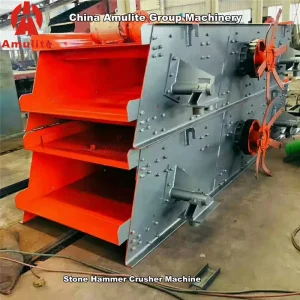
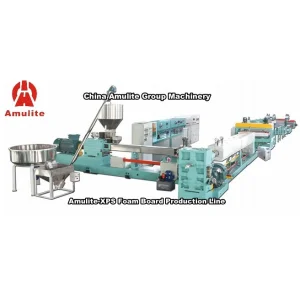
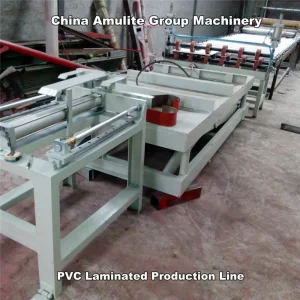
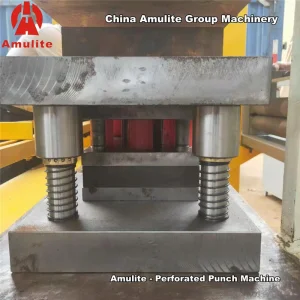
Explore our flagship heavy manufacturing lines engineered for high-performance structural materials, thermal insulation, and automated recycling.
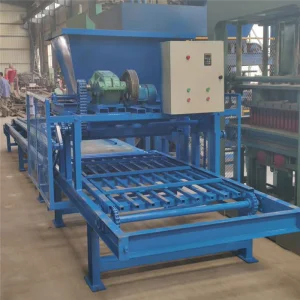
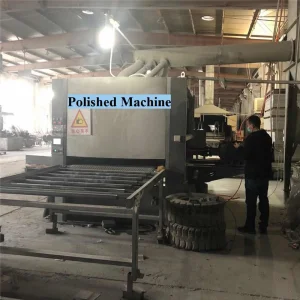
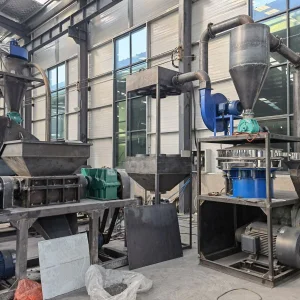
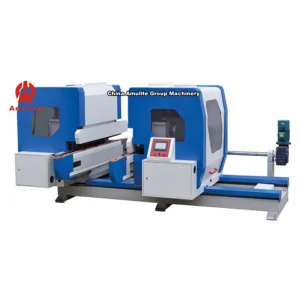
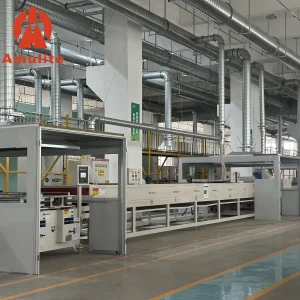
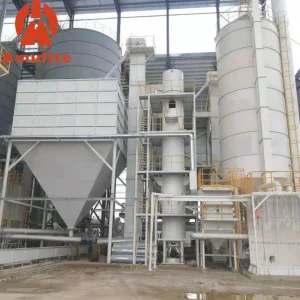
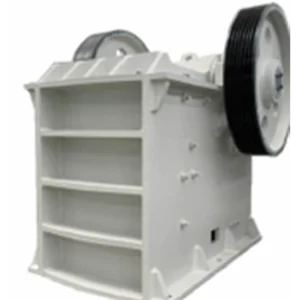
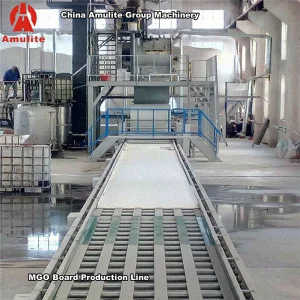
The global modern architecture sector is undergoing a profound paradigm shift. As regulatory frameworks across North America, Europe, Asia-Pacific, and Latin America stringently mandate zero-asbestos building materials, demand for high-capacity, automated Non-Asbestos Fiber Cement Board (FCB) Manufacturing Machines has experienced exponential growth.
Global ESG benchmarks, coupled with WHO and OSHA regulations, have driven the complete phase-out of chrysotile asbestos. Modern manufacturing plants utilize refined bleached kraft pulp, synthetic PVA/PP fibers, and reactive silica to deliver non-hazardous, 100% eco-friendly structural boards.
Rapid industrialization and the boom in modular, off-site dry-wall construction require building panels that exhibit high flexural strength, Class A1 fire rating, dimensional stability, and resistance to termites, moisture, and chemical decay.
Leading global machinery suppliers offer modular, fully automatic production lines spanning annual output capacities from 2 million m² to over 10 million m², integrating real-time SCADA tracking, adaptive slurry dosing, and high-pressure steam autoclaving.
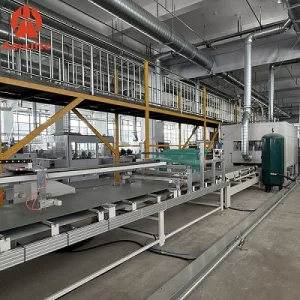
Precision engineering forms the backbone of non-asbestos fiber cement board machinery. Manufacturing involves complex hydro-mechanical slurry forming, controlled dewatering, high-tonnage hydraulic compression, and hydrothermal autoclave synthesis.
Pulp sheets are deflaked and wet-milled in high-consistency hydrapulpers until a precise Canadian Standard Freeness (CSF) is attained. Silica sand is wet-ground in ball mills to a fineness exceeding 325 mesh (passing >90%). Portland cement, fly ash, silica flour, and synthetic reinforcing matrix are automatically weighed via loss-in-weight gravimetric feeders.
The homogeneous dilute slurry is fed into multi-vat Hatschek forming machines. Rotating wire mesh cylinders pick up micron-thin film layers (0.2–0.3 mm each). The continuous film is transferred onto a felt belt, subjected to high-vacuum dewatering boxes, and wrapped around a forming drum (making cylinder) until the target green sheet thickness (e.g., 6mm, 9mm, 12mm) is reached.
Green boards are trimmed via high-pressure waterjets, stacked with steel templates, and routed to an automatic hydraulic press (7,000 to 14,000 Tons). Compression increases density to 1.4–1.75 g/cm³ and boosts mechanical flexural strength. Subsequently, boards enter steam autoclaves (180°C at 1.0–1.2 MPa steam pressure for 10–12 hours) triggering hydrothermal synthesis to produce crystalline Tobermorite phase calcium silicate matrix.
| Performance Parameter | Autoclaved Fiber Cement Board (High Density) | Air-Cured Calcium Silicate Board | Standard EPS / Light Concrete Panel |
|---|---|---|---|
| Bending Strength (Flexural) | ≥ 16 - 28 MPa | ≥ 10 - 14 MPa | ≥ 8.5 MPa |
| Material Density (g/cm³) | 1.30 – 1.75 g/cm³ | 0.95 – 1.25 g/cm³ | 0.60 – 0.85 g/cm³ |
| Thermal Conductivity | ≤ 0.24 W/(m·K) | ≤ 0.18 W/(m·K) | ≤ 0.12 W/(m·K) |
| Water Absorption Rate | ≤ 25% | ≤ 35% | ≤ 15% |
| Incombustibility Standard | Class A1 (BS 476 Part 4 / EN 13501) | Class A1 (EN 13501) | Class B1 / A2 depending on core |
Investing in a non-asbestos fiber cement board factory requires an integrated operational framework. From greenfield site planning to full-capacity commissioning, our turnkey engineering solutions mitigate technical risks and minimize operational expenditure (OPEX).
Analyzing local cement, silica flour, and cellulose pulps to formulate precise batch recipes ensuring maximum tensile matrix cross-linking.
Deploying heavy-duty CNC-machined vats, dynamic balancing forming rollers, laser-guided sheet cutters, and automated vacuum destackers.
Centralized control rooms powered by Siemens S7-1500 PLCs and Industrial IoT sensors for real-time monitoring of slurry density, thickness tolerances, steam pressure, and energy usage.
Integrating high-speed calibration sanding machines, automated edge chamfering/profiling units, and UV-curable fluorocarbon decorative painting lines.
Boards produced by state-of-the-art non-asbestos machinery serve diverse structural and decorative roles in modern civil, commercial, and industrial construction projects.
High-density (≥1.5 g/cm³) autoclaved boards treated with hydrophobic coatings serve as rainscreen cladding systems. They withstand extreme freeze-thaw cycles, high wind-loads, and harsh UV exposure in tropical and alpine microclimates.
Medium-density boards are widely specified as water-resistant backing underlayments for kitchens, bathrooms, and sub-flooring, providing structural rigidity without swelling or delaminating under continuous moisture exposure.
Autoclaved calcium silicate boards (calcium silicate mineral framework) provide up to 4-hour fire endurance ratings in commercial skyscrapers, data centers, and industrial tunnel linings, preventing flame propagation without emitting toxic fumes.
Detailed technical insights for industrial procurement directors, structural engineers, and plant managers evaluating non-asbestos fiber cement machinery options.
Discover integrated machinery modules for post-processing, board coating, foam insulation, and structural panel fabrication.