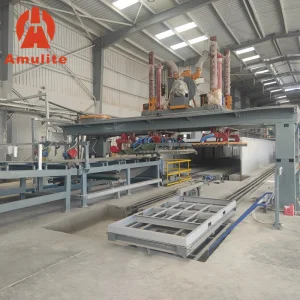
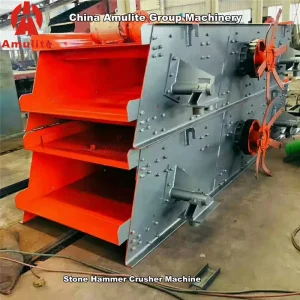
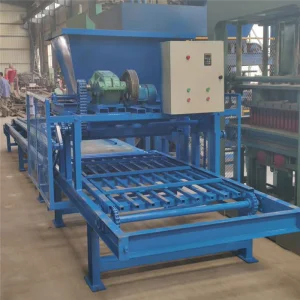
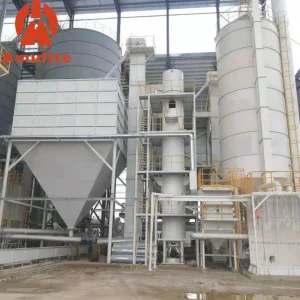
Explore high-capacity turnkey machinery engineered for concrete structural components, composite wall panels, and green building substrates.
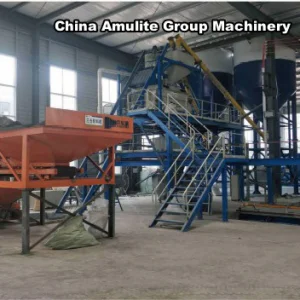
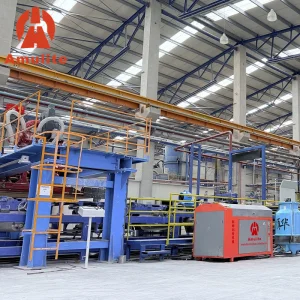
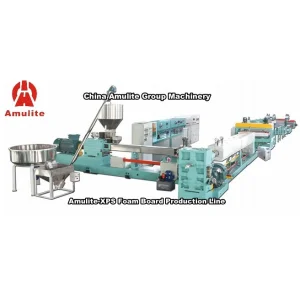
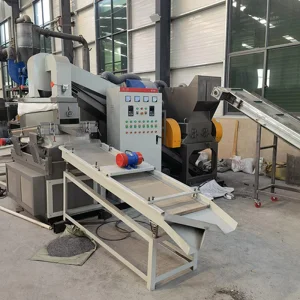
Analyzing procurement metrics, market adoption, and industrial efficiency standards across global commercial and residential sectors.
The global demand for hollow core wall panel equipment is accelerating rapidly, driven by the urbanization of emerging markets and stringent decarbonization mandates in developed nations. Modern precast hollow core panels offer structural weight reduction of up to 40% compared to solid masonry, without sacrificing flexural strength or structural integrity.
Procurement teams face significant challenges evaluating machine tolerances, screw extruder wear cycles, and automated batching integration. Choosing the right machinery factory requires deep technical vetting of drive train engineering, high-frequency vibration mold systems, and raw material versatility (e.g., fly ash, expanded perlite, OPC concrete, and EPS aggregates).
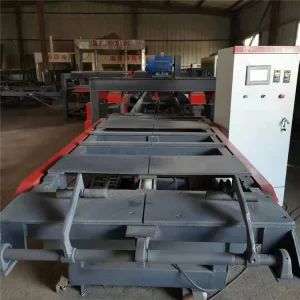
Engineered to rigorous international standards (CE, ISO9001), modern Chinese wall panel equipment manufacturers deliver comprehensive turnkey solutions—from civil foundation blueprints and custom core mold geometry to on-site commissioning and automated PLC SCADA control systems.
A rigorous engineering breakdown of core panel production methodologies to assist enterprise buyers in line sizing and raw material selection.
| Engineering Vector | High-Speed Extrusion Line (Slip-Forming) | Hydraulic Vertical Battery Mold Line | Continuous Lightweight EPS/Cement Line |
|---|---|---|---|
| Primary Output Capacity | High Volume (1.2m/min to 2.0m/min continuous) | Medium Volume (800–1,500 m²/day batch) | High Volume (2,000–5,000 m²/day continuous) |
| Panel Geometry & Cores | Tubular/Circular Voids (30% to 50% void ratio) | Solid or Custom Inserts (Tongue & Groove) | Composite Core with Fiber Cement Facings |
| Core Material Aggregates | Dry-hard Concrete, Fine Sand, Fly Ash, OPC | Slurry Concrete, Lightweight Clay, Slag | Portland Cement, EPS Beads, Sand, Foaming Agent |
| Flexural & Tension Support | Pre-stressed Steel Wires (2mm - 5mm) | Pre-hung Rebar Cages or Mesh | Dual Outer Fiber Cement/Calcium Silicate Sheets |
| Curing & Cycle Time | 8–12 hours (Accelerated Steam or Radiant Heat) | 6–10 hours (Hydraulic Heat Jacket Curing) | 4–8 hours (Tunnel Dryer Curing) |
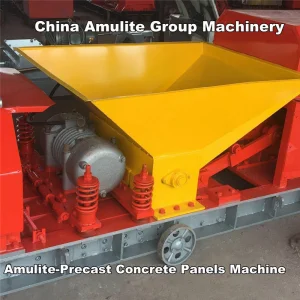
The core technology behind modern hollow core equipment relies on high-torque auger screws. Premium Chinese manufacturers utilize re-melted tungsten carbide alloy coating on screw flights to extend operational lifespan past 50,000 meters of continuous extrusion. The vibration box operates at frequency ranges between 3,000 to 4,500 RPM, consolidating dense zero-slump concrete around precise core tubes.
Industrial scale wall panel plants require micro-dosing precision for water-cement ratios (w/c < 0.32). Modern OEM factories integrate Siemens S7-1500 PLCs with load-cell belt feeders, adjusting aggregate moisture on-the-fly via microwave moisture sensors to ensure perfect void retention and dimensional tolerance (±1mm).
Why Tier-1 global EPC contractors and building material conglomerates partner with Chinese equipment manufacturers for capital expenditure optimization.
China's heavy machinery manufacturing hubs (such as Hebei, Shandong, and Henan) host fully integrated supply chains. Raw steel plate cutting, high-precision CNC machining, heat treatment furnaces, and motor manufacturing occur within a 50km radius, reducing production lead times from 6 months down to 45–60 days.
Procuring a complete automated hollow core wall panel extrusion line from leading Chinese factories typical delivers a 40% to 60% reduction in capital expenditure compared to European equivalents. This allows precast plants to achieve full ROI within 14 to 18 months of operation.
Chinese engineering teams excel at modular adaptation. Whether your target application requires lightweight aggregate cores (perlite/EPS) for interior acoustic partition walls or high-density OPC for load-bearing exterior boundaries, equipment molds can be customized for panel widths of 600mm to 1200mm and thicknesses from 60mm to 200mm.
Leading exporters maintain resident field teams across Asia, the Middle East, Africa, and Latin America. Scope of delivery includes foundation civil layout, electrical drop connections, mechanical erection supervision, trial mix batching, and operator safety certification.
Understanding how hollow core precast elements perform across varied climatic zones, seismic requirements, and architectural designs.
In dense urban centers across Southeast Asia and the Middle East, high-rise interior partition walls utilize 75mm and 100mm lightweight hollow core concrete panels. The internal air channels serve as conduits for electrical wiring and plumbing chases, eliminating manual wall-chasing labor on site and increasing floor area yield by 3% to 5%.
Large-span logistics parks in Western Europe and North America demand 150mm to 200mm pre-stressed hollow core wall panels for exterior perimeter walls. These panels provide exceptional impact resistance, thermal mass, and a 4-hour fire rating (EN 1363-1 compliant), drastically reducing industrial insurance premiums.
Government-backed social housing developments in Africa and South America utilize continuous extruders running low-cost fly ash concrete formulations. Interlocking tongue-and-groove side profiles enable rapid assembly without heavy crane infrastructure, reducing unit construction timelines by over 60%.
How modern machinery manufacturers are responding to carbon compliance, circular economy materials, and predictive maintenance automation.
Next-generation hollow core wall panel lines are equipped with laser profilometers and ultrasonic density sensors immediately downstream from the extruder outlet. Machine learning algorithms continuously analyze surface flatness, core wall thickness consistency, and internal air void structure, auto-adjusting vibration frequencies in real-time to prevent structural micro-fractures prior to initial set.
With environmental regulations placing tight caps on Portland cement usage, leading machinery makers design extruders capable of handling up to 70% industrial byproduct substitution. Formulations integrating blast furnace slag (GGBS), calcined clay, recycled concrete aggregates, and expanded perlite reduce net embodied carbon to meet LEED and BREEAM certification standards.
Follow this multi-stage engineering audit checklist before issuing purchase orders or signing turnkey contracts.
Verify that screw flights feature plasma-arc re-welded tungsten carbide coatings. Inspect side mold liner plates for AR400/AR500 wear resistance ratings to avoid premature abrasion under aggressive aggregate friction.
Mandate dry-run and wet-run extrusion trials at the manufacturer’s facility using raw material batches identical to your local quarry samples. Monitor motor thermal rise, hydraulic pressure stability, and vibration motor synchronization.
Ensure all control panels feature dual-channel safety relays, CE-certified breakers (Siemens/Schneider/ABB), and IP65-rated enclosures to withstand harsh concrete plant dust and humidity conditions.
Direct answers from our senior precast process engineers regarding wall panel machine operations, capacities, and plant logistics.
Explore related heavy industrial machinery, recycling systems, and processing equipment manufactured to global EPC standards.