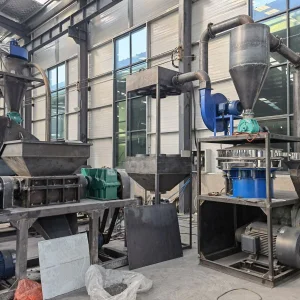
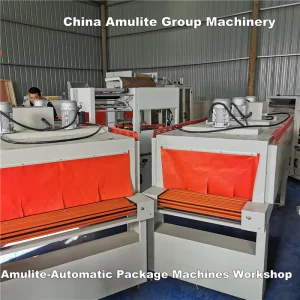
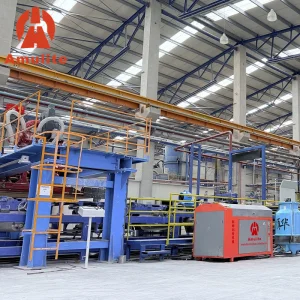
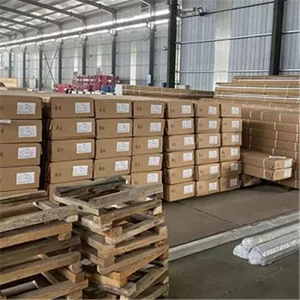
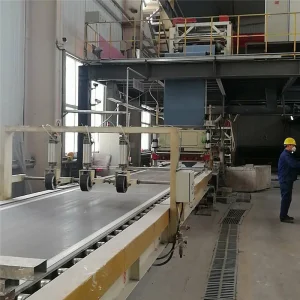
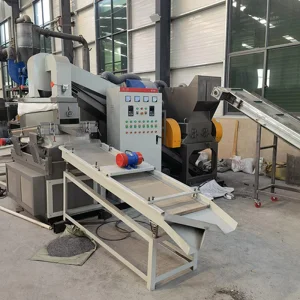
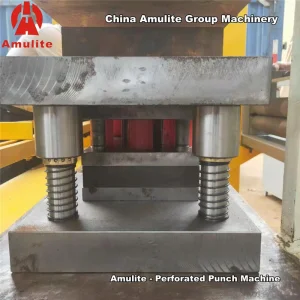
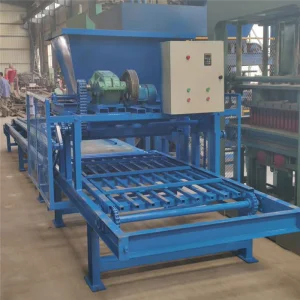
Select from our precision-engineered non-metallic building material production infrastructure, optimized for energy efficiency, recipe precision, and high throughput.
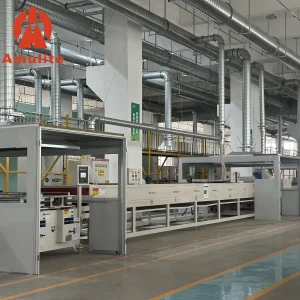
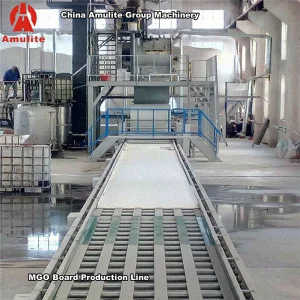
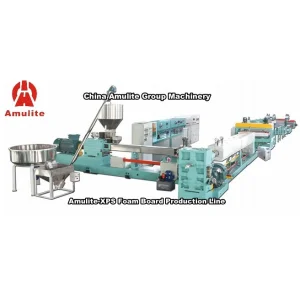
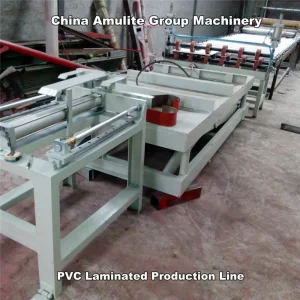
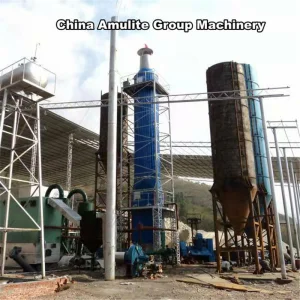
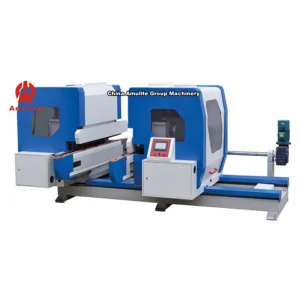
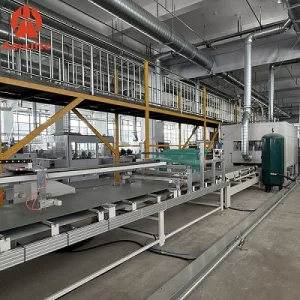
In modern non-metallic building material manufacturing, choosing between the Hatschek Process and the Flow-On Process represents a foundational decision impacting Capital Expenditure (CAPEX), Operational Expenditure (OPEX), product density profiles, and structural performance.
Originally derived from paper-making technology by Ludwig Hatschek in 1898 and evolved over a century of chemical engineering, the modern Hatschek process relies on thin-film multi-layer accumulation. A dilute aqueous slurry containing Portland cement, silica sand, organic/inorganic reinforcing fibers (such as cellulose pulp and PVA/PVP synthetic fibers), and micro-additives is held in multiple rotating sieve vats (typically 3 to 5 vats).
As the cylindrical wire mesh vats rotate inside the slurry vat, a micro-thin layer of solids (approximately 0.2mm to 0.3mm thick) is filtered onto the cylinder mesh via differential pressure and transferred onto a continuous running felt. The felt transports this film over vacuum dewatering boxes, extracting excess moisture before winding the film onto a solid forming bowl cylinder (making drum). Once the desired board thickness (e.g., 6mm, 9mm, 12mm, 18mm) is laminated under pneumatic nip-roller pressure, a high-speed mechanical cutter severs the film, laying the green sheet onto a receiving table.
Core Advantage: Excellent multi-directional fiber orientation, resulting in superior flexural strength ($E_{modulus}$), exceptional inter-laminar shear resistance, and thin-sheet structural stability ideal for external siding and high-impact cladding.
The Flow-On process was engineered to overcome output constraints when producing medium-to-thick fiber cement and calcium silicate sheets. Rather than relying on rotating wire vats submerged in dilute slurry tanks, the Flow-On system pumps a higher-density slurry directly through a precision-calibrated headbox slot distributor directly onto a moving porous rubber/felt conveyor belt.
The slurry spread across the felt immediately passes over a continuous sequence of high-capacity vacuum dewatering chambers. High-vacuum pumps pull water aggressively from underneath while top press rollers continuously consolidate the matrix. The continuous slab is then cut into discrete board lengths by a flying shear or waterjet cutter prior to pressing and autoclaving.
Core Advantage: Significantly higher volumetric output per hour, reduced mechanical wear on rotating mesh drums, lower raw material dilution requirements, and lower capital investment for dedicated thick-board (12mm to 30mm) production operations.
| Engineering Parameter | Hatschek Multi-Vat Process | Flow-On Slurry Headbox Process |
|---|---|---|
| Slurry Consistency (Solids %) | Dilute (7% – 12% solids ratio) | Concentrated (20% – 35% solids ratio) |
| Layer Formation Method | Multi-layer film lamination (0.2–0.3mm per layer) | Single-pass continuous direct headbox deposition |
| Fiber Orientation | Biaxial / Interwoven multi-layer alignment | Unidirectional / Flow-aligned matrix |
| Bending Strength (MOR) | Higher flexural strength at thin gauges (>18-24 MPa) | Moderate to high flexural strength (>14-18 MPa) |
| Optimal Sheet Thickness Range | 4 mm to 16 mm (Versatile fine cladding) | 8 mm to 30+ mm (Heavy structural & sub-floor) |
| Energy Consumption / Dewatering | High water circulation volume; moderate vacuum load | Lower water pumping volume; intense vacuum load |
| Maintenance Profile | Requires regular sieve mesh & felt cleaning | Fewer rotating drum parts; focused on headbox lip & felt |
The international market for fiber cement board and calcium silicate matrix machinery is undergoing an accelerated structural transition driven by global urbanization, stringent environmental mandates, and the phase-out of asbestos-based materials in developing economies.
Governments across North America, Europe, and Asia-Pacific are enforcing zero-voc, non-combustible building envelopes. Autoclaved Calcium Silicate and Fiber Cement boards produced via Hatschek and Flow-On lines comply with ISO 1182 non-combustibility standards, positioning them as primary substitutes for gypsum board in exterior weatherboards and wet-area partitions.
Off-site construction and modular steel-frame housing demand dimensionally stable, light-gauge panels with extreme durability. Standardized 4x8 ft and 4x10 ft fiber cement panels, engineered through automated Hatschek lines with downstream edge-profiling and UV coating, serve as the structural substrate for prefabricated facades.
Emerging markets in Asia, Africa, and South America are modernizing legacy cement corrugated sheet factories into asbestos-free, high-density cellulose-reinforced fiber cement production plants. This shift creates a massive commercial demand for complete line conversions and turnkey plant installations.
Building material machinery cannot operate under a one-size-fits-all paradigm. Operating environments, local raw material mineralogy, and regional climate stresses dictate specific line configurations.
Climatic Challenge: Sustained relative humidity >85%, intense UV radiation, exposure to fungal growth, and torrential rainfall cycles.
Machinery & Process Solution: Hatschek lines are retrofitted with secondary hydraulic post-press machines operating at 2,000–3,000 metric tons of total force. Post-pressing increases board density from 1.2 g/cm³ to over 1.65 g/cm³, drastically reducing water absorption (water absorption <20%). Integrated in-line hydrophobic chemical dosing systems and UV sealers guarantee anti-efflorescence and rot-proof performance under tropical weathering.
Climatic Challenge: Repeated freeze-thaw cycles inducing internal pore pressure, delamination, and micro-cracking.
Machinery & Process Solution: High-pressure steam Autoclave curing systems operating at 1.0–1.2 MPa (180°C to 190°C) for 10 to 12 hours are mandated. Autoclaving converts raw silica sand and cement binder into stable crystalline Tobermorite ($C_5S_6H_5$). Flow-On and Hatschek lines bound for cold regions incorporate air-entraining agent dosing equipment to engineer stable micro-pore structures that relieve ice expansion pressure.
Climatic Challenge: High shear forces, dynamic vibration, and hurricane wind-load deflections.
Machinery & Process Solution: Hybrid fiber slurry recipes featuring imported long-fiber unbleached kraft pulp combined with synthetic PVA (Polyvinyl Alcohol) fibers. Multi-vat Hatschek systems provide alternating fiber orientation across successive laminations, enhancing the Modulus of Rupture (MOR >20 MPa) and impact resistance required by regional building codes.
Commercial Demand: Lightweight low-density calcium silicate panels with high acoustic insulation and 2-to-4-hour fire ratings.
Machinery & Process Solution: Specialized low-density Flow-On lines utilizing expandable perlite, fly ash, and micro-silica formulations. Downstream machinery integrates automatic calibration sanding machines, edge profiling groovers (Tongue & Groove joints), and dust-free automated stackers.
The non-metallic building material machinery sector is undergoing a massive digital and ecological transformation. Our technical roadmap focuses on three key pillars:
Integration of inline ultrasonic slurry viscosity sensors, laser displacement thickness scanners, and AI closed-loop feedback systems. Real-time machine learning algorithms automatically adjust headbox pressure, vat slurry feed rates, and forming bowl Nip-roller pneumatic pressure to maintain thickness tolerances within ±0.1mm at speeds exceeding 120 meters/minute.
Engineering slurry preparation systems to handle ultra-low carbon binders, alkali-activated slag, calcined clay, and industrial waste byproducts (GGBS, bottom ash). Future-proof Hatschek and Flow-On lines dramatically reduce reliance on traditional high-emission Ordinary Portland Cement (OPC).
Full integration of robotic arm de-stackers, automated guided vehicles (AGVs) for autoclave loading, and high-speed waste recycling units. Uncured green trim off-cuts are continuously slurred and re-injected into the primary feed tank with zero raw material loss.
Procuring complete turnkey plant infrastructure from leading Chinese equipment manufacturers offers global buyers unparalleled CAPEX optimization, technical agility, and industrial ecosystem integration.
Our manufacturing base benefits from direct local access to heavy machining clusters, precision CNC lathe facilities, pressure vessel forging plants (for autoclaves), and specialized textile weaving hubs producing technical felt and mesh filters. Because core components—from slurry chest agitators to PLC electrical control cabinets—are engineered, machined, and pre-assembled in-house, manufacturing lead times are reduced by 40% compared to Western OEMs.
Capital expenditure savings do not require compromising on component quality. Chinese turnkey plants integrate tier-one global electrical and mechanical components: Siemens / Schneider PLC automation systems, SEW-Eurodrive gear motors, SKF/NSK heavy bearing units, and Omron sensors. Buyers achieve an exceptional Return on Investment (ROI) timeline, typically recovering capital expenditure within 18 to 30 months of commercial commissioning.
Deploying machinery globally demands absolute alignment with regional electrical codes, structural pressure vessel directives, and international product performance certifications.
Our steam autoclave systems comply with ASME Section VIII Div 1, PED 2014/68/EU (European Pressure Equipment Directive), and DOSH / MOM / SELO national safety standards. Electrical control cabinets are built to CE directives and UL 508A specifications, ensuring smooth site approval and grid connection in North America and Europe.
We design recipe formulations and mechanical pressing cycles to ensure output boards consistently exceed international standard requirements, including ASTM C1186 (Standard Specification for Flat Fiber-Cement Sheets), EN 12467 (Fiber-Cement Flat Sheets), and BS EN 13501-1 (Class A1 Fire Reaction).
Deploying a global engineering team of process chemists, mechanical specialists, and field commissioning engineers, we provide site layout design, civil engineering load drawings, installation supervision, local raw material testing (pulp, sand, cement trial mixes), and complete operator training until stable output targets are reached.
Expert answers to common engineering, procurement, and process questions regarding Hatschek and Flow-On production lines.
The decision hinges primarily on target product thickness and annual output volume. If your main product matrix focuses on thin cladding panels, exterior siding, and ceiling boards (4mm to 12mm) requiring high flexural strength, the Hatschek process is superior due to its multi-layer fiber alignment. If your primary focus is heavy partition walls, sub-flooring, or structural backer boards (12mm to 30mm) at maximum output, the Flow-On process provides superior volumetric efficiency.
The standard raw material matrix consists of Ordinary Portland Cement (OPC Type 1 / 42.5R or 52.5N), fine quartz silica sand ($SiO_2 > 90\%$, ground to 200–325 mesh), unbleached softwood kraft cellulose pulp (providing tensile reinforcement), micro-silica or fly ash, and secondary process additives (flocculants, defoamers). In air-cured non-autoclaved formulations, synthetic fibers such as PVA or Polypropylene (PP) are incorporated.
Autoclaving subjects the green sheets to high-pressure steam (1.0 to 1.2 MPa at 183°C to 190°C) inside a sealed pressure vessel for 10–12 hours. This hydrothermal environment accelerates a hydrothermal reaction between lime ($CaO$ from cement) and silica ($SiO_2$ from sand), forming crystalline Tobermorite ($C_5S_6H_5$). Tobermorite provides extreme dimensional stability, zero moisture expansion cracking, high temperature fire resistance, and freeze-thaw durability.
For a modern autoclaved Hatschek line producing 5 million m² of standard 6mm board annually, the installed electrical capacity is approximately 800 kW to 1,200 kW (actual consumption ~65% of installed rating). Thermal energy requirements for the autoclave steam boiler range between 4.0 to 6.0 metric tons of saturated steam per hour, depending on condensate heat recovery efficiency.
While high-strength unbleached kraft softwood pulp (e.g., Canadian or Chilean Pine) yields the best fiber freeness and tensile strength, our process engineers can customize slurry formulations to blend imported pulp with locally recycled paper pulp, bamboo pulp, or bagasse fiber, cutting raw material costs while maintaining standard flexural strength parameters.
Critical preventive maintenance includes continuous high-pressure water jet cleaning of the running felt, chemical washing of sieve cylinder meshes to prevent pore blinding, inspection of vacuum box sealing strips, and dynamic balancing of the main forming drum every 6 to 12 months.
Following contract finalization and civil foundation preparation (approx. 60–90 days), equipment manufacturing and dry-testing takes 90–120 days. On-site mechanical and electrical erection takes 45–60 days, followed by 30 days of trial runs, recipe calibration, and operator handover training.
Explore our complete range of specialized equipment, recycling machinery, and modern architectural panel manufacturing systems.