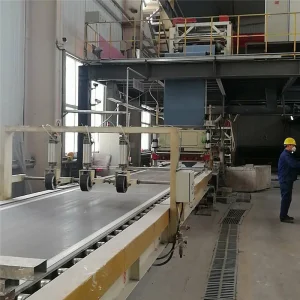
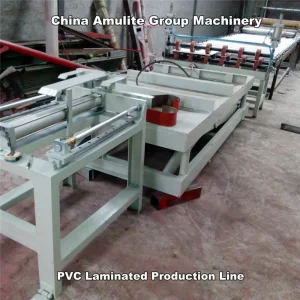
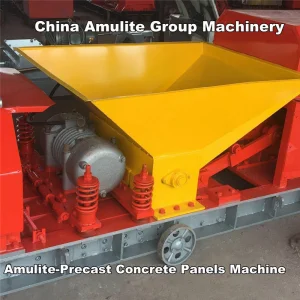
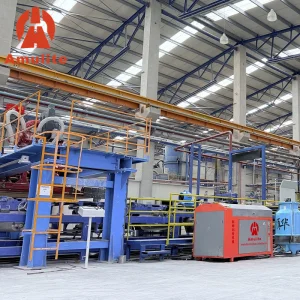
Explore our core turnkey machinery line-up engineered for ultra-low carbon footprint, heavy industrial throughput, and compliant non-asbestos building board fabrication.
The global construction ecosystem is undergoing a structural paradigm shift driven by stringent decarbonization mandates, corporate ESG targets, and rising raw material volatility. Decisions regarding how enterprises buy green building material equipment from leading factories and OEMs directly influence embodied carbon ratings, operational thermal efficiencies, and overall capital payback periods.
Modern structural wallboards, thermal insulation cores, lightweight masonry blocks, and acoustic panels require plant engineering that merges high-throughput throughput with low-embodied carbon inputs. Transitioning away from legacy intensive manufacturing lines toward energy-optimized hydrothermal synthesis (autoclaving), recycled mineral slurry loops, and closed-circuit waste heat recovery has become a competitive prerequisite for global building material producers.
Industrial buyers assessing plant vendor contracts must look beyond basic machinery unit pricing. Achieving optimal Total Cost of Ownership (TCO) necessitates analyzing mechanical wear resistance, PLC SCADA integration, hydrothermal phase optimization (such as Tobermorite needle crystal formation), and localized raw material formulation adaptability.
Institutional real estate developers, infrastructure contractors, and industrial building board manufacturers are prioritizing five critical equipment attributes when sourcing green manufacturing lines from specialized factories:
Ability to process industrial by-products including coal fly ash, FGD gypsum, granulated blast furnace slag (GGBS), and quartz tailings without degrading flexural strength or structural integrity.
Implementation of multi-vat Hatschek sheet forming machines operating at line speeds of 40–60 m/min with continuous vacuum dewatering to minimize thermal energy load in down-stream dryers.
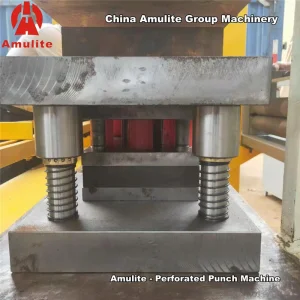
Integration of real-time optical thickness gauge feedback loops driving automated four-edge cutting, surface polishing, and high-speed acoustic perforation system units.
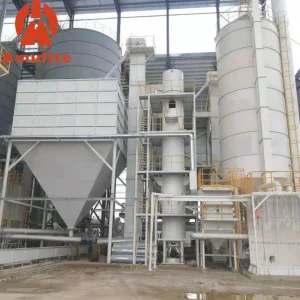
Vertical electric/gas expansion furnaces engineered with multi-stage cyclone dust collection and heat-exchanger recycling to supply ultra-lightweight insulation cores for fireproof boards.
Flexible mechanical layouts allowing progressive expansion—such as upgrading from 2 million m²/year to 10 million m²/year without requiring complete civil redesign or extended line shutdown.
Full alignment with ASME pressure vessel codes, CE Machinery Directive compliance, ISO 9001/14001 certification standards, and integrated SIL-2 emergency stop architectures.
Choosing the appropriate plant machinery configuration depends heavily on raw material availability, desired board density (g/cm³), flexural strength requirements (MPa), and localized climate conditions. The decision matrix below compares major green building material equipment lines:
| Equipment / Line Type | Primary Raw Materials | Key Mechanical Components | Energy Optimization Feature | Typical Output Range |
|---|---|---|---|---|
| Fiber Cement / Calcium Silicate Line | OPC Cement, Silica Sand/Quartz, Pulp Fiber, Fly Ash | Slurry pulper, Hatschek vats, Vacuum box, Pre-cutter, Autoclave system | Vacuum water recirculation & steam condensate heat recovery | 2,000,000 to 20,000,000 m²/year |
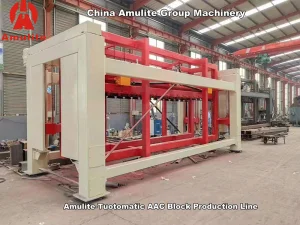
| Autoclaved Aerated Concrete (AAC) Line | Sand/Fly Ash, Quicklime, Cement, Gypsum, Aluminum Powder | Ball mill, Slurry mixer, Tilting cutting machine, 4.2m Autoclaves, Separator | Hydrothermal steam exchange cycles between autoclave batteries | 50,000 to 600,000 m³/year |
| Expanded Perlite Insulation Line | Raw Perlite Ore, Inorganic Binders, Sodium Silicate | Crusher, Pre-dryer, Vertical Expansion Furnace, Cyclone collector, Press | Counter-flow flue gas heat exchangers for pre-heating raw ore | 100,000 to 1,500,000 m³/year |
| Gypsum Board & Plasterboard Line | FGD Gypsum, Starch, Foaming Agent, Paper Liners | Mixer, Edge former, Continuous belt conveyer, Multi-deck dryer, Stacker | Multi-zone heat exchange dryer utilizing waste steam recovery | 5,000,000 to 30,000,000 m²/year |
| EPS Sandwich Cement Wall Panel Line | Cement, EPS Beads, Sand, Fiber Cement Facing Sheets | Automatic batching system, EPS expander, Vertical mold car battery | Low-pressure steam injection curing for rapid demolding cycles | 500,000 to 3,000,000 m²/year |
Building a modern, highly profitable manufacturing plant requires an end-to-end execution framework that eliminates bottlenecks before civil installation begins. Our engineering methodologies integrate smart Industry 4.0 architecture at every stage of the equipment lifecycle.
Raw material samples (local cement, quartz sand, waste cellulose fiber) undergo laboratory testing to determine precise particle size distribution (Blaine fineness) and slurry rheology. This guarantees optimal green board density and prevents delamination during vacuum dewatering.
Heavy machinery—including CNC-machined forming cylinders, dynamic balancing roll vats, hydraulic stackers, and high-pressure autoclave vessels—are manufactured in-house. Dry testing and pre-assembly occur before export logistics dispatch.
Curing conditions are engineered to achieve complete Tobermorite phase transformation ($C_5S_6H_5$). Operating saturated steam autoclaves at 1.2 MPa (190°C) for 10–12 hours guarantees zero moisture expansion and A1-grade fire non-combustibility.
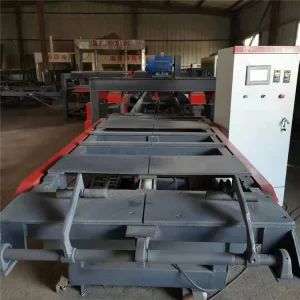
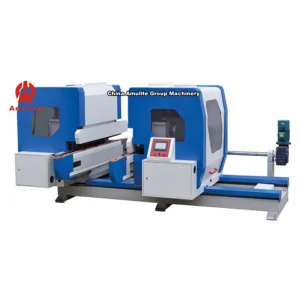
Green board stacks enter high-speed automated cutting stations (such as the OEM 1300 II Type Four Side Edge Cutting Machine) and acoustic punching units. Laser thickness calipers and optical scanners detect structural defects with millimeter precision.
Integrated Siemens/Schneider PLC control architecture provides real-time digital monitoring of power consumption, motor vibration, slurry pump flow rates, and thermal losses. Remote VPN diagnostics enable predictive maintenance and immediate operational troubleshooting.
Resident field engineers supervise civil anchoring, electrical alignment, wet trial runs, and raw material formula tuning until target daily yield and ISO performance specs are validated. Local factory teams are fully certified for autonomous operation.
Sourcing heavy machinery across international borders demands comprehensive field engineering support and unwavering compliance safeguards. Operating across 60+ countries throughout Southeast Asia, the Middle East, Africa, Central Asia, and Latin America, our technical deployment frameworks mitigate project execution risks.
Every pressure vessel, autoclaved aerated concrete cutter, pulper vat, and edge-profiling unit is engineered in strict compliance with international manufacturing frameworks:
Our dedicated team conducts comprehensive factory audits, third-party non-destructive testing (NDT) of welds, and full video walkthrough inspections prior to international shipping.
The green building machinery industry is rapidly evolving beyond baseline energy efficiency into complete closed-loop circular economy models. Next-generation production lines engineered by top manufacturers incorporate advanced mineral recycling, alternative binder activation, and secondary resource recovery pathways.
Direct injection of captured industrial flue-gas $CO_2$ into concrete board mixing cycles. Accelerated carbonation curing transforms ambient carbon dioxide into solid calcium carbonate ($CaCO_3$) crystals within the matrix, permanently sequestering carbon while improving early-stage flexural strength.
Integrating multi-material recycling systems—such as Lithium Battery Recycling Equipment and slag pulverizers—allows plants to process complex industrial side-streams into inert mineral fillers for hollow-core wall panel lines and cellular lightweight concrete.
Advanced steam pressure cascade systems route high-enthalpy blowdown steam from primary autoclaves into secondary curing chambers and pre-dryer radiant coils, reducing boiler fuel demand by up to 35% per metric ton of cured board.
In-depth technical answers addressing core procurement, engineering, operational, and financial parameters for green building material production lines.
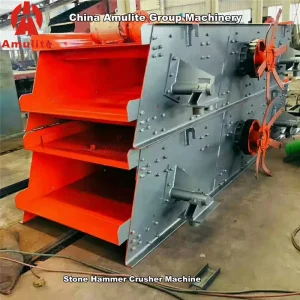
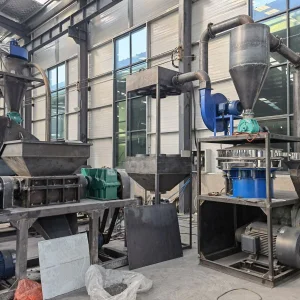
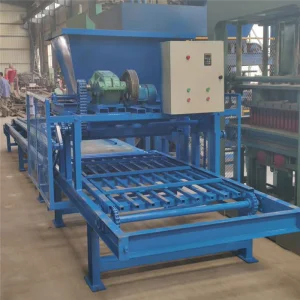
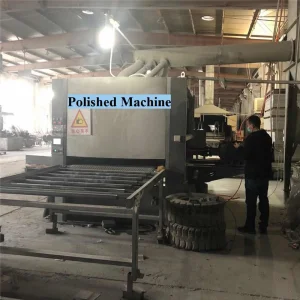
Explore auxiliary and specialized equipment essential for heavy material preparation, post-processing board finishing, and industrial byproduct recycling.