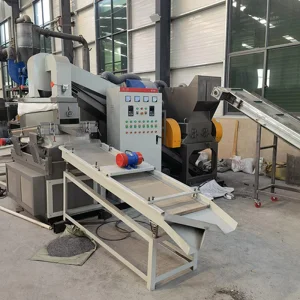
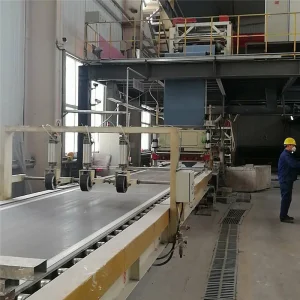
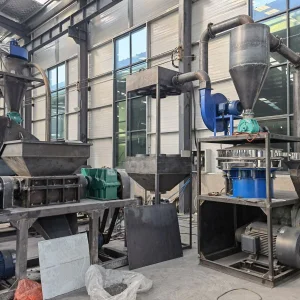
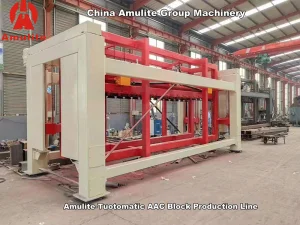
Explore our leading industrial manufacturing lines, ranging from high-speed fiber cement sheet machinery to automated recycling and mineral processing systems.
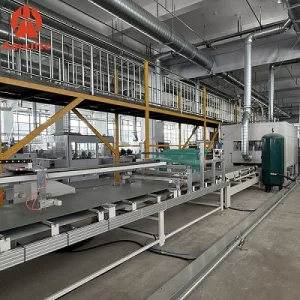
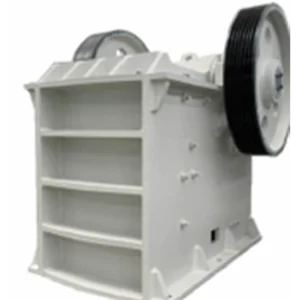
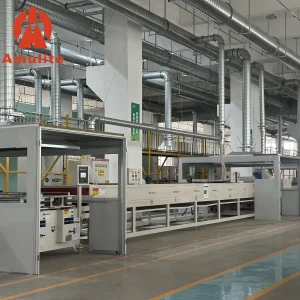
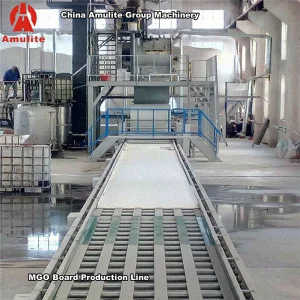
Understanding the macroeconomic forces driving plant installations across North America, Europe, Asia-Pacific, and emerging global markets.
The global construction industry is undergoing a structural transition toward modular, prefabricated, and fire-resistant envelope systems. As municipal building codes enforce non-combustible materials following major high-rise fires worldwide, traditional timber, plywood, and standard gypsum drywalls are increasingly restricted in exterior cladding and high-moisture interior partition walls. This regulatory shift has placed Fiber Cement Boards (FCB) and Calcium Silicate Boards (CSB) at the absolute center of modern industrial procurement strategy.
For industrial buyers, decision-makers, and manufacturing plant investors looking to buy a Fiber Cement Board Making Machine factory and product infrastructure, evaluating vendor capabilities requires looking beyond mere mechanical assembly. Modern production lines must deliver chemical slurry precision, energy-efficient hydrothermal reactions during autoclaving, and micro-porosity control to withstand freeze-thaw cycles, high impact, and tropical humidity.
High-density fiber cement boards (>1.4 g/cm³) provide superior flexural strength (>16 MPa) and dimensional stability, serving as ventilated rainscreen claddings, exterior decorative panels, and energy-efficient building envelopes.
Non-asbestos calcium silicate matrices engineered from quartz sand, lime, and cellulose fibers offer 2-hour to 4-hour fire ratings under ISO 834 and ASTM E119 testing, vital for commercial complexes, data centers, and hospitals.
Medium-density boards (1.1–1.3 g/cm³) exhibit less than 0.15% moisture movement, preventing tile failure, fungal growth, and structural warping in high-humidity zones such as bathrooms, kitchens, and industrial cleanrooms.
A granular analysis of capital expenditure allocation, raw material ratios, energy balances, and payback periods when sourcing turnkey fiber cement board factories.
Purchasing a complete fiber cement board line requires multi-variable strategic planning. The total cost of ownership (TCO) is governed not only by the initial purchase price of the machinery, but heavily by operational consumption: energy tariffs, fiber pulping efficiency, vacuum dewatering recovery, and autoclave steam retention.
| Plant Capacity Profile | Annual Board Yield (m²/Yr) | Forming Technology | Autoclave Units (Dia × L) | Installed Electrical Load | Estimated Payback (Years) |
|---|---|---|---|---|---|
| Compact Industrial Line | 2.5 Million to 4.0 Million | 3-Vat Hatschek Process | 2 Set (2.0m × 31m) | ~650 kW | 2.2 – 2.8 Years |
| Standard Commercial Line | 5.0 Million to 8.0 Million | 4-Vat Hatschek / Flow-on | 4 Set (2.5m × 35m) | ~1,200 kW | 1.8 – 2.4 Years |
| High-Output Mega Plant | 10.0 Million to 15.0 Million+ | 5-Vat High-Speed Line | 6-8 Set (2.8m × 40m) | ~2,400 kW | 1.5 – 2.0 Years |
Profitability depends on matching local raw material mineralogy to line dosing systems. Below is the industry-standard formulation weight ratio engineered into Amulite automated batching platforms:
An engineering dive into the hydro-forming process, vacuum dewatering, hydraulic pressing, and hydrothermal autoclave synthesis.
Cellulose pulp sheets are processed through high-consistency hydro-pulpers and disk refiners to achieve optimal Canadian Standard Freeness (CSF 450–550 ml). Precise fibrillation unlocks hydroxyl bonds, enabling the fiber network to lock matrix particles during sheet formation.
Rotating mesh cylinders pick up micron-thin films (0.2–0.3 mm) from dilute slurry vats (solids concentration 8–12%). These film layers transfer onto a continuous felt conveyor belt, passing over high-pressure vacuum boxes to achieve preliminary dewatering.
The dewatered wet film winds continuously around an engineered accumulation roll (forming drum) until the desired green sheet thickness (4mm to 30mm) is achieved. Flying knives automatically cut the sheet along a seamless longitudinal axis with zero edge tears.
Green boards are stacked between stainless steel templates and transferred to a 5,000-ton to 8,000-ton hydraulic press. Pressing removes residual moisture, increases board density from 1.2 g/cm³ to over 1.6 g/cm³, and boosts flexural strength to meet high-end exterior cladding standard ASTM C1185 Grade IV.
Stacked boards enter an energy-retained pre-curing tunnel (45°C–55°C, 90% RH) for 6 to 10 hours. Once green strength reaches 2.5 MPa, automated vacuum unstackers separate the steel templates from the boards, recirculating templates back to the stacker.
Boards are loaded into horizontal autoclaves operating at 170°C – 183°C under saturated steam pressure of 0.9 – 1.0 MPa for 10 to 12 hours. Under these conditions, fine silica reacts with calcium hydroxide:
5Ca(OH)₂ + 6SiO₂ + 5H₂O → C₅S₆H₅ (Tobermorite Crystalline Matrix)
This crystalline matrix ensures zero post-installation shrinkage and absolute chemical stability.
Cured boards pass through high-precision double-end tenoners, multi-head sanding machines for surface calibration, and optional UV-curing fluorocarbon painting lines to produce finished architectural boards ready for export.
How China Amulite Group integrates Siemens PLC architectures, closed-loop water recovery, and zero-waste slurry recirculation into modern board machinery.
Every plant section—from raw material weight batching to autoclave steam valves—is synchronized through a central Siemens S7-1500 PLC network, featuring remote monitoring, fault pre-alarm, and automated thickness corrections.
Water extracted via felt vacuum boxes and hydraulic presses is piped into continuous multi-stage clarification tanks. Clarified water and residual solids are 100% recycled back into pulp hydration and slurry mixing, achieving environmental compliance.
Trimming waste generated at the accumulation drum during green cutting is instantly washed back into the slurry agitator tanks, eliminating solid raw material waste prior to curing.
Providing complete lifetime engineering coverage from foundation civil planning to certified local code compliance.
Investing in a foreign manufacturing line involves mitigating operational, structural, and regulatory risks. China Amulite Group operates an end-to-end EPC (Engineering, Procurement, and Construction) service structure designed to guarantee plant commissioning schedules and product quality targets across over 60 countries.
Every piece of machinery engineered by Amulite complies with strict European CE guidelines, ISO 9001 quality frameworks, and ISO 14001 environmental safety norms. Machinery pressure vessels (Autoclaves) carry ASME Sec VIII Div 1 or PED certifications.
Our senior mechanical, electrical, and chemical engineers are dispatched directly to your installation site. We manage steel structure assembly, utility connections, PLC debugging, and initial trial batching using your local raw sand and cement samples.
We train local engineering staff on felt cleaning protocols, vacuum pressure calibration, hydro-pulper consistency testing, and autoclave steam control curves—handing over commercial chemical formulations certified for local sales.
Direct answers from our senior project engineering managers to guide your machinery procurement process.
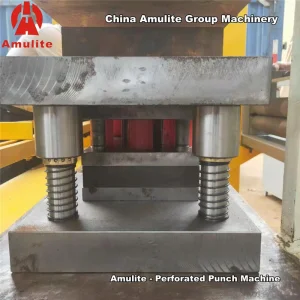
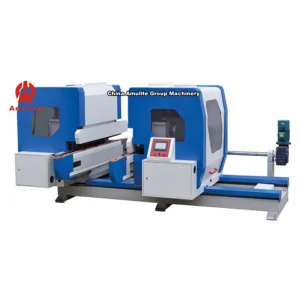
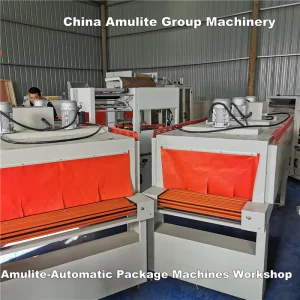
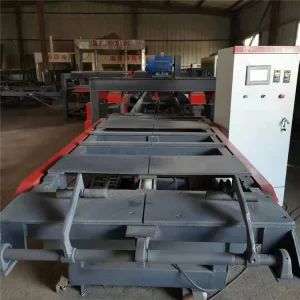
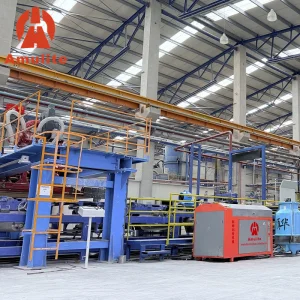
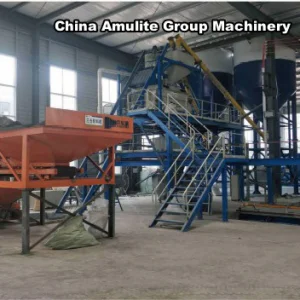
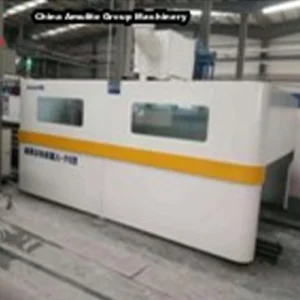
Complete your plant automation with our precision cutting, punching, wall panel, and specialized material processing equipment.
Contact China Amulite Group today to speak directly with our senior process engineers. Request customized factory layout drawings, financial ROI models, and formal quotation packages tailored to your target regional output.