Explore our premium engineered structural insulated panels and continuous production line machinery engineered for high-efficiency thermal building envelopes.
The global demand for high-performance thermal insulation in modern industrial and commercial roofing has propelled Expanded Polystyrene (EPS) Roof Sheets and composite sandwich panels to the forefront of sustainable construction. Driven by aggressive zero-carbon building mandates across Europe, North America, the Middle East, and Asia-Pacific, structural insulated panels (SIPs) utilizing EPS technology represent a pivotal paradigm shift away from traditional uninsulated corrugated metal roofing.
In 2026, global commercial roof engineering demands an integrated approach: minimizing thermal bridging, providing structural diaphragm resistance against high wind uplift loads, and lowering operational carbon dioxide output through enhanced HVAC thermal retention. EPS roof sheets, comprising a closed-cell rigid EPS insulation core bonded between structural pre-painted galvanized iron (PPGI) or Galvalume steel skins, yield an unmatched ratio of structural rigidity, low dead-weight load, and high R-value thermal performance per unit cost.
EPS cores feature a closed-cell structural grid composed of 98% trapped air. This geometry inhibits conductive and convective heat transfers, guaranteeing consistent long-term R-values that do not degrade over time due to thermal drift or blowing-agent gas evacuation.
By functioning as a stress-transferring composite I-beam structure, the outer ribbed metal facers handle axial tension and compression, while the rigid EPS core resists shear stress, allowing long purlin spans up to 3.5 meters without structural sagging.
Modern EPS roof sheets require zero CFCs, HCFCs, or HFC blowing agents during bead expansion. Fully recyclable at product end-of-life, EPS roofs significantly lower embodied energy metrics compared to mineral wool or rigid polyurethane foam alternatives.
When issuing Request for Quotations (RFQs) to global suppliers and factories, structural procurement engineers must evaluate critical mechanical and material parameters. Below is a comprehensive engineering standard matrix for commercial EPS roof sheet sourcing:
| Specification Parameter | Standard Range / Grade | Test Methodology Standard | Engineering Impact |
|---|---|---|---|
| EPS Core Density | 12 kg/m³ – 25 kg/m³ (Optionally Fire Retardant) | ASTM C303 / ISO 845 | Directly governs compressive strength, shear resistance, and thermal insulation efficiency. |
| Thermal Conductivity (λ) | 0.033 – 0.038 W/m·K | EN 12667 / ASTM C518 | Lower values minimize heat gain in tropical zones and reduce heating load in sub-zero climates. |
| Facing Metal Thickness | 0.30 mm – 0.80 mm PPGI / Galvalume / Stainless | GB/T 12754 / EN 10346 | Ensures mechanical flexural strength, hail impact tolerance, and long-term corrosion resistance. |
| Effective Width Profile | 950 mm, 960 mm, 980 mm, 1000 mm | Custom Factory Roll Profile | Determines coverage area, joint overlap efficiency, and weatherproofing security against rainfall leaks. |
| Fire Reaction Class | B1 (Self-Extinguishing), B2, Class A Core options | DIN 4102-1 / EN 13501-1 | Essential for municipal building code compliance, warehouse safety, and commercial insurance ratings. |
| Sound Transmission Loss | 23 dB – 28 dB (Acoustic Attenuation) | ISO 140-3 / ASTM E90 | Dampens heavy rain impact noise and ambient industrial acoustic interference. |
| Panel Core Thicknesses | 50 mm, 75 mm, 100 mm, 125 mm, 150 mm, 200 mm | Direct Measurement | Sized based on targeted U-values (ranging from 0.65 W/m²K down to 0.18 W/m²K). |
Procuring EPS roof sheets directly from tier-1 Chinese factories offers global project developers unmatched cost efficiency, scale, and technical compliance. Over the past decade, Chinese manufacturing facilities have completed an aggressive transition into Smart Factory Industry 4.0 ecosystems.
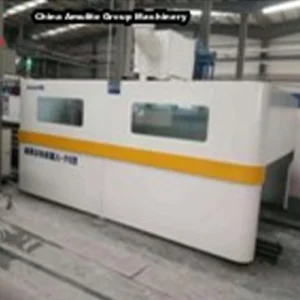
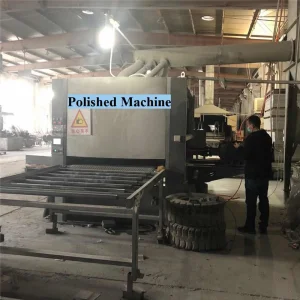
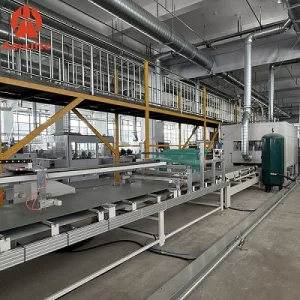
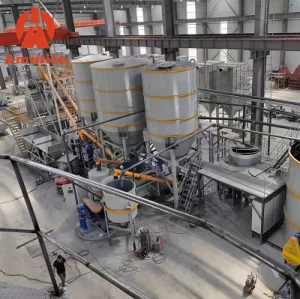
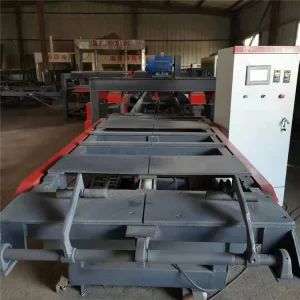
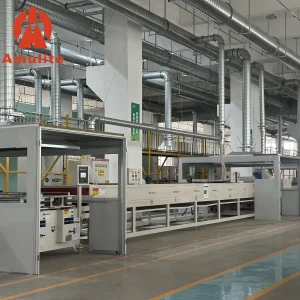
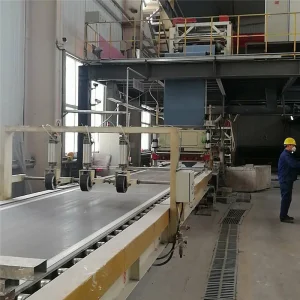
Integrated production plants utilize continuous high-speed double-belt laminating lines spanning over 150 meters in length. Automated raw polymer bead expansion, continuous block aging, high-precision multi-wire CNC cutting, structural polyurethane adhesive application, and hydraulic roll-forming operate under unified PLC digital control. This automation eliminates human manual alignment errors, ensuring absolute panel flatness, zero delamination, and strict tolerance management within ±0.5 mm across batch production runs.
Direct procurement of raw EPS polymer resins and prime steel coils (Baosteel, Shougang) guarantees consistent core density and coating adhesion without batch variance.
Continuous heat and pressure application ensures structural cross-linking polymer adhesives permanently fuse the steel skin to the flame-retardant EPS core.
Laser-guided visual sensors monitor edge profiling, panel thickness consistency, rib alignment, and skin tensioning in real time during continuous rolling.
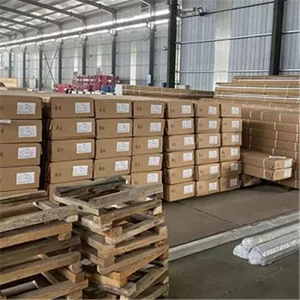
Automated stacking, protective PE film wrapping, corner guards, and custom wooden skid support prevent moisture damage and sea-freight transport abrasion.
For EPC contractors, commercial project developers, and regional building material distributors, purchasing EPS roof sheets involves balancing factory FOB costs against ocean logistics volume, import tariffs, and site installation velocity.
Because EPS roof panels are voluminous lightweight goods, standard 40ft High Cube (40HC) shipping containers must be packed with nestable lap profiles. Custom length sizing matching container interior dimensions (up to 11.8 meters) optimizes freight cost per square meter by up to 22%.
Audit target suppliers for ISO9001 quality management, CE mark validation, raw steel zinc coating thickness certifications (AZ50–AZ150 Galvalume), and third-party laboratory fire testing certificates (EN 13501-1 / UL 94).
Compared to multi-layer site-assembled insulation and single-skin sheet systems, factory-prefabricated EPS sandwich roof panels reduce field labor costs by 40% and compress overall building roof installation schedules by up to 60%.
EPS roof sheets engineered by specialized factories are tailored for diverse environmental, climatic, and industrial conditions worldwide.
Poultry farms, dairy barns, and agricultural processing sheds require stringent thermal regulation to preserve livestock yield and stop condensation drips. Anti-corrosive PVDF or HDP coated outer steel skins resist ammonia atmospheric degradation while thick EPS cores buffer heat stress.
For food processing plants, pharmaceutical logistics, and cold chain distribution centers, high-density EPS panels (up to 200mm thickness) provide continuous thermal barriers preventing thermal bridge formation and minimizing compressor refrigeration power loads.
Large-span portal steel frame structures utilize corrugated EPS roof panels for rapid roofing coverage. Integrated overlapping overlap joints prevent rain leakage during monsoon seasons while offering structural diaphragm support across purlin networks.
Modular workforce housing, disaster relief shelters, and site accommodation units utilize lightweight EPS roof sheets due to easy manual handling, rapid crane lifting, and simple self-tapping screw fastening dynamics.
Structures built near marine environments utilize Galvalume (AZ150) metal facers combined with closed-cell EPS core structures to resist salt spray corrosion, severe ocean wind uplift, and intense ultraviolet solar radiation exposure.
Electronics assembly plants and pharmaceutical manufacturing rooms require non-dusting, smooth-surface interior roof ceilings. Smooth inner steel EPS panels create airtight, easily sanitized ceiling environments.
Key answers provided by our senior structural engineering team for overseas buyers, sourcing managers, and project architects.
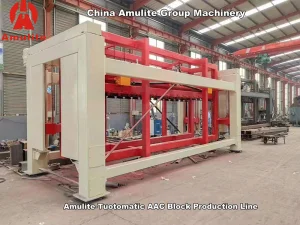
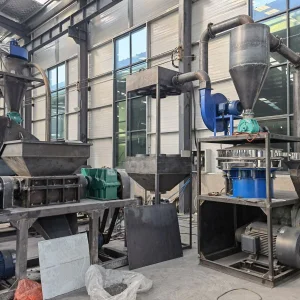
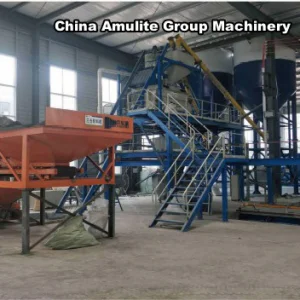
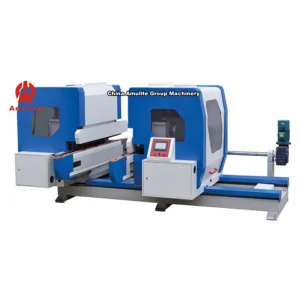
Discover specialized manufacturing equipment, recycling systems, and continuous automated production lines designed and exported globally.