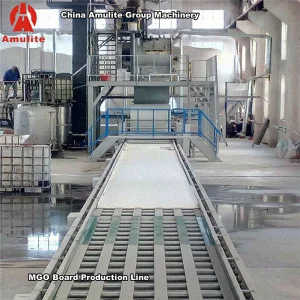
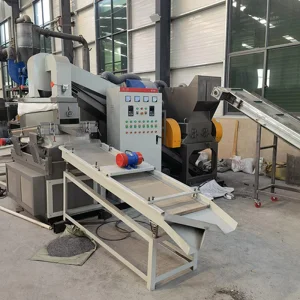
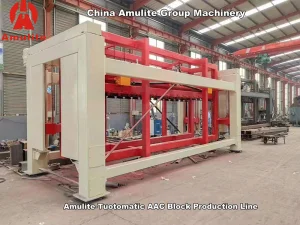
Explore our top-tier machinery configurations engineered for precision, high throughput, and structural performance.
Analyzing the pivotal role of automated EPS cement sandwich panel manufacturing systems in addressing the global demand for sustainable, resilient, and energy-efficient building envelope systems.
The global construction sector is undergoing an unprecedented paradigm shift. Driven by aggressive zero-carbon targets, rising labor costs, and urgent structural needs for affordable housing, modern off-site prefabrication technology has transitioned from an alternative building approach to a core industrial strategy. Central to this revolution is the EPS (Expanded Polystyrene) Cement Sandwich Panel Machine, a sophisticated production platform engineered to deliver lightweight, high-strength composite wall panels that fundamentally outperform traditional brickwork, blockwork, and cast-in-place concrete.
EPS cement sandwich panels comprise two fiber-reinforced surface sheets—typically fiber cement boards or calcium silicate boards—encasing a lightweight aggregate core composed of Portland cement, expanded polystyrene granules, fly ash, and specialized chemical admixtures. When produced using state-of-the-art automated equipment from premier China manufacturers and factory direct suppliers, these panels exhibit extraordinary strength-to-weight ratios, superior thermal resistance (R-values), fire protection (Class A non-combustibility), and acoustical damping capabilities.
To assist global EPC contractors, real estate developers, and building material factory investors in making evidence-based capital expenditure (CapEx) decisions, the table below delineates the performance metrics of EPS cement sandwich panels against conventional masonry and Autoclaved Aerated Concrete (AAC) systems.
| Performance Indicator | EPS Cement Sandwich Panel | Autoclaved Aerated Concrete (AAC) | Clay Brick / Concrete Block |
|---|---|---|---|
| Dry Bulk Density | 550 – 700 kg/m³ | 500 – 650 kg/m³ | 1,600 – 2,200 kg/m³ |
| Compressive Strength | ≥ 3.5 – 5.0 MPa | 3.5 – 5.0 MPa | 5.0 – 10.0 MPa |
| Thermal Conductivity (W/m·K) | 0.045 – 0.065 | 0.11 – 0.16 | 0.70 – 1.30 |
| Sound Transmission Class (STC) | 42 – 50 dB (100mm thickness) | 38 – 44 dB | 45 – 52 dB (Heavy mortar required) |
| Construction Efficiency | 35 – 50 m²/worker/day | 15 – 20 m²/worker/day | 8 – 12 m²/worker/day |
| Wet Trade Requirement | Minimal (Dry Joint Assembly) | Moderate (Thin-bed Mortar) | High (Plastering & Wet Mortar) |
Investing in an automated EPS Cement Sandwich Panel machine line yields compounding savings across the entire construction value chain. By reducing building structural dead load by up to 60%, structural engineers can optimize foundation design and steel reinforcement requirements, reducing overall building CapEx by 12% to 18%.
A deep dive into the mechanical, hydraulic, pneumatic, and electronic sub-systems that compose a commercial EPS panel production line.
Employs high-precision load-cell weighing hoppers for cement, silica sand, and fly ash. Features computerized EPS bead volumetric dosing coupled with twin-shaft forced mixers to ensure absolute homogeneous distribution of polystyrene particles without aggregate segregation.
Heavy-duty, hydraulic-clamped vertical mould cars designed for simultaneous multi-board casting (up to 40 panels per car). High-frequency internal and external vibration units remove micro-air voids, achieving smooth surfaces and perfect mechanical interlock with face boards.
Fully automatic steam expansion system that controls EPS bead bulk density from 8 to 25 kg/m³ with less than 1.5% variance. Integrated drying, aging, and pneumatic conveyance silos guarantee optimal bead stability before core slurry integration.
Powered by Siemens S7-1500 PLC architectures with intuitive multi-language HMI touchscreens. Real-time sensor monitoring tracks slurry viscosity, curing temperatures, hydraulic pressures, and dimensional tolerances automatically.
Amulite Group engineers turnkey plants scaled to meet diverse commercial objectives. Below are the engineering parameters for our three standard plant tiers:
| Plant Parameter | Compact Line (AL-100K) | Standard Line (AL-300K) | Flagship Automation Line (AL-600K) |
|---|---|---|---|
| Annual Capacity (m²/year) | 100,000 – 150,000 | 300,000 – 400,000 | 600,000 – 1,000,000 |
| Mould Car Quantity | 10 – 15 Cars | 30 – 40 Cars | 60 – 80 Cars (Automated Rail Transit) |
| Installed Power (kW) | 65 kW | 160 kW | 320 kW |
| Recommended Plant Footprint | 1,500 m² | 3,500 m² | 7,500 m² |
| Operational Labor Shift | 6 – 8 Operators | 4 – 5 Operators | 2 – 3 Operators (Robotic Handling) |
| Curing Method | Ambient / Thermal Blanket | Accelerated Steam Chamber | Continuous Automated Steam Tunnel |
How localized climatic conditions, building codes, and regional logistics drive panel adoption across key overseas markets.
In regions like Saudi Arabia, the UAE, and Egypt, high air-conditioning loads mandate low thermal mass transmittance. EPS cement sandwich panels provide exceptional envelope insulation, reducing HVAC energy consumption by up to 40% while resisting seismic and sandstorm stresses.
Deploying EPS panels in moisture-rich environments (Indonesia, Philippines, Vietnam) prevents fungal growth, rot, and moisture degradation. Tongue-and-groove male/female panel joints bonded with polymer mortar absorb lateral seismic shifts and high wind loads effortlessly.
Government-backed affordable housing programs in countries like Chile, Mexico, and Kazakhstan utilize 90mm and 120mm EPS panels for rapid interior partition and exterior load-bearing walls, cutting construction timetables from months to days.
A major technical advantage of partnering with China Amulite Group is our deep expertise in customized slurry formulation chemistry. Rather than locking factory owners into proprietary raw material suppliers, our process engineers optimize slurries to exploit locally abundant industrial byproducts and mineral deposits:
E-E-A-T Framework: Strict adherence to international mechanical standards, factory acceptance testing, and lifecycle operational support.
All machinery structural frames, electrical control cabinets, pressure vessels, and hydraulic systems fully comply with EU CE directives, ISO 9001:2015 quality management systems, and North American UL/CSA wiring standards.
Prior to dispatch from our 100,000 m² manufacturing plant in Hebei, China, every complete line undergoes dry-run trial assembly, hydraulic pressure decay checks, PLC sequence testing, and sensor calibration.
Our senior mechanical, electrical, and chemical engineers deploy directly to client sites worldwide. We handle foundation layout validation, mechanical alignment, chemical trial batching, and full workforce training until contract capacity is achieved.
Every automated Amulite EPS Panel Production Line is equipped with encrypted IoT remote diagnostic modules. In the event of process anomalies or software optimization needs, our engineering center in China can perform real-time system audits, PLC updates, and troubleshooting globally within hours.
Pioneering Next-Gen Manufacturing through AI-Driven Rheology Control, Carbon-Negative Matrices, and Dynamic Robotics.
Integration of inline ultrasonic slurry viscosity sensors connected to closed-loop PLC water/cement dosing algorithms, compensating automatically for ambient temperature and aggregate moisture fluctuations.
Upgrading expander systems to process 100% recycled post-consumer expanded polystyrene (rEPS) and bio-based polymeric foams, reducing raw material footprint while maintaining thermal metrics.
Implementation of 6-axis heavy payload articulated industrial robots for automatic face-sheet loading, core de-moulding, edge profiling, and shrink-wrap palletizing with zero manual intervention.
Incorporating CO2 mineralization curing technology into thermal chambers, permanently sequestering carbon dioxide directly within the cementitious core matrix during hydration.
Explore our broader industrial machinery ecosystem for non-metallic building board production.
Comprehensive engineering and commercial answers to guide global plant investors through procurement, factory layout, and production scaling.