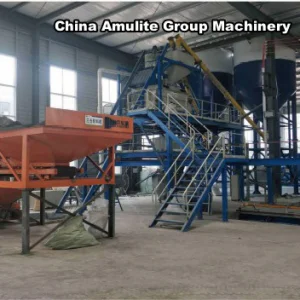
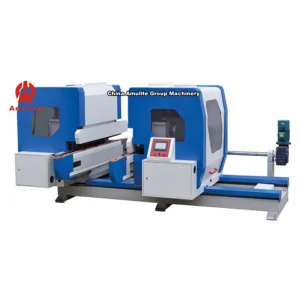
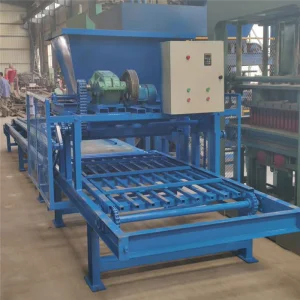
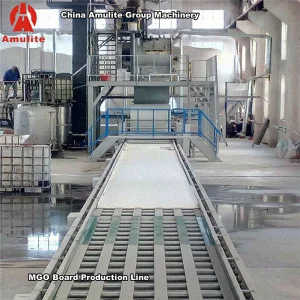
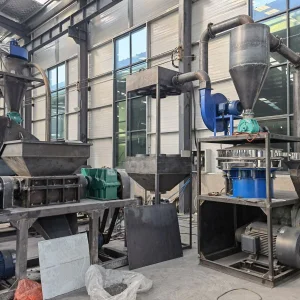
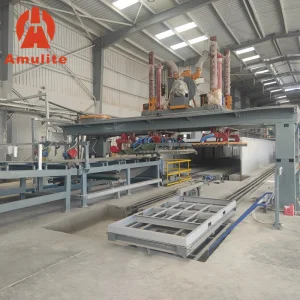
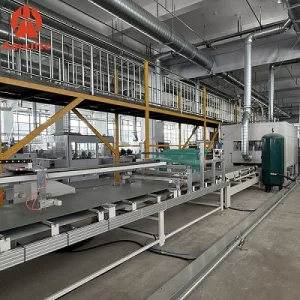
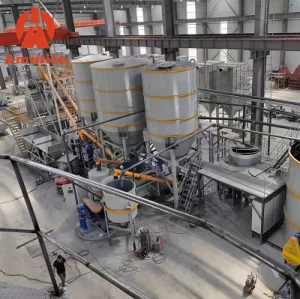
Explore our core industrial plant solutions designed for high-density fiber cement boards, hollow-core wall systems, and advanced thermal insulation materials.
The global building materials market is experiencing a structural pivot from traditional masonry and gypsum drywall toward high-performance, autoclaved fiber cement boards (FCB) and calcium silicate panels. Driven by worldwide mandates for fire safety (Class A1 non-combustible standards), moisture resilience, and seismic weight reduction, modern commercial and residential developments increasingly rely on fiber-reinforced cement substrates for exterior facade cladding, interior wet-room partitioning, structural flooring sub-layers, and soffit linings.
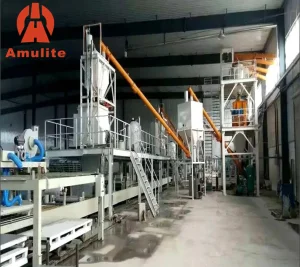
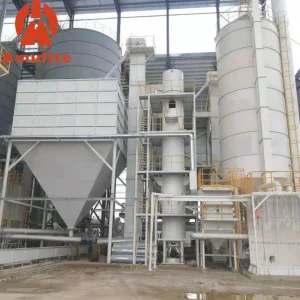
As industrial procurement intent shifts toward setting up fully automated, turnkey production plants, acquiring a high-yield Cement Fiber Board Machine from a reputable OEM factory has become a strategic priority for building material conglomerates, real estate developers, and state-backed infrastructure contractors. Today's manufacturing landscape demands equipment capable of processing continuous wet-slurry mixtures via advanced Hatschek or flow-on methods, integrated with high-pressure hydraulic pre-pressing and high-temperature autoclave curing systems.
The industrial footprint of fiber cement board production is geographically expanding. While North America and Western Europe maintain high consumption rates for residential siding and architectural cladding, rapid urbanization across Southeast Asia, the Middle East, Latin America, and Africa has triggered unprecedented capital investment in localized board manufacturing facilities. Importing finished boards incurs heavy logistics overhead due to product density; hence, establishing local production via an experienced machinery factory provides an immediate cost advantage and market domination.
Engineering a commercial-grade fiber cement board production line requires rigorous integration of chemical engineering, mechanical automation, and thermal dynamics. The core process relies on synthetic or organic fiber reinforcement (such as unbleached kraft pulp, PVA fibers, or glass fibers) matrixed within Portland cement, quartz silica sand, and mineral fillers.
Utilizing multiple rotating mesh cylinders immersed in dilute raw material slurry. Film layers of 0.2mm to 0.3mm thickness are continuously transferred onto a moving felt belt, built up on a accumulator roll to reach exact target board thickness (4mm–30mm) with pinpoint tolerance.
Formed green sheets undergo intense hydraulic consolidation up to 10,000 metric tons. This process eliminates internal micro-voids, increases density to >1.5 g/cm³, and significantly boosts flexural bending strength (MPa ratings) required for exterior facade applications.
High-pressure steam autoclaves (operating at 0.8–1.2 MPa and 175°C–190°C) drive the crystalline chemical reaction between calcium hydroxide and quartz silica, producing stable Tobermorite crystal structures that eliminate thermal expansion and moisture swelling.
| Performance Parameter | Standard Board Line Specs | Heavy-Duty Autoclaved Line Specs | High-Density Facade Board Line |
|---|---|---|---|
| Annual Production Capacity | 2.0M – 5.0M m² / Year | 5.0M – 10.0M m² / Year | 10.0M – 20.0M+ m² / Year |
| Board Thickness Range | 4mm – 12mm | 4mm – 20mm | 6mm – 30mm (Customized) |
| Board Density Class | 1.1 – 1.3 g/cm³ | 1.3 – 1.5 g/cm³ | 1.5 – 1.8 g/cm³ (Pressed) |
| Bending Strength (Saturated) | ≥ 9 MPa (Class 1-2) | ≥ 14 MPa (Class 3-4) | ≥ 18 - 24 MPa (Class 5 High Load) |
| Control System Automation | Semi-Automated PLC | Fully Automated Siemens S7 PLC | Industry 4.0 SCADA + AI Vision QA |
As environmental regulations tighten globally, machinery suppliers and fiber cement companies are co-developing greener, smarter production methodologies. The modern cement board machine factory is no longer just a mechanical fabricator; it is an engineering research hub focused on resource conservation, energy recovery, and raw material optimization.
Global market access requires complete elimination of asbestos fibers. Modern machinery lines are specifically calibrated to handle delicate organic cellulose fibers and synthetic Polyvinyl Alcohol (PVA) matrices without degrading tensile properties during high-shear slurry mixing.
Advanced machinery dosing systems allow up to 30–45% substitution of virgin Portland cement with industrial fly ash, granulated blast-furnace slag (GGBS), and ultra-fine silica fume. This slashes raw material costs while drastically reducing the carbon footprint of finished boards.
Modern plants incorporate multi-stage clarification thickeners and automatic filter presses. 100% of process water and scrap green board trim are continuously reclaimed and recycled back into the primary slurry mixing circuit, eliminating industrial wastewater discharge.
Building requirements vary widely across climate zones and regional structural standards. When investing in a fiber cement board line, the equipment layout and chemical formulation must be customized for local environmental stress factors.
In regions such as Southeast Asia, Central America, and Coastal Africa, traditional wood and gypsum materials deteriorate rapidly due to rot, termites, and high relative humidity. Autoclaved fiber cement boards produced by our machinery offer zero water absorption expansion, 100% termite proofing, and mold resistance.
Lightweight building techniques in earthquake-prone zones require wall linings with exceptional shear strength and low mass. Fiber cement sandwich panels and external siding produced on our automated lines provide superior flexural toughness, preventing brittle catastrophic fractures during seismic events.
Commercial skyscrapers and public infrastructure (subways, hospitals, schools) demand strict fire isolation. Fiber cement boards manufactured with our high-density press technology achieve 2-to-4-hour fire ratings (BS 476 / EN 13501 compliance) along with outstanding acoustic sound attenuation.
Our senior process engineering team provides full EPC services including site civil layout drawings, energy consumption calculations, raw material feasibility testing, and ROI projections customized to your region.
Request Comprehensive Machinery Catalog & QuotationBelow are technical and commercial answers to key questions asked by plant investors and factory managers before buying cement fiber board machinery.
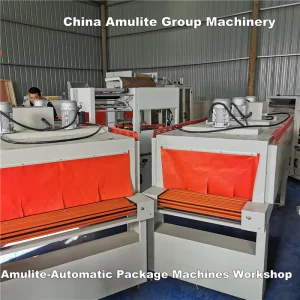
Explore our complete range of specialized equipment including battery recycling setups, corrugated roofing machinery, flexible clay lines, and automatic packaging systems.