Explore our core engineering line-up designed for high structural integrity, automated density control, and long service life.
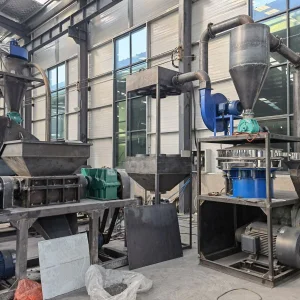
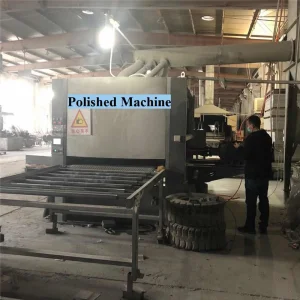
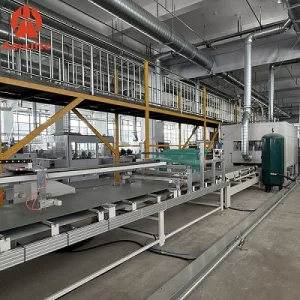
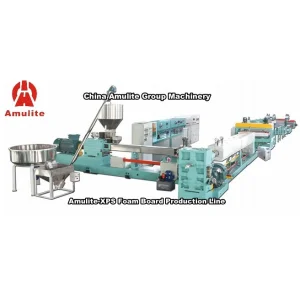
In the contemporary building materials manufacturing sector, the global demand for lightweight, fire-rated, acoustically insulated, and energy-efficient building envelopes has reached an all-time high. Modern commercial and residential developments rely heavily on prefabricated structural components. Among these, composite sandwich panels—comprising lightweight concrete core materials, expanded polystyrene (EPS) beads, polyurethane (PU), rockwool, or fiber cement facing sheets—stand out as the definitive standard for sustainable wall construction. When procurement officers, plant directors, and project developers seek to buy automatic sandwich forming machine factory systems, they are not merely purchasing hardware; they are investing in advanced mechanical engineering, automated slurry dispensation, high-precision molding hydraulics, and seamless digital production workflows.
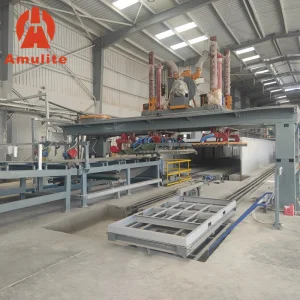
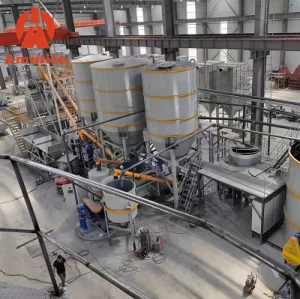
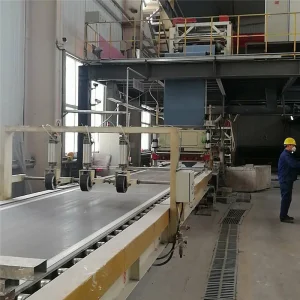
An modern automatic sandwich panel forming plant integrates raw material batching, continuous roll forming or hydraulic vertical molding, high-frequency core slurry injection, thermal curing, auto-demolding, edge profiling, and automated stacking. The replacement of manual or semi-automatic panel production with fully continuous automated forming machines reduces labor overhead by up to 75%, drastically minimizes raw material wastage, and guarantees strict adherence to international building codes regarding compressive strength, thermal conductivity, and fire endurance ratings.
A comprehensive breakdown of the core mechanical systems driving continuous and vertical sandwich panel machinery.
Utilizes computer-controlled gravimetric feeders for precise batching of Portland cement, fly ash, EPS lightweight aggregate, foaming agents, and chemical additives. Ensures constant volumetric density and consistent micro-cellular foam structure across all produced panels.
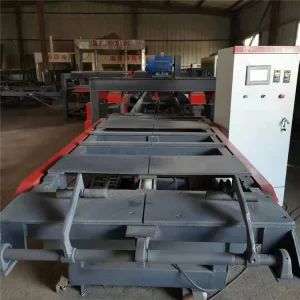
Equipped with micro-adjustable hydraulic side-clamping walls and multi-cavity vertical mold cars. Machine tolerances within ±0.5mm ensure exact tongue-and-groove joint profile alignment, eliminating on-site fitting delays.
Powered by Siemens or Schneider PLC suites paired with high-definition HMI touch interfaces. Offers real-time telemetry, remote diagnostic access, automatic batch reporting, and predictive maintenance alerts for optimal operational uptime.
Technical Authority Insight: Continuous double-belt forming machinery provides superior surface flatness when manufacturing metal-faced EPS or polyurethane panels, whereas vertical mold battery systems excel at high-volume cementitious EPS sandwich wall panel production with calcium silicate board facings.
Below is a comparative breakdown of standard technical metrics across leading industrial automatic sandwich panel production configurations available directly from specialized machinery factories:
| Machine Metric / Parameter | Vertical Battery Mold Line | Continuous Double-Belt Line | Semi-Automatic Modular Unit |
|---|---|---|---|
| Annual Production Capacity | 500,000 m² – 2,000,000 m² | 1,500,000 m² – 5,000,000 m² | 100,000 m² – 400,000 m² |
| Applicable Panel Thickness | 60mm, 75mm, 90mm, 120mm, 150mm, 200mm | 30mm – 250mm (Continuous adjustment) | 50mm – 150mm |
| Core Material Options | EPS Cement Slurry, Perlite, Fly Ash | PU, PIR, Mineral Wool, EPS Board | EPS Cement Slurry, Ceramsite |
| Facing Board Compatibility | Fiber Cement Board, Calcium Silicate | PPGI Steel, Aluminum Sheet, Kraft Paper | Calcium Silicate Board, MGO Board |
| Installed Power Requirement | 45 kW – 110 kW | 120 kW – 350 kW | 22 kW – 55 kW |
| Automation Level | Full Auto (PLC Controlled Batching/Curing) | Full Servo-Driven Industry 4.0 Suite | Semi-Automated Batching & Manual Demolding |
When enterprise buyers evaluate specialized equipment factories to purchase automatic sandwich forming machinery, the decision framework must extend beyond initial machinery CAPEX (Capital Expenditure). A robust Total Cost of Ownership (TCO) evaluation encompasses raw material yield efficiency, energy consumption metrics per square meter of panel, machine longevity, spare parts availability, and local regulatory compliance support.
Establishing a successful building materials plant requires selecting an equipment factory partner that offers comprehensive turnkey engineering. This includes civil foundation drawings, power plant load sizing, steam pipeline routing (for EPS bead pre-expansion), raw material formulation trials using locally sourced aggregates, and full commissioning support.
Local cement types, fly ash quality, and silica sand particle sizes vary significantly between regions. Experienced machinery manufacturers conduct rigorous lab testing on local materials to calibrate slurry viscosity, hydration rates, and bonding characteristics before plant fabrication.
Proper plant engineering ensures logical flow from aggregate storage silos and water batching tanks to molding bays, curing zones, automatic turning tables, panel trimming stations, and final wrapping lines without workflow bottlenecks.
Modern sandwich forming machinery incorporates heat-recovery circuits within curing tunnels and optimized steam recirculation systems for EPS pre-expanders, cutting overall thermal energy costs by up to 30% compared to legacy plants.
China has established itself as the global epicenter for heavy industrial machinery fabrication and building materials equipment design. Procuring an automatic sandwich forming machine factory system directly from leading Chinese manufacturers provides significant structural, economic, and technological advantages for global buyers:
1. Complete Industrial Ecosystem Integration: Chinese equipment clusters bring together steel foundries, CNC machining centers, hydraulic cylinder manufacturers, electrical cabinet integrators, and software automation developers within close proximity. This vertical integration allows factories to manufacture custom heavy-duty sandwich forming machines with reduced lead times and highly competitive pricing structures.
2. Extensive Field-Tested Engineering Experience: China’s massive urban infrastructure expansion over recent decades served as a rigorous testing ground for sandwich wall panel machinery. Equipment produced by top Chinese factories has undergone millions of cycles of real-world refining, resulting in highly resilient structural frames, wear-resistant mixing paddles, and perfected panel demolding kinematics.
3. Advanced Customization Flexibility: Unlike rigid European suppliers, Chinese factories readily accommodate specialized client requirements. Whether a client requires custom panel dimensions, non-standard electrical voltages (e.g., 480V 60Hz or 380V 50Hz), integrated double-layer mesh reinforcement feeders, or custom tongue-and-groove joint profiles, Chinese machinery engineering teams tailor designs to match exact project specifications.
Cross-border industrial procurement requires careful attention to regional electrical safety standards, structural building codes, and environmental regulations. Leading automatic sandwich forming machine factories support overseas buyers through comprehensive compliance management and localized technical services:
Export-grade sandwich forming machinery carries full CE marking (under Machinery Directive 2006/42/EC), ISO 9001:2015 quality control compliance, and UL/CSA compliant electrical panel layout options tailored to North American and European regulatory markets.
Equipped with secure VPN router modules, modern factory control systems allow factory automation engineers to perform remote troubleshooting, PLC software updates, and process optimization assistance worldwide without requiring immediate physical site visits.
Factory-trained mechanical and electrical installation teams deploy directly to client sites worldwide. Services include foundation alignment verification, hydraulic piping connection, dry/wet testing runs, operator training, and safety protocol establishing.
Automatic sandwich forming machine lines produce structural and non-structural panels engineered for a wide array of demanding climate conditions and architectural uses:
• Cold Storage & Logistics Hubs: Production of ultra-thick (150mm–250mm) continuous PU/PIR insulated wall and ceiling panels featuring high airtightness tongue-and-groove geometry to prevent thermal bridging in cold chain facilities.
• Commercial & High-Rise Interior Partitions: High-speed vertical molding lines producing lightweight EPS cement solid or hollow-core panels that deliver 42dB+ sound transmission loss (STC) and 4-hour fire endurance ratings for high-density urban developments.
• Modular & Prefabricated Housing: Pre-cut insulated sandwich panels manufactured with pre-embedded electrical conduit channels, enabling rapid site assembly of low-cost housing units and emergency relief shelters.
Future Industry Trends: The sector is rapidly adopting green binder technologies, utilizing geopolymer cements and recycled industrial slag within the slurry mix. Simultaneously, machine vision AI systems are being integrated onto automated output lines to detect surface micro-cracks and verify dimensional tolerances in real time before panel packaging.
Direct technical guidance addressing core commercial and operational questions.
Complete turnkey equipment for board processing, mineral powder calcination, block manufacturing, and recycling.