Explore our core precast concrete wall panel machines, auxiliary automation equipment, and specialized manufacturing solutions engineered for maximum volumetric efficiency.
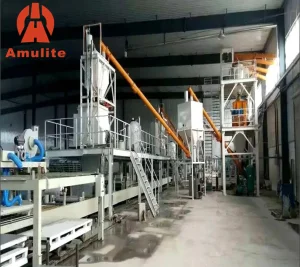
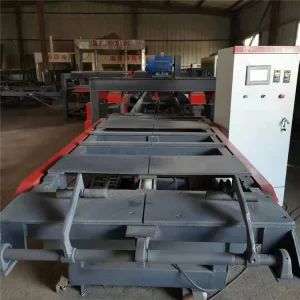
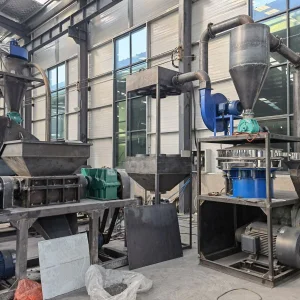
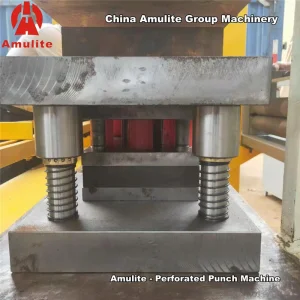
The global construction ecosystem is undergoing an unprecedented structural transition toward Modern Methods of Construction (MMC) and Industrialized Building Systems (IBS). As urban development accelerates and labor shortages persist across North America, Europe, the Middle East, and Asia-Pacific, traditional bricklaying and cast-in-place concrete frameworks are increasingly viewed as cost-inefficient, resource-intensive, and prone to project delays. Within this architectural evolution, precast lightweight concrete wall panel machines have emerged as the foundational backbone for high-performance, sustainable, and rapid building assembly.
Selecting the best precast lightweight concrete wall panel machines supplier & company is no longer merely a procurement decision—it is a strategic engineering partnership. Modern precast machinery must yield panels that strictly comply with international fire-resistance ratings, sound transmission class (STC) standards, thermal insulation metrics, and structural seismic tolerances. From expanded polystyrene (EPS) composite cement sandwich panels to autoclaved aerated concrete (AAC) elements and vertical hollow-core partition panels, plant operators require flexible, high-precision manufacturing lines capable of continuous throughput with minimal downtime.
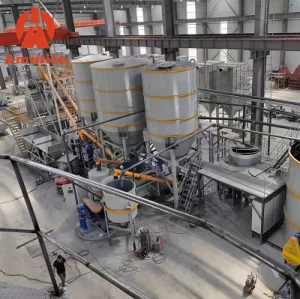
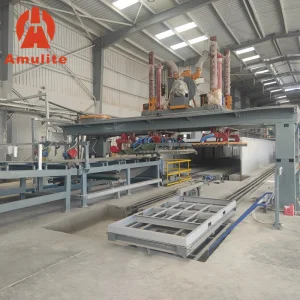
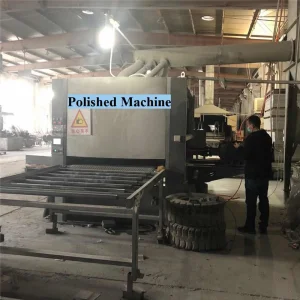
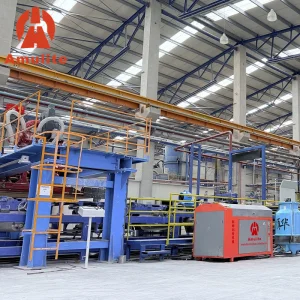
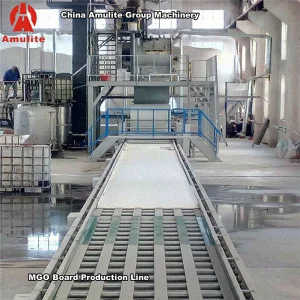
High-yield precast wall panel manufacturing demands an integrated system engineering approach. The production process integrates raw material silo storage, precision dosing, high-shear slurry mixing, mold cavity filling, curing acceleration, automated demolding, and robotic stacking. Below is the technical breakdown of state-of-the-art wall panel production technology.
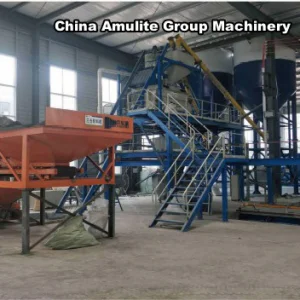
Precision micro-dosing systems manage Ordinary Portland Cement (OPC), fly ash, silica sand, expanded polystyrene (EPS) beads, and chemical additives (foaming agents, superplasticizers). Loss-in-weight feeders ensure compounding accuracy within ±0.5% tolerances, preventing density variations across large-format wall panels.
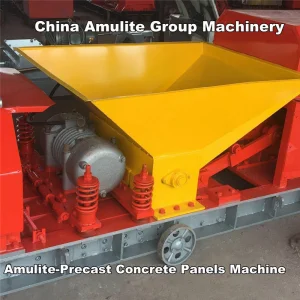
Depending on panel geometry, machines utilize either vertical battery mold cars with multi-cavity gang molds or continuous horizontal extrusion units. Vertical battery molds maximize factory floor footprint efficiency, producing perfectly smooth double-faced finish panels that eliminate the need for secondary wall plastering.
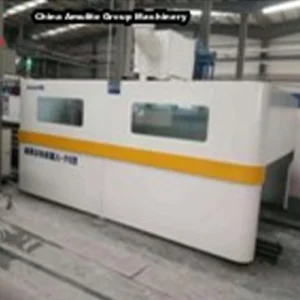
Accelerated curing chambers employ automated temperature and humidity control loops (55°C - 70°C steam environment or targeted radiant heating). This reduces green-strength development cycles from 24 hours to under 3.5 hours, facilitating rapid turnover of gang mold equipment.
| Panel Technology Type | Core Composition Matrix | Density Range (kg/m³) | Compressive Strength | Fire Resistance (Hours) | Primary Wall Application |
|---|---|---|---|---|---|
| EPS Cement Sandwich Panel | OPC + EPS Beads + Fiber Cement Skin | 550 - 750 kg/m³ | ≥ 3.5 - 5.0 MPa | 2 to 4 Hours (1000°C) | Non-load bearing interior/exterior wall |
| Lightweight Hollow Core Panel | Lightweight Aggregate + Cement + Fly Ash | 600 - 900 kg/m³ | ≥ 5.0 - 7.5 MPa | 3 to 4 Hours | High-rise residential interior partitions |
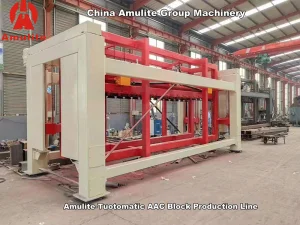
| Autoclaved Aerated Concrete (AAC) | Silica Sand/Fly Ash + Lime + Aluminum Powder | 420 - 620 kg/m³ | ≥ 3.5 - 6.0 MPa | 4 Hours (UL Standard) | Structural & curtain wall envelopes |
| Foam Concrete Solid Board | Foamed Cement Matrix + Synthetic Fiber | 400 - 650 kg/m³ | ≥ 2.5 - 4.5 MPa | 2 to 3 Hours | Acoustic partition & thermal lining |
Modern precast manufacturing requires tailored plant layouts designed around site-specific logistics, energy availability, and raw material supply chains. Leading machinery suppliers do not merely deliver standalone equipment; they provide comprehensive turnkey factory engineering.
For multi-story residential towers, wall panel systems must offer superior acoustic decoupling (STC ≥ 45 dB) and thin profiles to maximize usable internal floor area. Automated vertical mold machinery produces tongue-and-groove joint profiles with millimetric accuracy, eliminating wet mortar jointing during building assembly.
Large-format lightweight concrete panels equipped with continuous insulation cores serve as high-efficiency structural cladding. Turnkey manufacturing plants incorporate automated continuous surface mesh laminating units and edge-cutting systems to produce panels up to 6 meters in length for rapid industrial deployment.
China's heavy machinery manufacturing sector has evolved from cost-driven output to world-class precision engineering. By integrating Industry 4.0 automation, advanced robotics, and concentrated supply chain hubs, Chinese manufacturers of precast wall panel machines deliver exceptional value, equipment reliability, and technological innovation.
Machining vertical battery mold gang plates demands ultra-large CNC gantry milling machines to ensure flatness tolerances under 0.5mm across 6-meter spans. This guarantees panel thickness uniformity and mirror-like concrete surfaces.
Leading Chinese machinery companies partner with premium global component providers—utilizing Siemens PLC automation architectures, Schneider electrical controls, SEW-Eurodrive gear motors, and Rexroth hydraulic systems to guarantee worldwide spare parts availability.
From initial raw material lab testing and plant CAD layout to overseas foundation engineering, mechanical commissioning, and local operator training, Chinese manufacturing leaders supply end-to-end operational readiness.
Engineering executives, EPC contractors, and precast plant investors should evaluate prospective wall panel machine suppliers against rigorous operational parameters. Use this technical checklist during supplier audits:
Modern construction machinery must align with global green building standards and regional raw material characteristics. A top-tier precast machinery partner provides custom slurry formulation adjustments based on locally sourced cement grades, industrial fly ash streams, natural aggregates, and recycled mineral fillers.
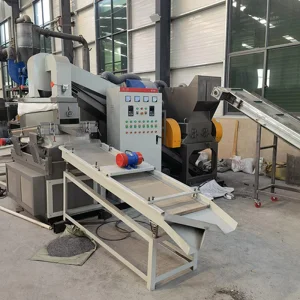
Furthermore, state-of-the-art production lines operate on a closed-loop zero-wastewater recycling system. Slurry residue from washing processes is neutralized and recirculated into mixing cycles, while cut-off panel trimmings are re-crushed and re-incorporated into lightweight aggregate feeds, drastically reducing embodied carbon metrics.
Clear, unvarnished technical answers to critical questions faced by plant owners and procurement directors.
Explore our extended catalog of advanced board lines, block machinery, recycling equipment, and automated cutting tools manufactured to international engineering standards.