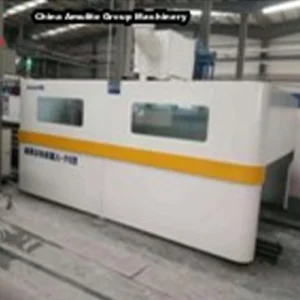
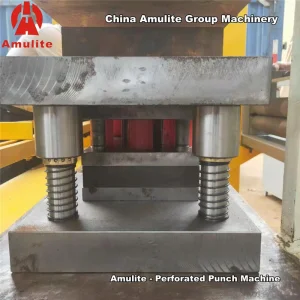
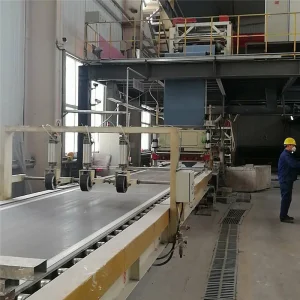
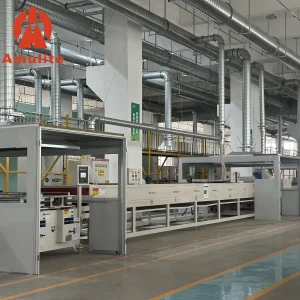
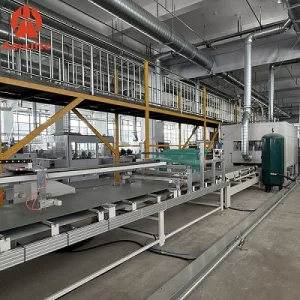
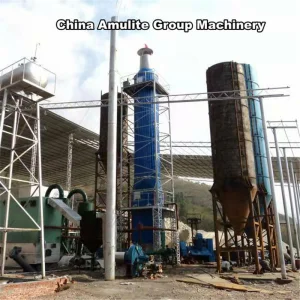
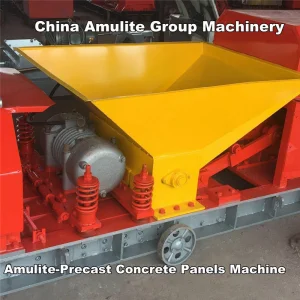
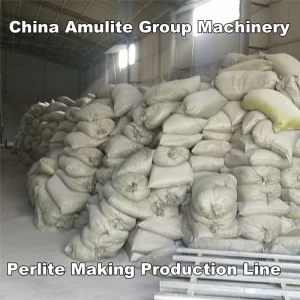
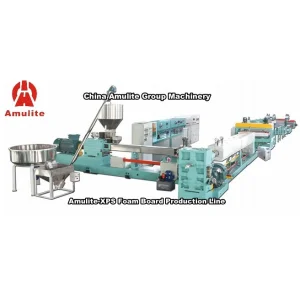
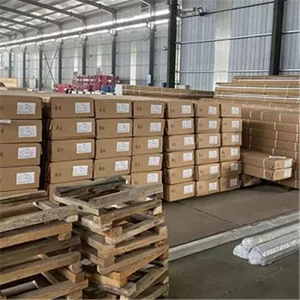
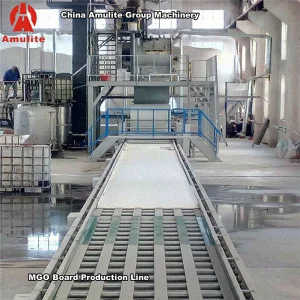
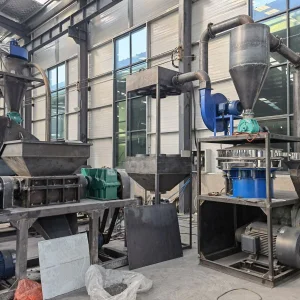
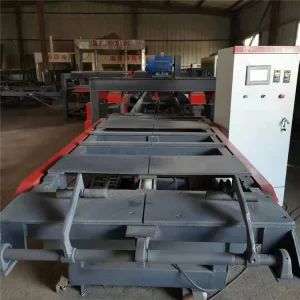
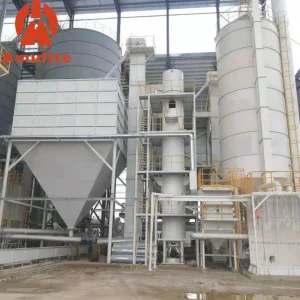
Explore our core industrial plant configurations engineered for non-metallic building material production, featuring automated dosing, high-density extrusion, and automated stack handling.
Magnesium Oxide (MGO) board technology represents a major paradigm shift in fireproof, moisture-resistant building materials. Sourcing a high-capacity, stable MGO board production machine requires an intimate understanding of industrial automation, chemical stoichiometry, crystal matrix stabilization, and raw material optimization.
The primary barrier to entry in MGO board manufacturing is avoiding free chloride leaching and board warping. Premier machinery suppliers integrate dual-component continuous mixing systems that precisely control the molar ratio of MgO to MgCl₂ or MgSO₄, ensuring the formation of the highly stable 5.1.8 crystal phase matrix (5Mg(OH)₂·MgCl₂·8H₂O).
Modern automated lines utilize multi-layer fiberglass mesh unrolling, tension-controlled embedding, and high-frequency slurry degassing. This eliminates micro-voids, ensuring flexural strength exceeding 18 MPa and providing Class A1 non-combustible ratings under international building codes.
Exothermic hydration reactions demand multi-stage, climate-controlled curing tunnels. Advanced MGO board production machinery maintains tight temperature (45°C - 65°C) and relative humidity (>90%) feedback loops to prevent micro-cracking during initial crystallization.
When tier-1 EPC contractors and global building material conglomerates procure MGO board production machines, evaluation goes far beyond initial machinery sticker price. Total Cost of Ownership (TCO), reliability, and scale determine long-term ROI.
Manual board lines require 25-35 operators per shift, leading to inconsistent board density and high labor overhead. Amulite's fully automated turnkey MGO board lines reduce shift headcount to 4-6 technicians. PLC-guided gravimetric dosing systems eliminate raw material waste by maintaining mass balance precision within ±0.2%.
Global suppliers must engineer machines capable of handling localized raw material variations. Whether utilizing caustic calcined magnesite, active magnesium oxide powder, fly ash, perlite, or volcanic ash, the production line's mixing shear and water-binder ratio controls must auto-adjust via real-time viscosity feedback.
| Performance Metrics | Amulite Fully Automated Line | Conventional Semi-Manual Line | Impact on Enterprise TCO |
|---|---|---|---|
| Daily Output (Standard 12mm Board) | 8,000 - 15,000 Sheets / Day | 1,500 - 3,000 Sheets / Day | 500% Increase in Throughput Efficiency |
| Thickness Tolerance Control | ± 0.15 mm (Laser Calibrated) | ± 0.80 mm (Manual Screed) | Elimination of Sanding Material Loss |
| Shift Headcount Requirement | 4 - 6 Operators (SCADA Control) | 25 - 35 Laborers | Up to $480,000 Annual Savings in Labor |
| Board Density Consistency | 0.95 - 1.15 g/cm³ (Homogeneous) | 0.80 - 1.35 g/cm³ (Segregated) | Guaranteed Compliance with ASTM C1186 |
| Energy Consumption per m² | 1.12 kWh / m² | 2.45 kWh / m² | 54% Direct Energy Savings |
China dominates global production of both raw magnesite minerals and high-end wallboard machinery. China Amulite Group leverages this industrial integration to offer unmatched quality-to-cost ratios.
Located near major magnesite reserves and industrial manufacturing clusters, Chinese suppliers have immediate access to high-purity MgO ores (>85% reactivity). This proximity allows in-house pilot laboratories to test and perfect slurry formulations across diverse raw material grades before plant delivery.
Amulite operates dedicated heavy machining facilities spanning over 100,000 m². Steel frameworks, forming rollers, cutter shafts, and hydraulic platens undergo ultrasonic flaw detection and CNC precision grinding, preventing operational vibration and line misalignment.
While structural components are forged in-house, electrical and pneumatic drive trains incorporate top-tier international brands: Siemens PLC units, Schneider electrics, SEW Eurodrive gear motors, and Festo pneumatic actuators, guaranteeing local spare part availability anywhere worldwide.
An end-to-end engineered MGO board production line integrates seven distinct process phases. Each step must function in synchronized harmony to ensure optimal flexural strength, waterproofing, and fire resistance.
1. Automated Raw Material Batching: Powdered MgO, MgCl₂/MgSO₄ liquids, perlite fillers, and modifiers are measured via pneumatic load cells feeding into high-shear mixers.
2. Degassing Slurry Mixing: Planetary mixing paddles eliminate air pockets, ensuring slurry homogeneity without segregation.
3. Continuous Layered Forming: Slurry is evenly spread over a moving polymer belt while multi-axis unrolling stations lay top and bottom alkali-resistant fiberglass meshes, pressed via hydraulic calibration rollers.
4. Ultrasonic Flying Cross-Cut: Servo-driven flying saws trim the continuous green sheet to precise length targets (e.g., 2440mm) without stopping line motion.
5. Primary Steam/Thermal Tunnel: Boards enter multi-deck automated stackers and pass through humidity-controlled tunnel chambers for initial set (8-12 hours).
6. Automated Demoulding & Stacking: Vacuum suction lifters separate boards from templates, transferring them to secondary curing racks.
7. Edge Profiling & Surface Sanding: Heavy-duty double-end tenoners trim tongue-and-groove or square edges, while multi-head sanding machines achieve smooth surface tolerances.
Setting up a building materials plant in North America, Europe, the Middle East, or Southeast Asia requires adhering to strict local environmental, electrical, and structural codes.
All Amulite machinery electrical enclosures are compliant with CE directives and UL 508A panel standards. Pressure vessels and hydraulic networks meet ASME and EU PED pressure equipment guidelines, ensuring effortless local municipal building permit approvals.
We deploy senior chemical process engineers and mechanical installation teams to client sites globally. Our engineers stay on site until local workers achieve stable mass production and pass target performance standards (ASTM C1185/C1186, EN 12467).
Integrated IoT gateways connect production lines directly to Amulite’s centralized cloud diagnostics hub. Real-time vibration sensors, thermal imaging of drive units, and remote PLC updating allow instant troubleshooting before downtime occurs.
The global market for MGO board products varies significantly by region. Engineering configurable production lines enables plant owners to dynamically target high-margin market segments.
Heavy-density MGO board (>1.15 g/cm³) engineered via multi-mesh reinforcement serves as a superior alternative to OSB and plywood in Structural Insulated Panels (SIPs), offering termite-proof, mold-proof, and fire-resistant subflooring for residential construction.
Exterior grade MGO boards featuring hydrophobic silane surface treatments and deep wood-grain embossing provide long-lasting, weather-resistant exterior cladding capable of withstanding freeze-thaw cycles without surface delamination.
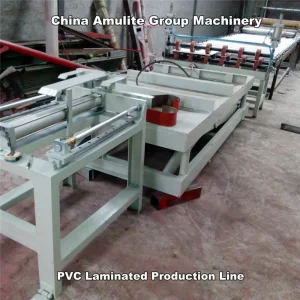
Smooth-surfaced, zero-formaldehyde MGO boards serve as ideal core substrates for HPL (High-Pressure Laminate) or PVC lamination, widely specified in sterile cleanroom environments, operating theaters, and data center wall systems.
The non-metallic building panel industry is rapidly adapting to global decarbonization mandates and automated smart factory standards.
Traditional chloride-based MGO boards (MgCl₂) face corrosion concerns when placed in contact with steel fasteners under warm, humid conditions. Modern turnkey suppliers are transitioning plants to pure magnesium sulfate matrixes, completely eliminating halogen sweating and steel corrosion risks.
Advanced MGO board production lines now feature high-speed optical vision systems. Machine vision algorithms detect micro-cracks, edge chipping, and thickness variations on the fly, automatically routing non-conforming boards to recut stations before robotic palletizing.
Direct, engineering-backed answers to the most common questions asked by industrial plant buyers and project engineers.
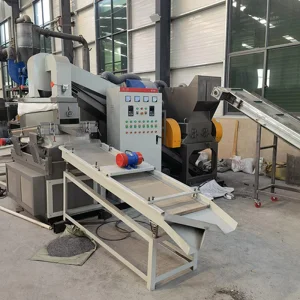
Explore our full engineering scope of supply, ranging from mineral processing and recycling equipment to automated cutting and panel laminating lines.