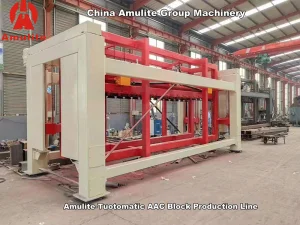
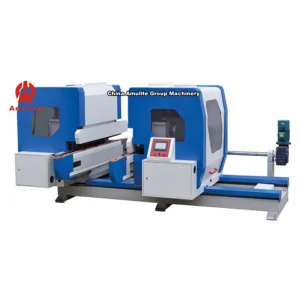
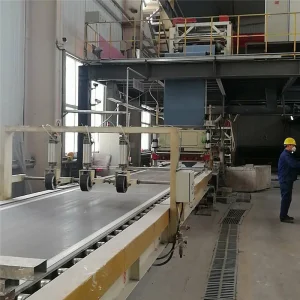
Explore turnkey production solutions for non-asbestos building boards, cementitious wall elements, and specialized mineral processing systems.
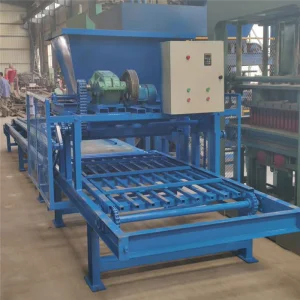
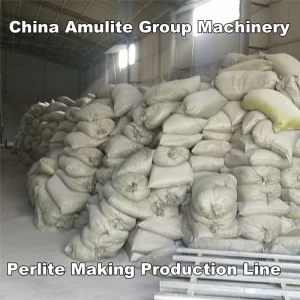
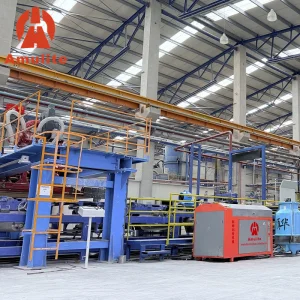
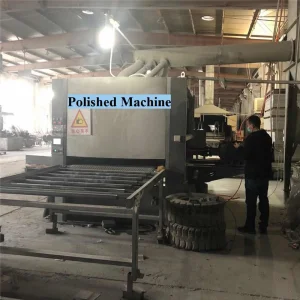
The global construction industry is experiencing a paradigm shift toward non-combustible, moisture-resistant, and sustainable building envelopes. Central to this transformation is the growth of modern fiber cement board machinery. Driven by stringent global fire-safety codes (such as EN 13501-1 Class A1 non-combustibility and ASTM E119 structural fire resistance), commercial real estate and infrastructure developers are rapidly substituting traditional timber, plywood, and standard gypsum boards with high-density fiber cement sheets.
Today, global market demand for fiber cement sheets exceeds 1.2 billion square meters annually. Emerging economics across Southeast Asia, Latin America, the Middle East, and Africa are experiencing rapid urbanization, driving demand for cost-effective, high-durability exterior cladding and interior partitioning. Concurrently, developed markets in North America and Western Europe are upgrading aging prefabricated modular structures, demanding high-end autoclaved calcium silicate and fiber cement products.
To capture market share, industrial plant investors require machinery that offers maximum yield with minimal scrap rates. Selecting the best fibre cement sheet machine supplier is no longer simply about buying mechanical parts; it is about partnering with an engineering authority capable of delivering optimized raw material formulations, automated slurry dosing, thermal energy recovery systems, and integrated PLC control systems.
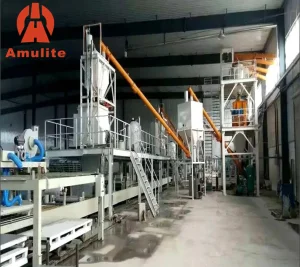
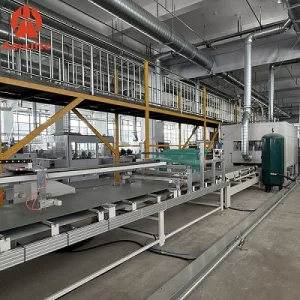
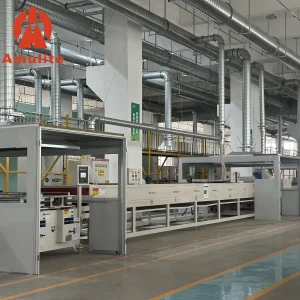
Understanding the core mechanical phases: Slurry preparation, Hatschek cylinder forming, vacuum dewatering, press consolidation, and hydrothermal autoclave curing.
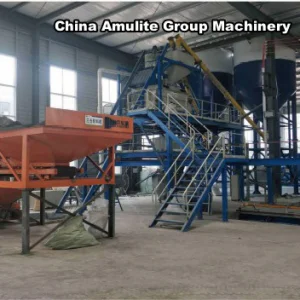
High-performance lines utilize automated raw material batching systems. Kraft cellulose pulp is refined through double-disc refiners to achieve precise Schopper-Riegler (°SR) freeness levels. Ordinary Portland Cement (OPC), ground silica sand (mesh 200–320), wollastonite, and recycled process solids are blended in high-shear mixers to form a homogenous slurry with controlled solids content (around 8–12%).
The core forming stage relies on 3 to 8 rotating mesh cylinders submerged in agitation vats. As the cylinder rotates, a thin film of fiber-cement matrix (approx. 0.2–0.3 mm per layer) deposits onto a continuous synthetic felt belt. Multi-stage agitation prevents heavy silica settling, ensuring uniform fiber orientation and high structural integrity across the entire board sheet width.
High-vacuum suction boxes extract excess water through the felt, reducing moisture content from 50% to roughly 28–32%. The thin film is continuously wound onto a precision-machined forming drum (making cylinder) until the required green board thickness (4 mm to 30 mm) is achieved. An automated rotary cutter performs precise flying cuts to release the green sheet.
Green boards are stacked with steel interlayers and subjected to hydraulic pressing up to 70–100 bar (7,000–10,000 metric tons total force). This dramatically increases density to 1.3–1.7 g/cm³. For autoclaved calcium silicate lines, boards enter steam pressure vessels operating at 170°C–190°C and 1.0–1.2 MPa pressure for 10–12 hours, inducing a hydrothermal reaction that forms stable tobermorite crystal structures.
| Technology Parameter | Autoclaved Fiber Cement Board (CSB) | Air-Cured Fiber Cement Board (FCB) | Extruded Cement Panel (Hollow Core) |
|---|---|---|---|
| Primary Raw Materials | Quartz Sand, Lime, OPC, Cellulose Pulp | OPC, Fly Ash, Silica Fume, Pulp/Synthetic Fiber | Cement, Aggregates, EPS Beads, Fiber Mesh |
| Density Range | 1.25 – 1.55 g/cm³ | 1.35 – 1.70 g/cm³ | 0.65 – 1.05 g/cm³ |
| Bending Strength (Flexural) | 14 – 24 MPa | 16 – 28 MPa | 8 – 14 MPa |
| Curing Method & Time | High Pressure Steam Autoclave (12 Hours) | Pre-cure (24h) + Water/Warm Moist Air (14-28 Days) | Pre-cure Mold (12-18 Hours) |
| Drying Shrinkage Rate | ≤ 0.15% (Ultra Stable) | ≤ 0.25% | ≤ 0.08% |
Delivering unmatched total cost of ownership (TCO), rapid delivery cycles, and custom process engineering for global industrial buyers.
Chinese machinery manufacturers, centered around robust engineering hubs like Hebei and Jiangsu, leverage full vertically integrated supply chains. From in-house CNC heavy machining centers for large-diameter forming cylinders (up to 1,600 mm) to ASME/CE certified pressure vessel fabrication bays for autoclaves, Chinese factories eliminate third-party sub-contracting markups and delays.
European machines often require strict, costly standardized raw material inputs. Chinese process engineers excel at custom-formulating slurries to work with local raw materials available in the buyer's region—whether utilizing high-calcium fly ash from local power plants, regional unwashed silica sand, or alternative agricultural waste fibers without sacrificing board flexural strength.
A complete turnkey 5-million-square-meter autoclaved fiber cement board line from top-tier Chinese manufacturers typical requires 40% to 60% less capital expenditure compared to European equivalents. This enables factory owners to achieve capital payback within 18 to 24 months after commissioning, while achieving equivalent product performance tolerances.
One production line can be reconfigured to produce diverse board types for varied global architectural uses.
Configured with embossed press rollers or post-process sanding and UV-coating lines, fiber cement machines manufacture weather-resistant 8–12 mm exterior cladding planks. These boards feature wood-grain or stone textures, providing high resistance to freeze-thaw cycles, UV degradation, and termites in tropical or coastal environments.
Thin-gauge boards (4–6 mm) produced on high-precision calcium silicate board machinery serve as non-combustible interior ceiling tiles and wall partitions in high-density public buildings, hospitals, and commercial towers. Offering a 2 to 4-hour fire rating, they produce zero toxic smoke emissions during fire emergencies.
Medium-to-high density 12–18 mm boards act as dimensionally stable tile underlayments in wet areas like kitchens, industrial bathrooms, and indoor swimming pools. Unlike gypsum, autoclaved fiber cement does not soften, swell, disintegrate, or harbor mold when exposed to continuous moisture.
Heavy-duty 18–30 mm structural floor plates manufactured on high-tonnage fiber cement presses serve as primary floor decking for modular container homes, steel structure buildings, and cleanroom facilities. They deliver high load-bearing capacities with structural impact strength.
Next-generation innovations driving operational automation, sustainability, and ultra-high-performance materials.
Modern lines incorporate industrial IoT sensors along the Hatschek vat line. Micro-optical sensors measure slurry viscosity and felt thickness in real time, automatically adjusting raw material dosing pumps and vacuum suction pressure via Siemens SCADA/PLC interfaces. This reduces sheet thickness variation to under ±0.1 mm.
Environmental regulations demand zero liquid discharge (ZLD). Advanced fiber cement machinery integrates closed-circuit water clarifiers and flocculation sedimentation tanks. Water removed during vacuum dewatering is filtered and 100% recirculated back to the slurry pulping stage, conserving water resources and recovering raw solid materials.
With global carbon reduction mandates, machinery suppliers are engineering lines to accommodate Geopolymer binders, calcined clays, and alkali-activated slag matrixes. These zero-cement formulations drastically reduce the embodied carbon footprint of finished building boards without compromising mechanical durability.
Key technical criteria for evaluating fiber cement sheet machine manufacturers prior to signing engineering procurement contracts.
Inspect the machining tolerances of forming cylinder shafts, vat agitators, and making cylinder drums. Dynamic balance checking of high-speed drums is critical; any eccentricity above 0.05 mm leads to uneven layer bonding, sheet delamination, and excessive felt wear.
Autoclaves operated in fiber cement plants fall under strict high-pressure safety codes. Ensure your supplier holds ISO, CE, or ASME Section VIII Div 1 pressure vessel manufacturing credentials, featuring automated quick-opening safety door locks and thermal insulation jackets.
Verify the OEM electrical bill of materials (BOM). Top-tier suppliers standardize on globally serviceable components—such as Siemens S7-1500 series PLCs, Schneider low-voltage breakers, ABB variable frequency drives (VFDs), and SEW Eurodrive gear motors—ensuring long-term spare parts availability.
A machine supplier must provide full lifecycle field support. Ensure the contract explicitly covers site foundation civil drawings, electrical installation supervision, raw material laboratory formulation testing, operator training, and guaranteed output performance metrics upon final hand-over.
Clear, authoritative answers from process engineers regarding investment, sizing, raw material selection, and operational management.
Select your specialized manufacturing equipment from our complete range of non-metallic building material lines.