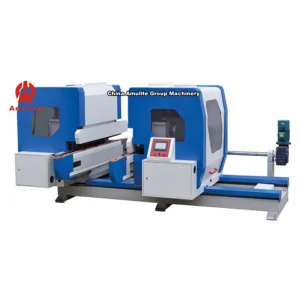
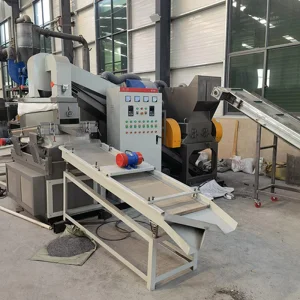
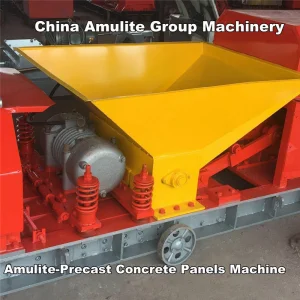
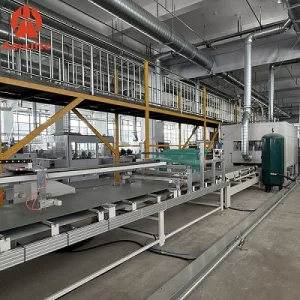
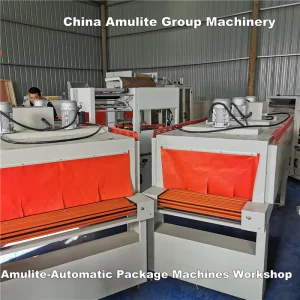
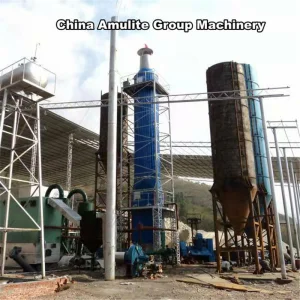
Explore our engineered production lines designed for high-capacity output, energy efficiency, and industrial reliability.
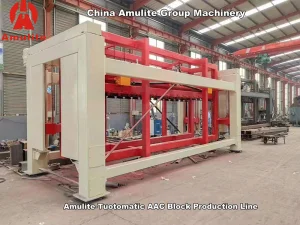
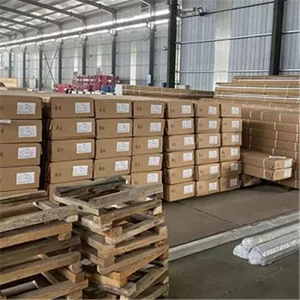
An analytical evaluation of prefabrication trends, thermal insulation mandates, and global sourcing parameters.
The global construction sector is undergoing a paradigm shift toward off-site prefabrication driven by escalating urban labor costs and strict project deadlines. Expanded Polystyrene (EPS) Lightweight Cement Sandwich Wall Panels have emerged as the primary alternative to traditional masonry, offering up to 10x faster installation rates and reducing overall structural deadweight by over 60%.
Stringent global building codes—such as the EU's Energy Performance of Buildings Directive (EPBD) and ASHRAE standards in the Americas—demand ultra-low thermal conductivity ($\lambda \le 0.045 W/m\cdot K$). EPS composite panels integrate structural strength with cellular insulation, significantly lowering HVAC energy consumption for commercial and residential developments.
Modern procurement directors reject legacy panel designs susceptible to delamination and core cracking. Modern manufacturing utilizes high-pressure foam bead dispersion combined with modified Portland cement and fly ash, enveloped by fiber cement or calcium silicate face sheets for superior flexural strength and fire resilience.
Selecting the best EPS sandwich wall panel factory or machinery partner requires an in-depth understanding of material science, automation protocols, and global supply chain dynamics. As modern architectural specs demand longer spans, higher acoustic insulation (STC ratings > 45dB), and A1-grade fire safety, the machinery required to produce these lightweight composite wall panels must perform with ultra-precise batching and curing stability.
Technical Consensus: An optimal EPS sandwich panel production facility must seamlessly integrate continuous raw material slurry preparation, high-density bead pre-expansion, micro-pressure core injection, and automated demolding cycles. Deviations in core density distribution exceed $\pm 3\%$ can lead to structural failure and thermal bridging.
An EPS Lightweight Cement Wall Panel is a multi-layered composite board comprising two dense exterior facing boards (typically 4.5mm to 6mm fiber cement or calcium silicate boards) sandwiching a lightweight core matrix. The core matrix consists of Expanded Polystyrene (EPS) beads, Ordinary Portland Cement (OPC Class 42.5 or 52.5), Class F pulverized fly ash, sand, and specialized foaming/bonding additives.
The structural efficacy of the panel relies on the micro-interlocking mechanism between the hydrated cement slurry and the expanded foam surface layer. When properly engineered by high-tier equipment manufacturers like China Amulite Group, the resulting composite delivers high compressive strength ($\ge 3.5 \text{ MPa}$), exceptional flexural capacity, and low moisture absorption ($\le 10\%$).
| Performance Metric | EPS Cement Sandwich Panel | Autoclaved Aerated Concrete (AAC) | Standard Hollow Clay Brick | Gypsum Drywall System |
|---|---|---|---|---|
| Density Range (kg/m³) | 550 – 650 | 500 – 700 | 1200 – 1400 | 800 – 950 |
| Thermal Conductivity (W/m·K) | 0.038 – 0.045 | 0.11 – 0.16 | 0.45 – 0.60 | 0.19 – 0.25 |
| Fire Resistance (Hours) | 2.0 – 4.0 Hours (A1 Level) | 3.0 – 4.0 Hours | 2.0 – 3.0 Hours | 1.0 – 2.0 Hours |
| Sound Transmission (STC dB) | 38 – 48 dB | 35 – 42 dB | 40 – 45 dB | 32 – 40 dB |
| Installation Speed (m²/worker/day) | 35 – 50 m² | 15 – 20 m² | 8 – 12 m² | 20 – 25 m² |
When global EPC contractors, real estate developers, and building material distributors audit EPS wall panel production lines, their intent centers around four primary evaluation criteria:
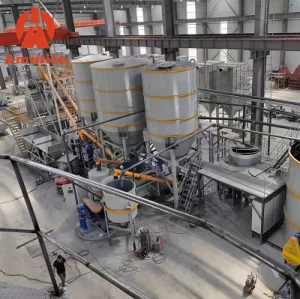
The global dominance of Chinese building material equipment manufacturers is anchored in robust supply chain ecosystems and rapid Industry 4.0 technological integration. Factories such as China Amulite Group operate over 100,000 m² of specialized manufacturing space, housing heavy CNC machining centers, laser cutting systems, and automated welding robots.
China's industrial advantages in EPS panel equipment manufacturing include:
The versatility of EPS Sandwich Cement Panels makes them ideal for a wide array of structural applications across varied geographic zones:
Utilized as non-loadbearing interior wall dividers in luxury hotels, office towers, and high-rise apartments. Their lightweight profile dramatically lowers total structural dead load, allowing structural engineers to optimize concrete and rebar designs.
Essential for fast-track residential developments, social housing initiatives, and villa construction. Tongue-and-groove jointing ensures structural integrity against seismic shocks and high winds.
Integrated with high-density EPS core formulations to provide thermal barriers for cold chain logistics warehouses, pharmaceutical cleanrooms, and food processing facilities.
A look at the mechanical design, automated controls, and structural engineering behind our turnkey plant deployments.
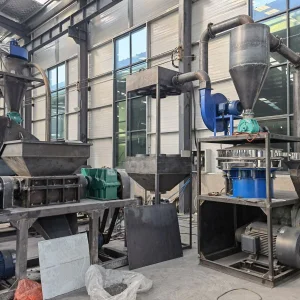
Utilizes fluid bed drying, double-pass expansion chambers, and digital pressure monitoring to achieve uniform EPS foam density from 8 kg/m³ to 25 kg/m³ with minimal steam energy loss.
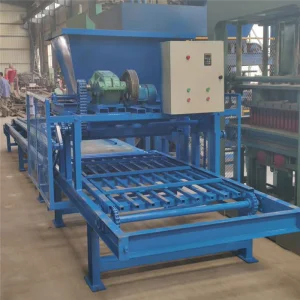
Heavy-duty hydraulic locking mechanisms prevent panel thickness distortion. Double-side board loading automation ensures 40 panels are cast simultaneously per mold car.
Siemens PLC micro-processing delivers real-time batching control, electronic weighing accuracy within $\pm 0.1\%$, remote diagnostics, and recipe memory storage for automated multi-spec operations.
In-depth technical responses from China Amulite Group's senior process engineering team.
Discover our complete collection of fiber cement, gypsum, precast concrete, and auxiliary processing systems.