Explore our engineering-certified machinery lineup for modern precast concrete, foam boards, and automated panel manufacturing plants.
Navigating the shift toward modular prefabrication, thermal insulation compliance, and high-throughput automated manufacturing.
The global construction industry is undergoing a structural transition toward rapid assembly, thermal efficiency, and carbon reduction. Central to this transformation is the Expanded Polystyrene (EPS) Sandwich Cement Wall Panel Production Line—an advanced industrial manufacturing ecosystem designed to manufacture composite light-weight load-bearing and non-load-bearing wall panels. These panels integrate fiber cement or calcium silicate surface boards with a lightweight core composed of EPS beads, Portland cement, fly ash, and specialized chemical additives.
Engineering procurement decision-makers evaluate EPS panel manufacturing machinery not simply as isolated equipment, but as integrated systems that directly govern overall operational expenditure (OPEX), raw material yields, plant uptime, and final board quality parameters such as flexural strength, sound attenuation, and thermal conductivity. Leading global manufacturers are setting new benchmarks by combining continuous automated dosing, high-precision vertical mould battery systems, and AI-driven PLC control architectures.
A comprehensive examination of core sub-systems, batching automation, and next-generation battery mould engineering.
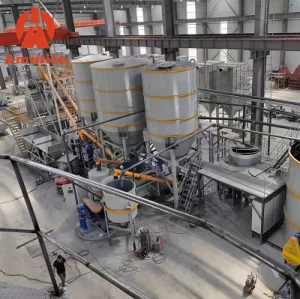
Features loss-in-weight gravimetric feeders for cement and fly ash paired with dynamic pre-expansion EPS machines. The digital dosing unit maintains slurry density within a strict ±1.5% margin, eliminating core voiding and density segregation across long panel spans.
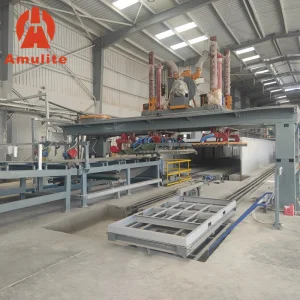
Designed with high-tensile steel frame structures, automatic hydraulic opening/closing mechanisms, and internal steam-heating pipelines. Allows simultaneous casting of 20–40 panels per car with precise tongue-and-groove joint profile shaping.
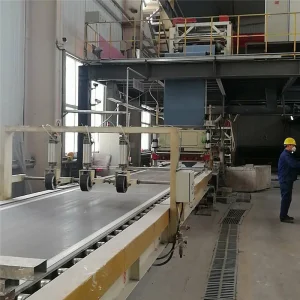
Integrated vacuum suction manipulators feed non-asbestos fiber cement skin boards into vertical mould slots with zero edge damage. Robotic stackers handle demoulded panels, transferring them directly to curing stations or automated bundling conveyors.
Selecting the optimal line architecture based on factory spatial footprint, target panel specifications, and output requirements.
| Technical Parameter | Vertical Battery Mould Line (Amulite Standard) | Horizontal Continuous Roll Line |
|---|---|---|
| Primary Application | Lightweight Cement EPS Sandwich Wall Panels | PU/PIR/Mineral Wool Metal Surface Panels |
| Core Density Range | 450 – 700 kg/m³ (Structural Cement Matrix) | 35 – 120 kg/m³ (Polyurethane / EPS Foam) |
| Joint Configuration | Precision Tongue & Groove (Male/Female Joint) | Overlapping Metal Interlock |
| Fire Resistance Rating | 2 to 4 Hours (Non-combustible Cement Matrix) | 30 to 90 Minutes (Varies by core insulation) |
| Footprint Requirement | Compact (1,500 – 3,500 m² factory area) | Extended Line (6,000 – 12,000 m² factory area) |
| Capital Expenditure (CAPEX) | Optimized Low to Medium Investment | High Initial Investment |
Adapting EPS sandwich cement panels to diverse architectural codes, climatic stresses, and structural environments worldwide.
In hot and humid regions such as Indonesia, Vietnam, and the Philippines, EPS sandwich panels serve as non-bearing interior partition walls in commercial high-rises. Their high moisture barrier resistance prevents wall fungus, while lightweight panels reduce dead loads on deep pile foundations.
Operating across Saudi Arabia and the UAE, buildings constructed with 100mm and 150mm EPS cement panels achieve U-values below 0.35 W/m²K. This drastically cuts HVAC electrical consumption during extreme summer heatwaves exceeding 50°C.
In Chile, Peru, and Mexico, structural flexibility under seismic stress is vital. The tongue-and-groove jointing system reinforced with anti-crack grouting mortar allows low-rise housing assemblies to withstand intense shear stress without panel fracture or structural failure.
Furthermore, rapid urbanization across African nations has created massive demand for affordable modular housing. EPS sandwich panel machinery manufactured by China Amulite Group empowers regional block and board producers to manufacture up to 800 m² of wall panels per day per line, accelerating site construction timelines by over 400% compared to traditional bricklaying practices.
Unlocking competitive capital efficiency, robust industrial clusters, and rigorous pre-shipment dry-run testing protocols.
Choosing a reliable machinery manufacturing partner requires evaluating both engineering capabilities and the strength of the underlying industrial ecosystem. China’s advanced heavy machinery sector—particularly concentrated in industrial machinery hubs such as Hebei—offers unmatched structural advantages to international building material investors.
From high-grade structural steel casting and hydraulic cylinder machining to Siemens PLC electrical cabinet integration, 95% of sub-components are manufactured within a 100-kilometer radius of Amulite's 100,000 m² heavy manufacturing facility, guaranteeing short lead times and strict quality control.
Prior to international container loading, every EPS sandwich panel production line undergoes rigorous factory pre-assembly. Mechanical drives, hydraulic pressure systems, automatic track transfer cars, and vacuum lifters are fully wired and dry-tested under simulated load conditions.
By leveraging streamlined fabrication workflows and standardized engineering designs, Amulite delivers high-tier automated equipment at 40% to 60% lower capital outlay compared to European alternatives, allowing investors to achieve full project ROI within 12 to 18 months of commissioning.
Ensuring compliance with international structural, electrical, and environmental safety standards across every stage of implementation.
Deploying a heavy industrial production line internationally requires absolute adherence to regional electrical codes, structural safety mandates, and raw material formulation tuning. China Amulite Group enforces a structured engineering project lifecycle for every plant installation:
Our senior engineering teams draft 3D BIM foundation drawings, detailing load-bearing pit requirements, steam boiler pipe networks, compressed air distribution lines, and electrical transformer capacities tailored to the client's site plot.
Before equipment arrives on site, client-sourced OPC cement, fly ash, silica sand, and local EPS beads are sent to Amulite’s laboratory for slurry rheology, density, and 28-day compression strength optimization.
Resident field installation engineers oversee mechanical placement, hydraulic piping, electrical wiring, PLC parameter tuning, and conduct hands-on training for plant operators until target daily output and board yields are fully achieved.
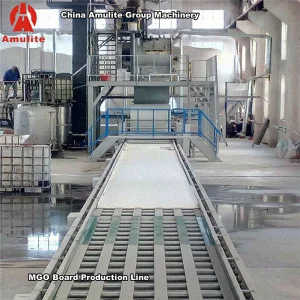
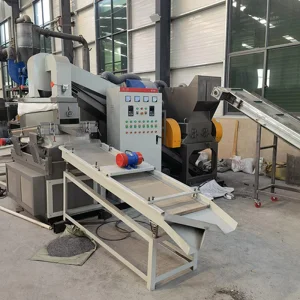
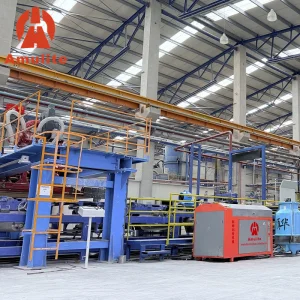
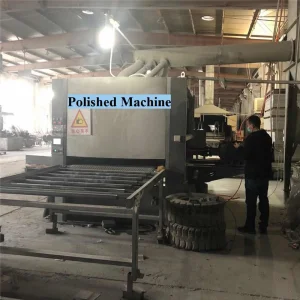
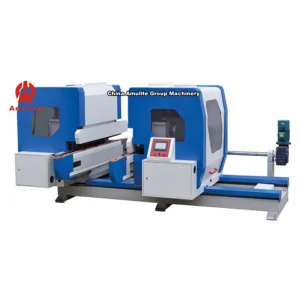
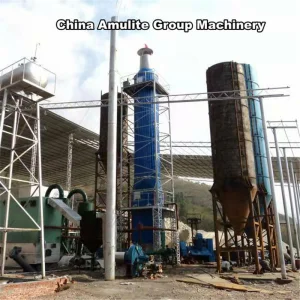
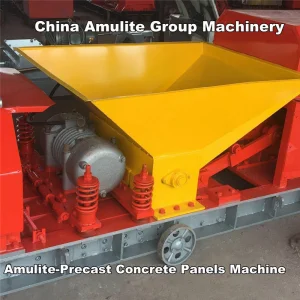
Discover our specialized raw material recycling, surface polishing, and lightweight board manufacturing equipment portfolio.
Direct answers from our senior engineering and export management department regarding plant ROI, raw material specs, and commissioning timelines.
Depending on local market prices for precast wall panels and raw material procurement costs (OPC cement, fly ash, EPS beads), most operating plants achieve full capital payback within 12 to 18 months. High demand in modular construction and structural wall replacement significantly accelerates profitability.
Yes. Amulite engineers design mix formulations tailored to locally available ordinary Portland cement (OPC 42.5/52.5), standard class-F fly ash, silica sand, and locally expanded polystyrene (EPS) granules. Our team conducts preliminary raw material lab testing to ensure optimal binding and curing profiles before delivery.
A standard battery mould EPS sandwich panel line producing 500,000 m² to 1,000,000 m² annually requires a workshop area of approximately 2,000 to 3,500 square meters. A minimum clear height of 6.0 meters is recommended to accommodate overhead crane operations, raw material storage hoppers, and vertical battery mould car maneuverability.
A standard 90mm thick EPS cement sandwich panel achieves an airborne acoustic sound insulation rating of 42 dB and a fire endurance rating exceeding 3 hours at 1000°C. In comparison, traditional hollow concrete blockwork requires manual plastering on both sides to match equivalent acoustic and thermal insulation performance, while weighing up to 60% more.
Amulite provides lifetime technical support, remote SCADA PLC diagnostics, and expedited spare parts dispatch within 48 hours. During on-site commissioning, our resident installation team delivers thorough maintenance training and hands over a 2-year wear-and-tear spare parts kit to maintain uninterrupted factory output.