Explore our engineering-grade concrete board systems, processing machinery, and automated production components.
Analyzing the macro-economic drivers, structural engineering shifts, and green building directives reshaping modern wall panel manufacturing worldwide.
The global construction industry is undergoing a paradigm shift from traditional, labor-intensive site-cast concrete operations toward advanced off-site prefabricated modular systems. At the heart of this transformation is the Concrete Wall Panel Making Machine. Driven by accelerating urbanization, severe structural labor shortages across North America, Europe, and Asia-Pacific, and stringent ESG (Environmental, Social, and Governance) mandates, precast concrete wall panel technology has transformed from an architectural alternative into a primary structural necessity.
Modern commercial developments, industrial logistics parks, and high-density residential complexes require exterior cladding and interior partitioning solutions that deliver high thermal resistance (R-value), superior structural acoustic isolation, exceptional fire endurance ratings (up to 4 hours A1 non-combustible), and rapid installation velocity. Consequently, global procurement teams are shifting focus from standalone block-making units toward fully integrated, automated precast concrete wall panel production lines.
Understanding the core mechanical principles, extrusion dynamics, and curing mechanics across major equipment variations.
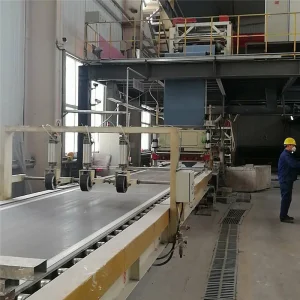
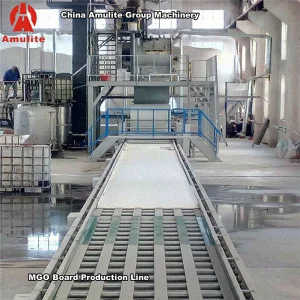
Utilizing high-tensile fiber cement or calcium silicate boards as surface facings, these vertical battery mold systems inject a core matrix of Portland cement, fly ash, chemical foaming agents, and pre-expanded EPS beads. Featuring vertical hydraulic opening/closing molds, automatic slurry batching, and high-frequency internal vibration, these lines yield smooth, paint-ready composite panels with exceptional thermal performance.
Operating on slip-form extrusion or auger drive technology, hollow-core machines process semi-dry concrete mixes containing aggregates, sand, and cement. Internal augers compress the concrete around core-forming tubes while moving along long casting beds. The resulting longitudinal voids dramatically reduce overall panel weight while providing dedicated conduits for MEP (mechanical, electrical, plumbing) installations.
Designed for large-scale industrial output, AAC panel equipment mixes fine quartz sand or fly ash, lime, cement, water, and aluminum powder expansion agent. The slurry is poured into massive molds where gas generation creates uniform micro-cellular structures. Following wire-cutting precision profiling, the green panels undergo high-pressure steam hydrothermal reaction inside autoclaves (12 bar, 190°C) to yield crystalline Tobermorite structures.
Utilizing multi-vat wet slurry filtration, the Hatschek process builds up micro-layers of cellulose fiber, cement, and silica onto forming cylinders under vacuum dewatering. Sheets are cut, stacked, pressed under 10,000-ton hydraulic presses to remove air pockets, and autoclaved. This machinery creates ultra-dense (1.2–1.6 g/cm³), weather-resistant exterior architectural wall panels.
| Panel Technology Type | Typical Density (kg/m³) | Flexural Strength (MPa) | Thermal Conductivity (W/m·K) | Primary Commercial Use |
|---|---|---|---|---|
| EPS Cement Sandwich Panel | 550 – 750 | 8.5 – 12.0 | 0.085 – 0.12 | High-rise interior partition walls, cold storage cladding |
| Hollow-Core Concrete Panel | 900 – 1400 | 12.0 – 18.0 | 0.25 – 0.45 | Boundary perimeter walls, industrial warehouse walling |
| AAC Aerated Concrete Panel | 420 – 625 | 3.5 – 6.0 | 0.09 – 0.16 | Commercial exterior curtain walls, steel-structure infill |
| Heavy Fiber Cement Cladding | 1300 – 1600 | 16.0 – 28.0 | 0.18 – 0.30 | High-end architectural facades, rain-screen systems |
Why leading global EPC contractors and building material manufacturers source automated wall panel lines from Chinese OEM hubs.
China's dominance in the global precast machinery sector stems from complete industrial cluster integration, advanced CNC heavy fabrication facilities, and rapid technological iteration. Modern Chinese machinery factories have transitioned from basic mechanical assembly to integrated Industry 4.0 mechatronics engineering.
From heavy steel plate welding and stress-relief heat treatment to precision CNC boring of forming cylinders and custom PLC cabinet wiring, 90% of structural components are fabricated within single industrial ecosystems, dramatically lowering total cost-to-performance ratios.
Top Chinese OEMs incorporate internationally accessible tier-1 electrical and hydraulic components—including Siemens S7-1500 PLCs, Schneider contactors, Yuken hydraulic valves, and SEW Eurodrive gear motors—ensuring effortless local spare parts sourcing worldwide.
Chinese engineering teams provide complete operational handovers. Rather than supplying isolated hardware, engineers customize chemical slump formulas and slurry hydration curves around your locally sourced aggregate, Portland cement grades, and agricultural fly ash waste.
How specialized concrete wall panel configurations solve region-specific climate and structural challenges.
Primary Deployment: 150mm EPS Cement Sandwich Wall Panels & Autoclaved Aerated Concrete Panels.
Technical Focus: Engineered to withstand thermal radiation reaching 50°C+. The low thermal conductivity (0.09 W/m·K) cuts HVAC power consumption in commercial structures by over 30%, meeting strict Estidama and Saudi Mostadam green building codes.
Primary Deployment: Fiber Cement Surface Composite Panels & Hollow Core Wall Units.
Technical Focus: Formulated for zero organic decay and 100% moisture resistance during monsoon seasons. Interlocking tongue-and-groove jointing systems provide structural elasticity, preventing cracking during seismic activity.
Primary Deployment: High-Density Autoclaved AAC Panels & Pre-Insulated Concrete Cladding.
Technical Focus: Prefabricated off-site to bypass wet-mortar freezing constraints during harsh winters. Dry-erection systems allow structural envelope completion in under half the traditional construction timeframe.
Emerging technological vectors that will define competitive advantages in precast panel production.
Next-generation concrete wall panel making machines incorporate AI-driven optical sensors along the slurry distribution track. Real-time viscosity scanners continuously analyze water-to-cement ratios and particle segregation, automatically adjusting liquid chemical admixtures via closed-loop PLC feedback before pouring.
With global carbon taxation expanding, machinery lines are re-engineered to process eco-friendly pozzolans, blast furnace slag (GGBS), expanded perlite, and bio-based aggregates. This lowers Portland cement dependency by up to 40% while achieving identical 28-day compressive strength metrics.
Key technical parameters, engineering audits, and ROI verification metrics for plant capital expenditure.
Investing in a high-capacity concrete wall panel production line involves substantial capital expenditure (CapEx). Evaluating international machine manufacturers requires an objective engineering matrix beyond initial quotation prices.
Ensure vertical mold cars feature heavy structural Q355B steel frames treated with stress-relieving heat treatment. Hydraulic clamping pressure should maintain a minimum of 21 MPa to resist lateral slurry expansion during vibration, preventing panel thickness deviations across multi-cavity molds.
Evaluate the thermodynamic insulation of continuous curing chambers or autoclaves. Modern lines incorporate heat exchanger loop recovery systems that harvest residual flash steam, lowering energy overhead per square meter of output by 18-25%.
In-depth engineering answers to common technical queries from prospective plant investors and facility managers.
Browse our expanded portfolio of raw material processing, block forming, and automated board handling systems.