High-performance automatic hydraulic machinery, continuous pressing systems, and heavy crushing technology engineered for enterprise-grade building material manufacturing.
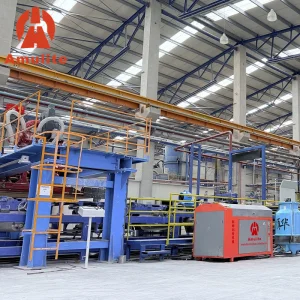
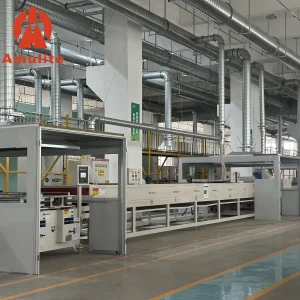
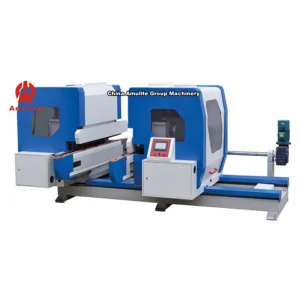
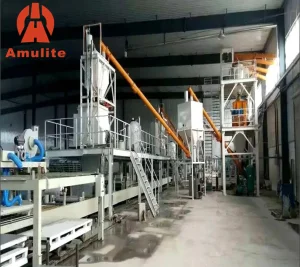
Modern automatic hydraulic machinery is undergoing a monumental shift from traditional induction-motor driven hydraulic circuits to intelligent, electro-hydraulic servo proportional architecture paired with Industry 4.0 IoT analytics.
Conventional hydraulic presses rely on fixed-displacement pumps operating continuously at nominal speeds, throttling excess fluid via relief valves and wasting thermal energy. Next-generation manufacturers integrate permanent magnet synchronous servo motors (PMSM) directly coupled with internal gear pumps.
During pressure dwell cycles or idle phases, the servo motor decelerates to zero RPM, completely eliminating standby energy losses while maintaining full system holding pressure with precision accuracy.
Modern automated hydraulic presses incorporate microsecond-level feedback loops utilizing high-frequency linear magnetostrictive displacement transducers and piezo-resistive pressure sensors. This allows for complex velocity-to-pressure cross-fading.
By dynamically adjusting flow rates across multi-cylinder configurations, machinery manufacturers achieve absolute parallelism during high-tonnage compaction—preventing material density gradient variations in precast wall panels and ceramic tiles.
Leading manufacturers embed industrial IoT gateways (OPC-UA compliant) directly into the PLC control cabinet. Real-time telemetry tracks hydraulic oil viscosity, micro-particulate contamination (ISO 4406 standards), valve switching latency, and pump acoustic signatures.
AI algorithms process this operational data on the edge, forecasting seal degradation or pump cavitation weeks before catastrophic failure occurs—driving operational uptime past 98.5%.
Automatic hydraulic machinery represents the core force behind global infrastructure, heavy building material production, recycling ecosystems, and advanced thermal insulation processing.
Whether forming structural fiber cement boards, high-density precast concrete elements, or EPS sandwich wall panels, hydraulic pressure must be distributed evenly without fluid turbulence. The application of automatic proportional hydraulic valves ensures density consistency across 100% of the board's surface area, mitigating internal stress and preventing post-cure warping.
| Performance Specification | Legacy Hydraulic Machinery | Standard Automatic Hydraulic Press | Advanced Servo-Hydraulic System (Industry 4.0) |
|---|---|---|---|
| Drive Architecture | Fixed Induction Motor + Relief Throttling | Variable Frequency Drive (VFD) + Vane Pump | PMSM Servo Motor + Direct Closed-Loop Hydraulic Pump |
| Energy Efficiency Class | Baseline (High Heat Generation) | +20% Energy Savings | +45% to +60% Energy Savings |
| Positioning Accuracy | ±1.5 mm to ±2.0 mm | ±0.3 mm to ±0.5 mm | ±0.05 mm (Magnetostrictive Encoder) |
| Hydraulic Fluid Thermal Stability | Requires Continuous External Chilling | Standard Heat Exchanger | Minimal Heat Generation (Reduced Cooling Duty) |
| Data Connectivity | Hardwired Analog Relays | Basic PLC with Modbus RTU | OPC-UA, MQTT, Cloud Telemetry & Remote ERP Sync |
| Maintenance Protocol | Reactive (Breakdown Repair) | Time-Based Preventive Schedule | AI Predictive Condition Monitoring & Telemetry |
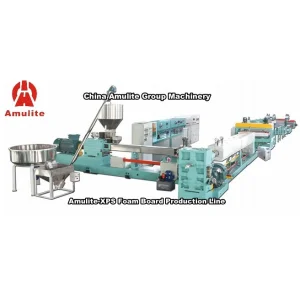
In EPS sandwich panel and AAC block manufacturing lines, automatic hydraulic demolding units and gang-mould clamping presses provide the structural lock needed during high-expansion curing phases. Precise hydraulic pressure regulation prevents mould deformation under thermal stress.
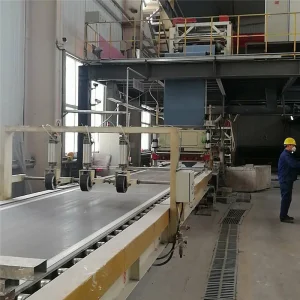
Continuous wet sheet forming (Hatschek process) relies on automatic hydraulic accumulator-assisted dewatering presses. These multi-cylinder rams exert up to 10,000 tons of uniform force to extract interstitial moisture prior to autoclave steam curing.
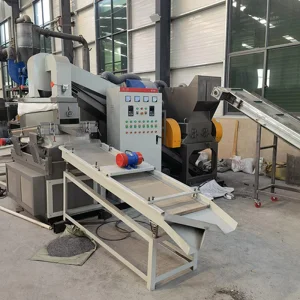
Industrial copper wire recycling, scrap metal baling, and crushed aggregate briquetting demand high power density. Heavy-duty hydraulic rams compress loose materials into high-density solid blocks, maximizing furnace yield and shipping economics.
Selecting a premier Chinese machinery manufacturer grants global enterprises access to unparalleled industrial scale, fully integrated supply chains, and advanced CNC machining infrastructures.
China's modern industrial clusters in Hebei and regional manufacturing hubs possess localized access to high-yield strength structural steel plates (Q355B to Q690D). Machine frames undergo full thermal stress-relieving annealing in massive furnace bays, guaranteeing zero structural warping under decades of cyclic loading.
Hydraulic cylinder performance is dictating by inner cylinder bore tolerances. Leading Chinese factories utilize 5-axis heavy gantry machining centers and deep-hole honing machines to achieve internal wall finishes of Ra < 0.2 µm, coupled with hard chrome plating exceeding 50 microns for extreme wear resistance.
Before ocean transport, full production lines are dry-assembled and operated under 120% rated hydraulic test pressures. Laser trackers verify bed alignment, while thermal imaging validates oil cooler heat dissipation rates across extended 72-hour trial runs.
Industrial machinery buyers, plant directors, and EPC procurement leads must evaluate automatic hydraulic machinery suppliers across rigorous operational and commercial benchmarks to maximize Total Cost of Ownership (TCO) efficiency.
Engineering buyers should mandate precise calculations for required clamping tonnage ($F = P \times A$) and hydraulic oil flow velocity ($Q = V \times A$). Ensure the manufacturer designs the hydraulic manifold block with optimized fluid channels to prevent pressure drops and fluid turbulence.
Inquire about oil filtration standards. Premium hydraulic power units employ dual offline filtration loops equipped with 3-micron absolute glass-fiber elements and water absorption membranes to maintain hydraulic oil cleanliness to ISO 4406 Class 16/14/11.
Specify global-brand electrical hardware to guarantee locally available replacement parts. Control cabinets should feature IP54 or IP65 enclosures with Siemens S7-1500 PLCs, Schneider contactors, and integrated safety relays meeting SIL 3 / Category 4 safety standards.
Deploying heavy industrial machinery into international jurisdictions requires stringent adherence to regional safety directives, electrical grid compatibility, and comprehensive field service support.
Leading automatic hydraulic machine manufacturers build machinery compliant with global safety standard directives: European CE Directives (2006/42/EC Machine Safety, 2014/68/EU Pressure Equipment Directive), North American UL/CSA control panel certifications, and ISO 9001:2015 quality management systems.
Machinery must be customized for local electrical grids (380V, 415V, 460V, or 480V at 50Hz or 60Hz). For tropical or high-altitude installations, cooling systems are upgraded to heavy-duty air/water heat exchangers or oil chillers equipped with anti-corrosion condenser fins.
Expert factory field engineers provide on-site foundation inspection, hydraulic line piping layout verification, mechanical erection, PLC program customization, and complete operator training until stable commercial mass production is achieved.
Direct insights from senior hydraulic engineers addressing critical questions regarding installation, system customization, maintenance cycles, and machine selection.
Explore our specialized production lines, post-processing machinery, and material recycling systems engineered for enterprise industrial operations.