Single Face Polished Machine Manufacturers & Products

The Definitive Industrial Engineering Whitepaper on High-Precision Surface Finishing, Ultra-Flat Planarization & Automated Machining Systems

Featured Machinery & Industrial Equipment Lineup

Explore our core engineering hardware portfolio, featuring high-speed single face polishing equipment, continuous material processing lines, and heavy-duty manufacturing systems.
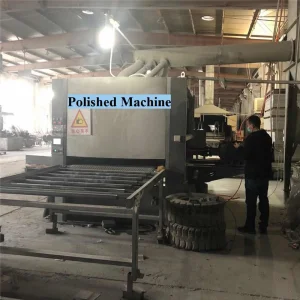
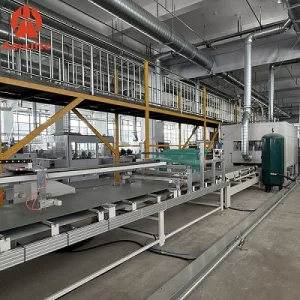
China Single Face Polished Machine Manufacturers Suppliers
China Single Face Polished Machine Manufacturers, Suppliers
View Product Details
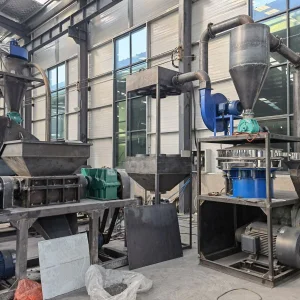
OEM Lithium Battery Recycling Equipment Factory Company
OEM Lithium Battery Recycling Equipment Factory, Company
View Product Details
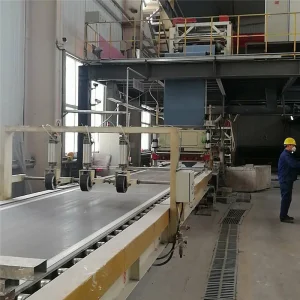
China Gypsum Board Production Line Supplier Factories
China Gypsum Board Production Line Supplier, Factories
View Product Details
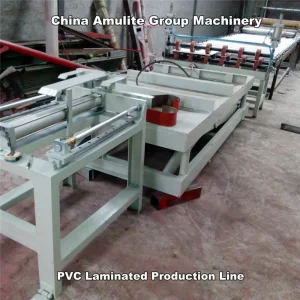
China PVC Laminated Production Line Factories Products
China PVC Laminated Production Line Factories, Products
View Product Details
Best XPS Insulation Tile Backer Production Line Supplier Companies
Best XPS Insulation Tile Backer Production Line Supplier, Companies
View Product Details
OEM UV Coating Painting Production Line Manufacturer Factories
OEM UV Coating/Painting Production Line Manufacturer, Factories
View Product Details
High Quality Embossed Metal Composite Exterior Panels Production Line
High-Quality Embossed Metal Composite Exterior Panels Production Line Manufacturers, Company
View Product Details
China Automatic Bricks Making Production Line Manufacturers Products
China Automatic Bricks Making Production Line Manufacturers, Products
View Product Details

Global Industrial Demand & Macro Procurement Analysis

The global market for precision surface finishing equipment has transitioned from basic abrasive smoothing to sub-micron planarization. Single face polishing machines represent a crucial nexus in high-end building material fabrication, semiconductor substrates, advanced ceramic manufacturing, and architectural board surface processing.

Ra < 0.01μm
Ultra-Precision Roughness Target
99.8%
Automated Yield Rate
35%
Slurry Consumption Savings
24/7
Continuous Operation Capability
Executive Procurement Summary: Industrial procurement managers and factory plant leads prioritize total cost of ownership (TCO), spindle thermal stability, closed-loop slurry recovery, and mechanical longevity when evaluating single face polishing machine manufacturers. Selecting an equipment partner requires examining both structural mechanics and digital automation capabilities.

Across North America, Europe, Asia-Pacific, and emerging manufacturing hubs in Southeast Asia, industrial production lines are integrating high-efficiency single face polishing units. Whether used for calibrating fiber cement cladding panels, smoothing calcium silicate boards, micro-finishing semiconductor quartz, or refining metal composite surfaces, single face polishing systems provide targeted planarization on a single micro-layer without structural stress to the substrate back.

High-Rigidity Heavy Cast Iron Structure

Engineered using stress-relieved Meehanite casting or reinforced tubular steel frames to minimize structural harmonics, vibration dampening, and mechanical drift during continuous heavy-duty polishing cycles.

Pneumatic Multi-Zone Pressure Control

Variable pneumatic cylinders apply micro-calibrated force across multi-point pressure heads, ensuring dynamic thickness correction and uniform removal rates across non-standard board geometry.

Intelligent Slurry & Lubricant Management

Peristaltic auto-dosing pumps feed diamond, ceramic, or silicon carbide abrasives with precision thermal monitoring, preventing localized thermal expansion and surface scratching.

Kinematic Design & Kinematic Mechanics of Single Face Polishing

Understanding the tribological interaction between the polishing platen, carrier ring, abrasive slurry, and target substrate is vital for achieving predictable material removal rates (MRR) and absolute surface flatness.

Single face polishing systems operate on planetary or eccentric orbital motion profiles. The workpiece is secured inside a carrier plate held under controlled pneumatic downward pressure against a rotating lower polishing plate. Unlike double-sided lapping machines which process upper and lower surfaces simultaneously, single face machines are optimized for substrates requiring precise single-sided surface topography control, architectural texturing, or singular veneer coating preparation.

Engineering Parameter Standard Industrial Spec Advanced Ultra-Precision Spec Production Impact
Platen Runout Tolerance ≤ 0.005 mm ≤ 0.001 mm Eliminates micro-wavy patterns on finished surfaces
Main Drive Motor Power 15 kW - 45 kW 55 kW - 110 kW VFD Drive Sustains high torque under heavy abrasive loads
Surface Roughness ($R_a$) 0.1 μm - 0.4 μm < 0.008 μm (Mirror Finish) Dictates coating adhesion and visual aesthetic grade
Automation & PLC Interface Semi-Automatic Touchscreen Full Industry 4.0 SCADA Integration Reduces manual labor and standardizes operational parameters
Slurry Temperature Control Ambient Cooling Chilled Loop (±0.5°C stability) Prevents thermal distortion of large-format slabs
Technical Distinction — Single Face vs. Double Face Polishing: Single face polishing allows individual pressure profiling across heterogeneous materials (such as fiber-reinforced cement composite panels or laminated tile backer boards) where stress balance differs across the board cross-section. It prevents cracking in fragile substrates and reduces tooling setup time significantly compared to complex double-platen systems.

Macro Industry Solutions & Turnkey Ecosystem Integration

A single face polishing unit achieves its peak ROI when seamlessly integrated into complete upstream and downstream building material production lines.

1. Fiber Cement & Calcium Silicate Lines

Integrated downstream of autoclaving or curing stages. Single face polishing levels fiber cement sheets prior to UV coating, decorative embossing, or direct inkjet printing, securing superior paint adhesion and consistent panel thickness.

2. Decorative Metal Composite & Architectural Panels

Utilized for high-sheen hairline or mirror finishing of aluminum composite panels (ACP), stainless steel architectural cladding, and metallic exterior panels without inducing thermal warpage.

3. Flexible Clay & Lightweight Ceramic Tiles

Provides precise surface calibration for modern flexible ceramic membranes and modified clay tiles, ensuring seamless edge-to-edge alignment during architectural facade installation.

4. Gypsum Board & XPS Tile Backer Boards

Configured with heavy-duty vacuum table belt polishers to calibrate tile backer insulation cores, creating textured anchor profiles for adhesive bonding in wet-room applications.

5. Lithium Battery & E-Waste Component Processing

Specialized planarization machines used in recycling, dismantling, and surface conditioning of battery cell casings, copper foil substrates, and composite separator frames.

6. Advanced Bricks & Autoclaved Concrete Blocks

Heavy inline single face grinders flatten concrete block contact surfaces for mortarless thin-bed architectural masonry, increasing structural compressive rating.

Technology Roadmap & Future Industry Outlook (2025–2030)

The technological trajectory of single face polishing machinery is shaped by artificial intelligence, closed-loop sensor feedback, environmental sustainability, and ultra-high dynamic speed.

Phase 1: AI-Powered Adaptive Thickness Profiling (Current Deployment)

Machine-learning models interpret live laser thickness sensors across the surface platen, automatically making micro-adjustments to local pneumatic cylinder pressure to eliminate board taper and local thickness variances.

Phase 2: Eco-Smart Closed-Loop Slurry & Water Recycling (2025-2027)

Advanced centrifugal separation and ceramic membrane filtration systems recycle up to 96% of carrier water and reclaim unspent diamond abrasive grains, reducing industrial effluent and chemical waste dramatically.

Phase 3: Digital Twin & Predictive Maintenance Integration (2027-2030)

Embedded vibration transducers, acoustic emission sensors, and thermal imaging cameras stream machine condition data to cloud platform digital twins, predicting bearing wear and platen dressing requirements days before quality degradation occurs.

Global Compliance, Quality Standards & Localized Support

Deploying high-precision industrial machinery across international boundaries requires strict adherence to international safety directives, localized service infrastructure, and rigorous engineering credentials.

CE & Machinery Directive Compliance

All machinery complies with European Machinery Directive 2006/42/EC, Low Voltage Directive 2014/35/EU, and electromagnetic compatibility (EMC) standards, complete with interlocked safety guarding and dual-circuit emergency stop logic.

ISO 9001:2015 Manufacturing QA

Rigorous quality control frameworks govern raw material casting inspection, spindle dynamic balancing, PLC cabinet wiring verification, and pre-shipment dry-run operational endurance testing.

Worldwide On-Site Field Support

Experienced commissioning engineers provide complete layout civil design checking, mechanical alignment, electrical integration, recipe optimization, and local operator training across Asia, Europe, the Americas, and Africa.

Frequently Asked Questions (Technical Procurement Q&A)

Expert technical responses to common questions encountered during single face polishing machine evaluation, procurement, and factory installation.

1. What is the difference between a single face polishing machine and a traditional surface sander?
Traditional surface sanders rely on dry abrasive belts or abrasive wheels, which create macro-directional scratch patterns and generate significant frictional heat. Single face polishing machines utilize liquid abrasive slurry (diamond, cerium oxide, or silicon carbide) on liquid-cooled cast iron or synthetic pads. This process enables micro-planarization, eliminates thermal surface stress, achieves sub-micron surface roughness ($R_a < 0.01 \mu m$), and produces distortion-free mirror or satin finishes.
2. How does the machine handle non-uniform board thickness or initial bow?
Modern single face polishing machines feature multi-point pneumatic carrier heads or segmented pressure plates. Each segment dynamically adjusts its downward force based on real-time feedback from ultrasonic or laser thickness sensors situated at the inlet. This ensures that raised spots receive calibrated localized pressure without over-grinding thinner sections of the board.
3. What maintenance protocols are required for the lower polishing platen?
Over time, continuous polishing causes minor groove wear across the platen surface. Quality single face polishers feature automated diamond conditioning rings that run periodically or continuously to dress the pad, maintaining perfect planarity. Regular flushing of slurry lines and monitoring spindle bearing lubrication temperatures are standard preventative maintenance practices.
4. Can a single face polishing machine be integrated into existing high-speed production lines?
Yes. Equipment manufacturers design these machines with standardized Profinet, Ethernet/IP, or Modbus TCP interfaces. Infeed and outfeed roller conveyors, vacuum turnover units, and automatic stackers can be synchronized directly with the central plant SCADA system for fully automated batch processing.
5. What are the key criteria when selecting abrasive slurry for different materials?
Slurry selection depends on substrate Mohs hardness and target removal rate. Diamond slurries are preferred for hard ceramics, silicate substrates, and quartz; aluminum oxide is ideal for non-ferrous metals and decorative composite panels; silicon carbide offers an economical solution for rough calibration of fiber cement boards. Slurry pH and chemical dispersants must also be matched to prevent surface oxidation or chemical etching.
6. How do equipment suppliers assist with custom tooling and formulation?
Leading OEMs operate application testing laboratories where client sample substrates undergo material analysis. Suppliers evaluate structural density, flexural strength, and thermal resistance to configure customized platen rotation speeds, abrasive grit sequences, carrier ring geometries, and optimal feed rates prior to machinery assembly.
Comprehensive Equipment & Production Line Portfolio

Discover additional turnkey manufacturing solutions, high-capacity edge profilers, and full-scale factory systems available for global integration.
OEM 1300 II Type Automatic Four Side Edge Cutting Machine Factory Companies
OEM 1300 II Type Automatic Four Side Edge Cutting Machine Factory, Companies
View Product Details
Best Flexible Clay Ceramic Tile Production Line Manufacturer Companies
Best Flexible Clay Ceramic Tile Production Line Manufacturer, Companies
View Product Details
OEM EPS Sandwich Cement Wall Panels Production Line Companies Products
OEM EPS Sandwich Cement Wall Panels Production Line Companies, Products
View Product Details
Buy Gypsum Powder Production Line Supplier Product
Buy Gypsum Powder Production Line Supplier, Product
View Product Details
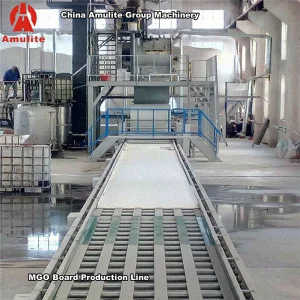
OEM China Amulite Group MGO Board Production Line Factories Product
OEM China Amulite Group MGO Board Production Line Factories, Product
View Product Details
Buy Stone Hammer Crusher 6CX Euro Series Jaw Crusher Company Product
Buy Stone Hammer Crusher 6CX Euro Series Jaw Crusher Company, Product
View Product Details
China Fiber Cement Board Calcium Silicate Board Production Line Factory Companies
China Fiber Cement Board /Calcium Silicate Board Production Line Factory, Companies
View Product Details
China Single Face Polished Machine Manufacturers Suppliers
China Single Face Polished Machine Manufacturers, Suppliers
View Product Details
All Single Face Polished Machine Products