Explore our core manufacturing units engineered for multi-layer board production, surface decoration, and heavy-duty building material processing.
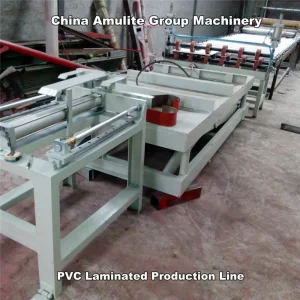
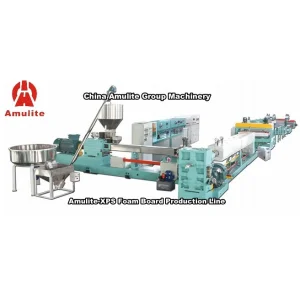
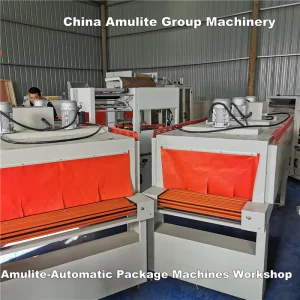
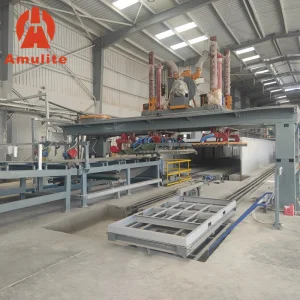
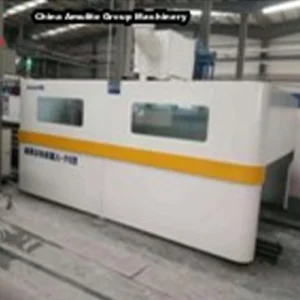
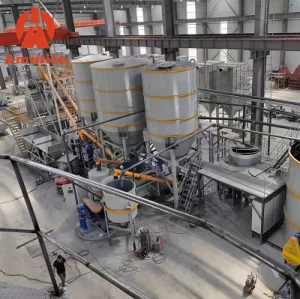
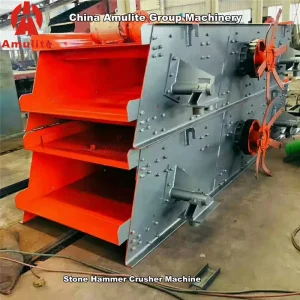
Modern architectural, commercial interior, and furniture applications demand lightweight, moisture-proof, and fire-resistant composite boards. The PVC Laminated Production Line stands at the nexus of high-precision material science and automated mechanical engineering. As global construction standards pivot toward sustainable, durable, and aesthetically versatile building components, procuring full-scale laminating infrastructure requires rigorous evaluation of machine kinematics, thermal dynamics, polymer adhesion science, and overall line efficiency.
Technical Insight: A modern turnkey PVC Laminated Production Line integrates substrate pre-treatment, dust extraction, primer application, thermal infrared pre-heating, precision adhesive coating (solvent-based or PUR hot-melt), pressure roller film application, online edge wrapping/cutting, and automated stacking. Achieving ZERO bubble formation and superior peel strength requires dynamic tension feedback across varying ambient temperatures.
To understand why leading gypsum board, calcium silicate board, PVC foam board, and fiber cement board factories are upgrading their surface finishing units, we must examine the core modules that dictate equipment stability and final panel quality.
Substrate boards often accumulate micro-dust and static charges during extrusion, trimming, or sander operations. The line incorporates anti-static nylon rotary brushes matched with high-pressure vacuum extraction systems, ensuring absolute surface purity prior to adhesive contact.
Whether utilizing Polyurethane Reactive (PUR) hot-melt technology or high-tack acrylic solvent adhesives, precision chrome-plated applicator rollers equipped with doctor blades ensure uniform grammage distribution down to ±1.5 g/m², preventing telegraphing or adhesive starvation.
PVC films (including wood grain, marble pattern, high-gloss UV, or tactile matte finishes) require constant tension. Dual-station continuous magnetic powder brake unwinding shafts paired with ultra-sonic edge position control (EPC) eliminate film mis-registration.
Engineered silicon pressure rollers arranged in temperature-controlled sequences exert calibrated pneumatic/hydraulic force across the width of the panel. Thermal infrared quartz tubes pre-activate the film backer and adhesive layer for instantaneous molecular bonding.
High-speed rotary carbide cutters synchronously cut excess film along the panel perimeter. Servo-driven flying saws or guillotine units cut continuously moving panels into exact pre-programmed architectural sheet dimensions with ±0.5 mm tolerance.
Integrated PLC controls sync the exit conveyor with gantry-style vacuum suction stackers, neatly piling finished PVC laminated ceiling boards or wall panels onto pallet platforms, eliminating manual labor handling damage.
The international building material machinery market has undergone a structural shift. Buyers from North America, Europe, the Middle East, Southeast Asia, and Latin America increasingly source complete production lines from Chinese manufacturers like Amulite Group. This migration is driven by compelling engineering and economic fundamentals.
Chinese equipment hubs house complete upstream and downstream supply chains within a 50-mile radius. From specialized steel rolling mills, high-precision CNC machining centers, to heavy-duty gearbox foundries and PLC automation labs, turn-around times for raw component sourcing are drastically reduced.
Capital expenditure (CAPEX) for a Chinese engineered turnkey laminating line is typically 40% to 60% lower than European equivalents without compromising on component quality. Lines utilize global standardized parts (Siemens PLC, Schneider electronics, Festo pneumatics, SKF bearings), keeping long-term maintenance OPEX predictable and low.
No two board factories have identical plant layouts or raw material characteristics. Chinese engineering firms excel at tailormade modular customization—adapting machine dimensions to existing factory heights, incorporating specific foil thickness modules, or integrating localized power grids (e.g., 380V 50Hz, 440V 60Hz, 220V 3Phase).
When evaluating PVC Laminated Production Line quotes from different manufacturers, technical procurement managers must contrast fundamental operating parameters. Below is a engineering benchmark matrix detailing modern plant configurations:
| Feature Parameter | Standard Cold-Glue Line | High-Speed PUR Hot-Melt Line | Ultra-Wide Heavy Industry Line |
|---|---|---|---|
| Target Board Substrates | Gypsum Board, PVC Foam Board | Calcium Silicate, Fiber Cement, MGO, WPC | SPC Flooring, XPS Foam, Acoustic Panels |
| Max Board Width | 600 mm – 1220 mm | 1220 mm – 1300 mm | 1300 mm – 1600 mm |
| Adhesive Type | Solvent-based / Water-based PVC Glue | Polyurethane Reactive (PUR) Hot-Melt | Dual PUR / Solvent Hybrid System |
| Production Line Speed | 5 – 18 m/min | 15 – 35 m/min | 10 – 28 m/min |
| Film Thickness Range | 0.12 mm – 0.35 mm | 0.15 mm – 0.80 mm | 0.20 mm – 1.20 mm |
| Adhesive Heat Resistance | Up to 65°C | Up to 120°C (Weathering Grade) | Up to 140°C (Extreme Climate) |
| Automation Level | Semi-Automated Manual Feed | Full PLC + Smart Vision Tracking | Turnkey Industry 4.0 Connected |
PVC laminated production lines yield composite boards that serve diverse architectural, structural, and decorative sectors globally. Understanding these end-market demands allows factory operators to maximize plant capacity utilization.
PVC laminated gypsum ceiling tiles (600x600mm or 2x2ft) with aluminum foil backing represent massive volume in hot, humid regions (Southeast Asia, Middle East, Africa). The film provides moisture resistance, preventing board sagging and mold growth in air-conditioned spaces.
Utilizing fiber cement board or calcium silicate substrate, PVC lamination generates Class A fire-rated decorative wall panels. Wood grain or marble PVC foils replace expensive natural timber and stone in hotel lobbies, hospital corridors, and corporate office fits.
Laminating PVC film onto WPC (Wood Plastic Composite) or foam PVC boards creates waterproof cabinet doors, bathroom vanities, and kitchen furniture. PUR hot-melt adhesives prevent edge peel even in steam-heavy environments.
Deploying complex production machinery across international borders requires stringent adherence to electrical safety, mechanical guarding, and environmental codes. Professional line builders integrate end-to-end compliance protocols into the machine engineering lifecycle.
All mechanical structures, pressure vessels, and control cabinets are designed to conform to global regulatory frameworks:
To shorten ramp-up cycles and guarantee contractual target capacity, manufacturers provide localized field engineer support packages:
The next decade of surface lamination machinery will be defined by smart automation, zero-VOC eco-adhesives, and real-time vision inspection systems.
High-speed line cameras equipped with deep-learning vision algorithms scan board surfaces continuously at 30 m/min. The system flags micro-scratches, bubble anomalies, or film misalignments instantly, automatically sorting defective boards off the main conveyor stack.
Environmental regulations in Western Europe and East Asia are phasing out high-solvent bonding systems. Modern lines prioritize solvent-free PUR hot-melt rollers or fully enclosed thermal catalytic oxidation (TCO) exhaust recovery units to eliminate VOC emissions.
Integrated PLC systems continuously stream temperature curve data, roller pressure readouts, motor amperage, and throughput speeds to cloud SCADA platforms. Remote factory technicians can perform remote diagnostic troubleshooting via encrypted VPN connections.
Clear engineering answers addressing the operational, financial, and logistical aspects of procuring a PVC Laminated Production Line.
Standard line configurations (e.g., 1220mm width cold-glue or PUR hot-melt) require 45 to 60 calendar days from initial deposit and engineering drawing approval. Fully custom lines featuring integrated automatic palletizing robotics, multi-foil unwinding carousels, or specialized board edge wrapping units typically require 75 to 90 calendar days for workshop fabrication, dry-assembly, and factory acceptance testing (FAT).
PUR Hot-Melt offers vastly superior chemical, moisture, and thermal resistance compared to solvent-based glues. PUR cross-links with moisture upon curing, forming an irreversible bond that withstands temperatures up to 120°C–140°C, making it mandatory for exterior wall cladding, high-humidity ceiling panels, and premium furniture. Solvent-based glues offer a lower initial CAPEX and are suitable for basic indoor PVC ceiling tiles in controlled climates.
Yes. Modern lines engineered by Amulite Group are multi-substrate versatile. By adjusting the roller gap clearance via digital servo-drives and altering pneumatic pressure settings, the line can smoothly transition between Gypsum Board (8mm-12mm), Fiber Cement Board (4mm-20mm), Calcium Silicate Board, PVC Foam Board, and MGO Board without changing primary mechanical components.
A standard high-speed 1220mm PUR PVC laminating line has an installed electrical capacity of approximately 45 kW to 85 kW, depending on the thermal pre-heating infrared lamp configurations and vacuum exhaust sizing. Operational power consumption typically averages 60% of total installed rating. Compressed air consumption requires approximately 0.6 m³/min at 0.6 to 0.8 MPa.
Bubble prevention is achieved through a multi-tier engineering approach: First, a high-efficiency anti-static dusting chamber clears all micro-particles. Second, an ultrasonic EPC system keeps foil tracking true. Third, a multi-stage progressive hardness silicon roller array expels air from the center outward during press-bonding. Fourth, infrared pre-heating softens the film to maintain elastic conformity over substrate surface micro-irregularities.
Every machine dispatch includes a 2-year wear-and-tear spare parts kit (silicon rings, heating tubes, rotary trimming blades, pneumatic valves, transport belts). Furthermore, remote PLC internet diagnostic modules enable our software engineering team to perform firmware updates, parameter tuning, and fault analysis worldwide within hours.
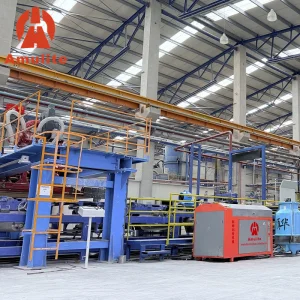
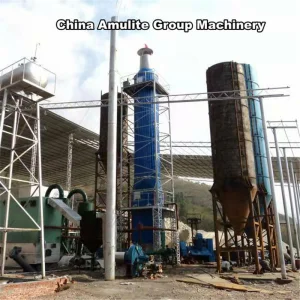
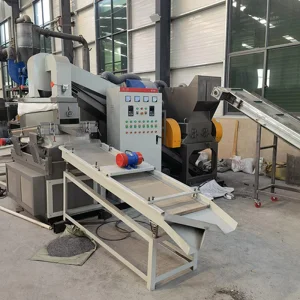
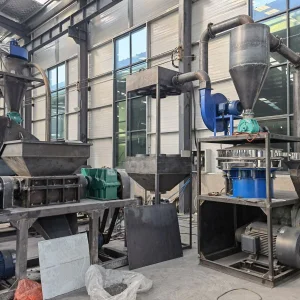
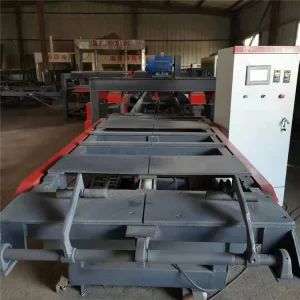
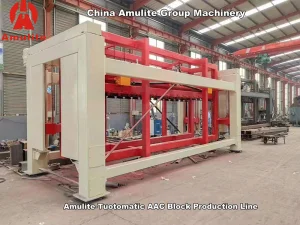
Complete your factory setup with our specialized heavy industry machinery portfolio engineered for fiber cement, AAC block, crushing, and recycling applications.
Connect with our senior process engineers today to receive a comprehensive technical quote, plant 3D layout proposal, and energy balance calculation tailored to your targeted panel specifications.
Request Turnkey Technical Proposal