Advanced non-metallic mineral processing systems engineered for high altitude operational stability and low thermal energy consumption.
Analyzing macroeconomic drivers, urban construction demand, and regional raw material logistics across Bogotá, Medellín, Cali, and Barranquilla.
Colombia’s construction sector is undergoing an unprecedented structural transition. Driven by major national infrastructure initiatives—such as the 4G/5G highway networks, the expansion of the Bogotá Metro system, and massive social housing programs (Vivienda de Interés Social - VIS)—demand for high-grade finishing materials has surged dramatically. Gypsum plaster, plasterboards, joint compounds, and self-leveling floor screeds represent the core building blocks of modern dry-wall construction across the department of Cundinamarca, Antioquia, and Valle del Cauca.
Historically, Colombia has relied significantly on imported processed gypsum powder or inefficient small-scale shaft kilns. Modernizing domestic processing capacity through automated fluidized bed calcination lines allows local manufacturers to substitute expensive imported plaster with superior locally produced $\beta$-hemihydrate ($\beta$-CaSO$_4$$\cdot$0.5H$_2$O) gypsum powder, yielding up to a 35% margin improvement for regional plant operators.
Colombia possesses substantial natural gypsum deposit reserves across key regions including Santander (Mesa de los Santos), Huila, Boyacá, and Tolima. Natural gypsum ore ($CaSO_4$$\cdot$2H$_2$O) in these deposits typically exhibits purities ranging from 82% to 94.5%. Furthermore, expanding coal-fired power infrastructure and industrial chemical processing plants in coastal industrial centers like Cartagena and Barranquilla generate significant volumes of Flue Gas Desulfurization (FGD) synthetic gypsum.
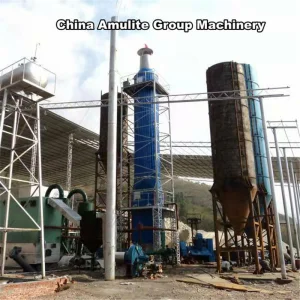
Utilizing China Amulite Group’s dual-feed calcination architecture, manufacturers in Colombia can seamlessly process both high-hardness natural gypsum rock and ultra-fine synthetic FGD gypsum, optimizing feed flexibility based on local transport costs and seasonal market pricing.
A step-by-step breakdown of phase transformation control, energy optimization, and particle size distribution technology.
Raw gypsum rock transported from regional Colombian mines is unloaded into heavy-duty vibrating feeders and crushed via a jaw crusher or hammer mill down to <25mm. The pre-crushed material is then elevated into a Raymond Mill or Vertical Roller Mill equipped with dynamic air classifiers, reducing particle size to 100-200 mesh with dynamic moisture reduction.
The core thermal reaction takes place in Amulite’s proprietary continuous fluidized bed calcinator. Using thermal oil coils powered by natural gas (supported by Colombia's extensive Ecopetrol gas supply network), the temperature is maintained uniformly between 150°C and 170°C. Two molecules of crystal water are precisely stripped to yield high-purity $\beta$-hemihydrate plaster:
CaSO₄·2H₂O + Heat → CaSO₄·0.5H₂O + 1.5H₂O↑
Freshly calcined powder exits the thermal reactor at elevated temperatures. Direct packaging at this stage leads to setting time instability and thermal lattice stress. Our plant design incorporates multi-cell homogenization aging silos where the plaster undergoes controlled cooling and hydration equilibrium for 48 to 72 hours, guaranteeing uniform initial and final setting times.
| Performance Parameter | Amulite Fluidized Bed Line | Traditional Rotary Kiln | Shaft Kiln (Legacy) |
|---|---|---|---|
| Thermal Energy Source | Thermal Oil / Natural Gas / Biomass | Direct Gas / Heavy Fuel Oil | Coal / Wood Direct Firing |
| Phase Composition ($\beta$-Hemihydrate Purity) | > 85% - 92% (High Consistency) | 70% - 80% (Variable) | < 60% (High Anhydrite Risk) |
| Specific Thermal Consumption | 320 - 360 kcal / kg powder | 450 - 520 kcal / kg powder | > 650 kcal / kg powder |
| High-Altitude Compatibility (Bogotá/Medellín) | Fully Compensated Automated Draft Control | Requires Manual Adjustment | Unstable Draft & Incomplete Burn |
| Dust Emission Standards | < 10 mg/Nm³ (Pulse Bag Filter) | < 50 mg/Nm³ | > 150 mg/Nm³ (Non-compliant) |
Evaluating Capital Expenditure (CAPEX), Operational Expenditure (OPEX), and ROI metrics for Colombian mining and construction conglomerates.
When investing in a modern gypsum powder production facility in Colombia, procurement directors must look beyond initial machine purchase pricing. While European machinery offers high build quality, its CAPEX is typically 3x to 4x higher, creating prolonged payback periods exceeding 4.5 years. Conversely, standard low-cost machinery frequently fails under continuous duty cycles, causing costly mill downtime and high thermal inefficiency.
China Amulite Group balances European-grade structural precision (Siemens PLCs, Schneider electronics, SKF bearings) with cost-engineered Chinese manufacturing capability. This yields an optimal CAPEX footprint with rapid ROI amortizations under 16 months based on regional Colombian electricity ($0.11/kWh) and natural gas tariffs.
Ensuring smooth operational integration under RETIE, ICONTEC, ANLA, and regional port logistics.
Gypsum powder produced for the Colombian domestic construction market must comply with strict ICONTEC technical standards (such as NTC 4043 for building plaster and NTC 5486). Amulite lines guarantee consistent compressive strength (> 4.5 MPa), normal consistency water ratio (60-70%), and controlled initial setting time (8-15 minutes) required by regional distributors.
Electrical control cabinets and power distribution networks are manufactured strictly adhering to RETIE (Reglamento Técnico de Instalaciones Eléctricas) rules in Colombia. Featuring Siemens S7-1500 PLCs, dual safety interlocks, IP55 enclosure protection, and tropicalized anti-humidity wire insulation designed for Latin American tropical operating environments.
Equipment is shipped directly via sea freight container vessels to major Colombian ports: Cartagena and Barranquilla on the Atlantic coast, or Buenaventura on the Pacific coast. Amulite maintains regional field engineers offering rapid dispatch to plant sites across Colombia for installation supervision, spare parts fulfillment, and PLC remote diagnostic maintenance.
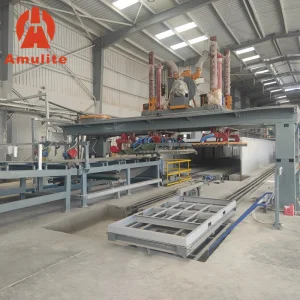
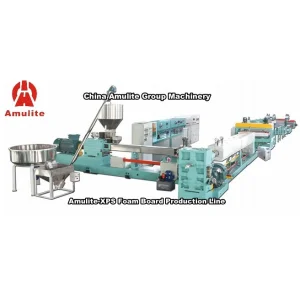
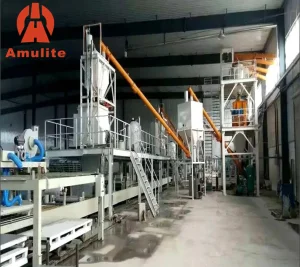
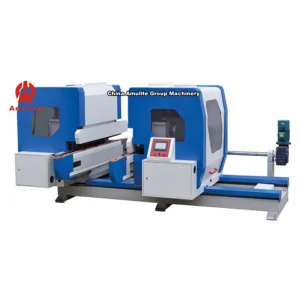
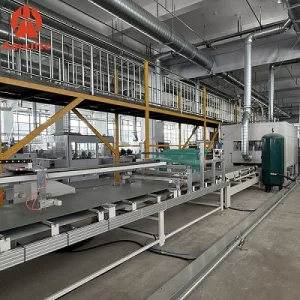
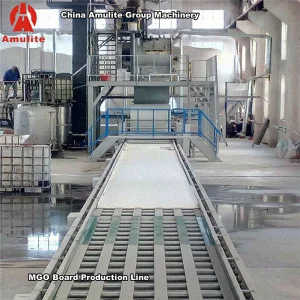
Explore integrated manufacturing plants engineered by China Amulite Group for comprehensive construction material production.
Expert engineering insights addressing technical, operational, and financial considerations for gypsum production in Colombia.
Amulite Group designs modular calcination plants ranging from 30,000 tons per year (ideal for regional suppliers targeting local plasterboard or mortar producers) up to 300,000 tons per year for large-scale mining operations. The lines can be expanded in phases by adding secondary fluidized bed modules without interrupting existing operation.
At higher altitudes, atmospheric pressure drops, lowering the boiling point of free and bound water molecules. Without custom calibration, standard calciners experience over-calcination and high fuel waste. Amulite’s control system features pressure-transducer feedback and automated variable speed exhaust blowers that dynamically regulate thermal oil heat transfer, maintaining 90%+ phase purity regardless of altitude.
Yes. Amulite’s dual-feed preparation system includes an integrated flash dryer and specialized pneumatic agitators designed specifically to prevent clogging when handling fine, high-moisture synthetic FGD (Flue Gas Desulfurization) gypsum, while seamlessly accepting crushed natural rock gypsum from mines in Santander or Huila.
All electrical cabinets and SCADA systems are built to RETIE compliance standards using CE and UL-certified components from Siemens and Schneider Electric. Dust control systems utilize pulse-jet baghouse collectors engineered to achieve sub-10 mg/Nm³ particulate emissions, satisfying strict regional ANLA and CAR environmental regulations in Colombia.
Equipment fabrication requires 90 to 120 days. Sea transit from China to Colombian ports (Cartagena, Barranquilla, or Buenaventura) typically takes 30 to 40 days. On-site installation, mechanical assembly, electrical wiring, and commissioning by our resident field engineering team requires approximately 45 days until commercial test runs are completed.
Amulite provides 24/7 remote PLC diagnostic monitoring via secure VPN links, allowing our engineers to adjust calcination curves remotely. We also provide on-site chemist support to formulate specialized plaster products tailored to Colombian market requirements (e.g., lightweight stucco, ceramic mold plaster, or joint compounds).
Contact our senior process engineering team today to receive a complete feasibility study, custom equipment configuration list, civil layout drawings, and TCO investment return matrix tailored to your site location.