


High-precision continuous production platforms optimized for North American drywall, structural board, and masonry standards.
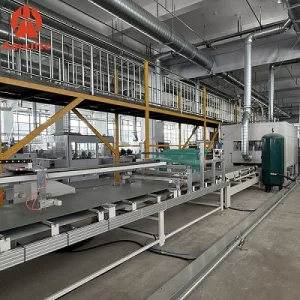
The demand for wallboard and structural gypsum products across Canada has reached a transformative inflection point. Driven by rapid urban expansion in the Greater Toronto Area (GTA), Metro Vancouver, Calgary, and Montreal, along with nationwide initiatives targeting sustainable, energy-efficient building envelopes under the National Building Code of Canada (NBC), manufacturing facilities face unprecedented pressure to modernise. As a leading international engineering authority and EPC turnkey contractor, our focus is delivering high-speed, low-energy Gypsum Board Production Lines tailored specifically to the economic, climatic, and regulatory context of Canadian manufacturing.
Canada’s industrial landscape presents distinct operational parameters. Facilities operating in regions such as Ontario, Quebec, and Alberta must navigate stringent environmental regulations enforced by Environment and Climate Change Canada (ECCC), requiring minimal carbon emissions, rigorous particulate controls, and maximized thermal recycling. Furthermore, the Canadian construction sector relies heavily on specialized board grades—including 5/8-inch Type X fire-rated drywall, Type C core boards, moisture-resistant exterior glass-mat sheathings, and sound-dampening acoustic wallboards.
Key Insight for Canadian Investors: Energy efficiency in the drying phase represents over 60% of total plant thermal utility costs. In Canadian climates where winter ambient air intake temperatures drop below -20°C, traditional drying technology leads to severe thermal losses. Our integrated heat recovery loops and micro-climate multi-deck drying systems recover up to 38% of exhaust waste heat, directly offsetting operational expenditure (OPEX).
From an upstream supply perspective, Canada benefits from abundant natural gypsum reserves in Nova Scotia and British Columbia, alongside substantial volumes of synthetic Flue-Gas Desulfurization (FGD) gypsum generated from industrial and power generation sector retrofits. Engineering a production line capable of seamlessly blending natural gypsum rocks with chemical FGD synthetic plaster—without compromising slurry setting speed, crystalline bonding, or board flexural strength—is the definitive competitive advantage for Canadian producers.
Strict NBC fire codes require high-density glass-fiber reinforced core formulations for residential and commercial multi-family units.
Advanced calcination engineering accommodating 0-100% synthetic FGD gypsum blending with zero crystalline degradation.
Custom thermo-compressor and air pre-heating technology maintaining thermal efficiency during sub-zero Canadian winters.
Fully certified to produce wallboard conforming precisely to ASTM C1396 / C1396M and CAN/ULC standards.
Analyzing worldwide capacity growth, raw material shifts, and automated process engineering benchmarks.
The global gypsum board equipment market has transitioned from traditional, mechanically driven batch lines toward ultra-automated, continuous process plants governed by Distributed Control Systems (DCS) and Industrial Internet of Things (IIoT) sensors. Modern plants deployed across Europe, North America, and East Asia target annual operational capacities between 10 million and 60 million square meters per line.
A critical competitive differentiator in global manufacturing is the optimization of the calcination process. Converting raw gypsum ($\text{CaSO}_4 \cdot 2\text{H}_2\text{O}$) into active stucco ($\text{CaSO}_4 \cdot 0.5\text{H}_2\text{O}$) requires precise thermal calcination via fluid bed calciners or ebullience calciners. Global leaders prioritize uniform beta-hemihydrate crystal growth, which drastically reduces water demand during slurry mixing, lowering dryer gas consumption downstream.
From raw rock grinding to automated robotic packaging—an end-to-end breakdown of our high-yield equipment matrix.
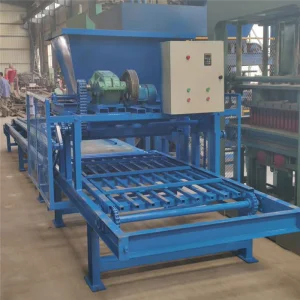
Employs high-efficiency vertical ebullience calciners with dynamic frequency control. Features automated dosing for starch, fiberglass, accelerants (BMA), and foam agents with micro-gram accuracy.
Stainless steel high-shear pin mixer engineered with variable-frequency rotors. Ensures uniform bubble distribution, optimal core density control, and zero slurry clumping prior to paper deposition.
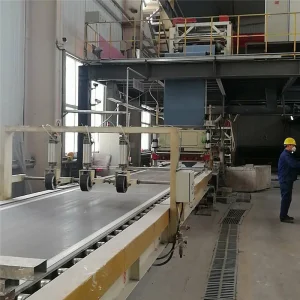
Pneumatic automatic paper alignment and edge-folding systems. Utilizes continuous vibratory forming tables and precision calibration rollers to establish exact wet-board thickness.
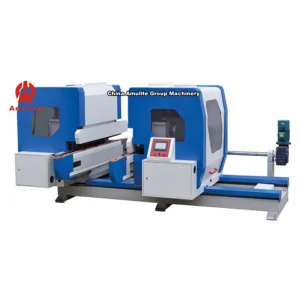
High-speed servo-driven rotary shears executing instantaneous cutting synchronized with line velocity. Achieves cut-length tolerance within ±1.5mm without edge crushing.
Multi-zone, longitudinal hot-air circulation dryer with thermal fluid heat exchangers or direct-fired natural gas burners. Features automated heat balance zoning to eliminate board blistering.
Automated edge sawing, book-matching flippers, stack counting, and automated plastic film wrapping units delivering market-ready pallets ready for intermodal transport.
Automation Standard: Our lines feature a centralized Siemens S7-1500 PLC architecture integrated with SCADA software, providing real-time data logging, predictive maintenance alerts, and cloud-based operational analytics compatible with Canadian factory networks.
A standard gypsum board line design cannot satisfy the diverse geographical and structural challenges of the Canadian building material sector. Our turnkey plant solutions incorporate modular engineering options customized to localized market requirements:
With massive high-rise residential projects dominating Toronto and Montreal, the market demand centers heavily on Type X (UL/ULC fire-rated) and acoustic-dampening wallboards. Our production lines integrate continuous fiberglass metering systems capable of dispersing chopped E-glass fibers directly into the slurry, forming a dense structural core that satisfies 1-hour and 2-hour fire endurance testing under CAN/ULC-S101.
In humid coastal climates like Vancouver and harsh interior winter zones like Calgary, traditional paper-faced drywall used on exterior envelope backings is prone to delamination and mold growth. Our advanced production lines can be equipped with dual-feeder non-woven glass mat unwinders and hydrophobic silicon-based additive injection units. This enables plants to manufacture coated glass-mat gypsum sheathings complying with ASTM C1177.
Modular housing construction for mining camps, indigenous housing initiatives, and northern territories requires lightened yet impact-resistant partition panels. By utilizing micro-foaming technologies, our plants achieve board weight reductions of up to 18% without forfeiting flexural strength, significantly reducing transport freight costs across remote Canadian highway networks.
Investing in a modern plasterboard plant requires a rigorous evaluation of Capital Expenditure (CAPEX) versus long-term Operational Expenditure (OPEX). Below is a structural feasibility overview based on a standard 20 million m²/year production line operating in North America:
| Production Parameter | Standard Legacy Line | Next-Gen Turnkey Line (Amulite Standard) |
|---|---|---|
| Water-to-Stucco Ratio | 0.85 - 0.90 | 0.58 - 0.65 (High-Efficiency Liquefiers) |
| Dryer Gas Consumption per m² | 0.42 m³ Natural Gas | 0.26 - 0.29 m³ (30%+ Heat Recovery Savings) |
| Operational Line Speed | 25 - 40 m/min | 60 - 85 m/min (Continuous Synchronized) |
| Shift Labor Requirement | 18 - 24 Operators | 6 - 8 Operators (Fully Automated Robotic Handling) |
Our complete EPC turnkey scope encompasses raw material chemical testing, civil engineering design, foundation load planning, equipment fabrication, export-grade packing, on-site mechanical and electrical erection, commissioning, and comprehensive operator training. We guarantee plant performance metrics under formal contractual SLAs.
Clear, technical answers to common questions asked by industrial plant developers and investors in Canada.
Explore our complete range of non-metallic mineral processing, wall panel, and block machinery systems.
Whether you are establishing a greenfield gypsum wallboard facility in Canada or upgrading an existing plasterboard manufacturing line, our process engineering specialists are ready to support your technical evaluation.