Gypsum Board Production Line Manufacturer & Products in the Nigeria Market

Engineering Turnkey Plasterboard Manufacturing Plants, Raw Gypsum Calcination Solutions, and Modular Drywall Systems Tailored to West Africa’s Industrial Growth

Send Inquiry Now
Primary Product Suite

High-Efficiency Board & Panel Production Equipment for Nigeria

Proven heavy industrial machinery configured for high ambient temperatures, local raw material profiles, and uninterrupted heavy-duty performance across Nigerian manufacturing hubs.
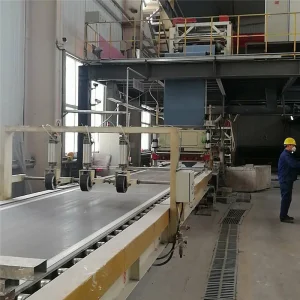
China Gypsum Board Production Line Supplier, Factories

Standard Turnkey Gypsum Board Line for Nigeria Hubs

Fully automated plasterboard line ranging from 2 million to 30 million m²/year. Optimized for Nigerian energy grids and localized calcined gypsum input.

View Line Specifications
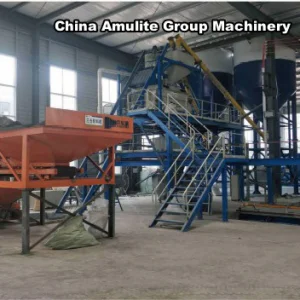
Buy Hollow Core Wall Panels Production Line Factory, Factories

Hollow Core Wall Panel Line (Lagos BuildTech Edition)

Advanced extruded lightweight hollow core wall panel manufacturing machinery engineered for high-density urban residential developments in Lagos & Abuja.

Explore Panel Systems
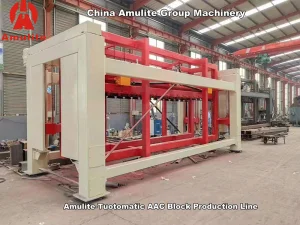
High-Quality Amulite Automatic AAC Block Production Line Manufacturers, Companies

Automatic AAC Block Line for Nigerian Infrastructure

Heavy-duty autoclaved aerated concrete block machinery utilizing local sand and fly ash to supply structural, thermally insulated masonry units.

Inspect AAC Machinery
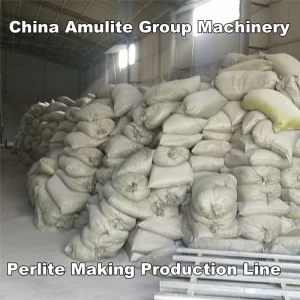
Buy Perlite Production Line Manufacturers, Company

Expanded Perlite Thermal Line for West Africa

Industrial expanded perlite equipment for fire-rated board core additives, lightweight insulation mortars, and acoustic ceiling board matrices.

Discover Perlite Tech

1. West Africa's Industrial Catalyst: Gypsum Board Market Dynamics in Nigeria

Nigeria stands at the epicentre of Africa’s urban transformation. Driven by rapid population growth, accelerating urbanization in mega-cities like Lagos, Kano, and Ibadan, and monumental infrastructure programs in the Federal Capital Territory (Abuja), the demand for modern interior partition systems, suspended ceilings, and drywall acoustics has reached unprecedented heights. Historically dependent on imported paper-faced plasterboards, the Nigerian construction sector is undergoing a structural transition toward domestic import substitution. Establishing localized production lines for gypsum boards and lightweight wall panels has evolved from a commercial venture into a strategic industrial priority.

The macroeconomic imperative for establishing local gypsum board production facilities in Nigeria is reinforced by several critical factors:

  • Foreign Exchange Risk Mitigation: Currency volatility and Central Bank FX allocation constraints make reliance on imported ceiling and drywall products financially unsustainable for real estate developers. Local manufacturing converts capital expenses into local currency (NGN) operational stability.
  • Raw Material Abundance: Nigeria possesses rich natural gypsum rock reserves distributed across states such as Yobe, Gombe, Taraba, Adamawa, and Sokoto. Operating an integrated calcination and board forming line locally unleashes massive supply chain efficiency.
  • Massive Housing & Commercial Deficit: With an estimated national housing deficit exceeding 20 million units, federal and private development housing schemes require rapid dry-construction techniques. Plasterboard partition walls install up to 4 times faster than traditional wet-masonry blockwork.
  • Backward Integration Incentives: Government frameworks such as the Industrial Revolution Plan (NIRP) actively incentivize building material manufacturers through tax holidays, import duty exemptions on capital machinery, and pioneer status designations.
20M+
Housing Deficit Units
75%
Build Time Reduction
100%
Local Raw Material Potential
30M m²
Max Line Capacity

Growth Directives Insight: Forward-thinking industrial groups operating in the Ogun State corridor (Agbara, Sagamu), Ikeja Industrial Estate, and the Lekki Free Trade Zone are rapidly securing turnkey gypsum board plants to dominate the West African trade zone (ECOWAS) tariff-free market.

Engineering Precision

High-Yield Gypsum Board Plant Process Roadmap

An end-to-end technical overview of China Amulite Group’s modular plasterboard manufacturing solutions, designed for raw material flexibility and thermal efficiency.

2. End-to-End Technical Infrastructure: From Raw Rock to Finished Plasterboard

Manufacturing high-quality plasterboard compliant with international standards (such as EN 520, ASTM C1396, and NIS 268:2003) demands precision at every stage of the process chain. Amulite Group’s engineering setup integrates automated continuous calcination, dynamic slurry formulation, high-speed board forming, energy-optimized drying tunnels, and automatic bundling.

Raw Material Calcination

Fluidized bed calciners and vertical boiling kettles transform raw natural gypsum ($CaSO_4 \cdot 2H_2O$) into high-purity beta-hemihydrate plaster ($CaSO_4 \cdot \frac{1}{2}H_2O$) with tight thermal controls.

Continuous Slurry Mixer

Stainless steel high-shear mixers combine stucco powder with water, foaming agents, starch, glass fibers, and retarders to produce uniform low-density core slurries.

Forming & Edge Molding

Vibration-assisted forming belts precisely sandwich the gypsum slurry between top and bottom high-tensile paper liners, forming square, recessed, or tapered edges.

Hydration Setting Belt

Long structural setting belts allow precise re-crystallization of the gypsum core before automatic rotary cross-cutters shear continuous boards into accurate 2.4m – 3.0m lengths.

Multi-Deck Dryer Tunnel

Co-generation heat exchange dryer systems featuring 8 to 12 decks. Utilizes waste heat, natural gas, heavy fuel oil (HFO), or dual-fuel burners optimized for local energy availability.

Automatic Stacking & Packaging

Servo-driven edge-trimmers, board flippers, stackers, and automated stretch-wrapping units prepare durable, moisture-protected pallets ready for road transit.

Key Technical Parameters of Amulite Plant Configurations

To meet diverse project budgets and operational scales, Amulite Group manufactures plant modules across distinct throughput classifications:

  • Compact Industrial Lines (2M – 5M m²/year): Ideal for regional investors entering the manufacturing space. Features semi-automated handling, highly modular footprints, and reduced initial CAPEX.
  • Mid-Scale Commercial Lines (8M – 15M m²/year): Standard configuration for domestic suppliers. Equipped with full SCADA automation, multi-deck continuous dryers, and automatic edge wrapping.
  • High-Speed Mega Plants (20M – 30M m²/year): Fully automated heavy-industrial operations. Operates at belt speeds up to 60-80 meters/minute, incorporating automated raw material dosing, online thickness sensors, and robotic stackers.

3. Procurement ROI & Total Cost of Ownership (TCO) in the Nigerian Context

Investing in heavy building-material machinery in West Africa requires rigorous financial engineering beyond the initial machine price sticker. Operational efficiency, energy consumption rates, raw material yield, and local power grid resilience determine long-term profitability.

Financial Breakdown & Revenue Drivers

Amulite Group assists Nigerian clients with detailed feasibility studies. Below is a comparative operational analysis showing cost distributions for a standard 10 Million m²/year gypsum board production line operated in an industrial hub such as Sagamu, Ogun State:

  • Raw Material Input (~45% Total OPEX): Sourcing local rock gypsum from northern mineral belts combined with locally milled paper or imported heavy kraft liner. Utilizing water-reducing additives minimizes core drying energy.
  • Energy & Fuel Consumption (~35% Total OPEX): Thermal drying accounts for the largest energy demand. Amulite’s heat-recovery systems recirculate exhaust air from the hot drying zones back to the calcination pre-heaters, cutting total gas/HFO usage by 18-22%.
  • Electrical Power Overhead (~10% Total OPEX): Power grid fluctuations in Nigeria necessitate robust hybrid power setups (Grid + Diesel/CNG Generators). Our Siemens PLC panels feature voltage stabilization interfaces and soft-start frequency converters to prevent peak-demand electrical spikes.
  • Labor & Maintenance (~10% Total OPEX): Automated board transfer systems reduce manual labor overhead to less than 15 operators per shift for a mid-sized plant.

ROI Timeline: Based on current market prices for 12.5mm standard paper-faced gypsum boards in West Africa, an Amulite turnkey 10M m²/year line typically achieves complete capital payback (CAPEX amortization) within 22 to 28 months of continuous production.

4. Localized Engineering Support, SONCAP Compliance & Field Execution

Executing industrial plant projects in Nigeria involves navigating regulatory standards, import clearance procedures, civil foundation works, and localized worker training. China Amulite Group provides an end-to-end operational safety net ensuring rapid plant commissioning without expensive delays.

Regulatory & Engineering Execution Matrix

  • SONCAP & MANCAP Certification: All Amulite machinery shipped to Nigeria undergoes rigorous pre-shipment inspection, compliance verification, and certification under the Standards Organisation of Nigeria Conformity Assessment Program (SONCAP). Finished board test protocols align with MANCAP requirements.
  • Tropicalization & Heavy-Duty Components: Electric control cabinets are equipped with heavy-duty air conditioning units, anti-dust sealing, and heat-resistant wiring rated for ambient tropical temperatures exceeding 40°C and high relative humidity.
  • On-Site Civil Guidance & Erection Supervision: Amulite dispatches senior mechanical and electrical engineers directly to your site in Nigeria to direct foundation anchor alignment, steel structure erection, autoclave placement, and wiring integration.
  • Local Operator Skills Transfer: Our technical team stays on-site for 30–60 days post-commissioning to train local engineers and technicians on PLC operation, slurry chemistry balancing, preventative maintenance routines, and quality control testing.

5. Tech Roadmap: Decarbonization, Synthetic Gypsum & Next-Gen Boards

As global environmental standards tighten, the building material industry is shifting toward zero-waste, low-carbon manufacturing technologies. Amulite Group is pioneering continuous innovation to ensure investments remain future-proof over a 25-year operational lifecycle.

FGD & Phosphogypsum Utilization

Our modified calcination boilers are specially calibrated to process synthetic gypsum by-products (Flue Gas Desulfurization gypsum and neutralized phosphogypsum), turning industrial waste into high-grade wallboards.

Solar-Thermal Hybrid Drying

Integrating rooftop thermal solar collectors with drying kiln pre-heaters lowers fossil fuel consumption during peak daytime operational hours in West Africa’s high-irradiance zones.

Ultra-Lightweight Core Tech

Micro-foaming technology combined with synthetic cross-linked polymers reduces board weight down to 5.5 kg/m² for 9.5mm boards, cutting shipping weight while maintaining structural flexural strength.

Expert Knowledge Base

Frequently Asked Questions on Gypsum Line Procurement

Clear, direct technical answers from Amulite’s chief process engineers regarding machinery selection, installation, and operation in Nigeria.

Q1: Can local Nigerian raw natural gypsum rock be directly processed by Amulite calcination plants?
Yes. Natural gypsum mined in northern Nigerian states (such as Yobe, Gombe, and Adamawa) generally ranges between 75% and 92% purity ($CaSO_4 \cdot 2H_2O$). Amulite supplies integrated multi-stage jaw crushers, hammer mills, and fluidized bed kettles specifically calibrated to crush, dry, and calcine natural rock into premium stucco powder without requiring pre-treated imports.
Q2: What is the minimum recommended annual plant capacity for an entry-level investor in West Africa?
We recommend a baseline capacity of 3 Million to 5 Million m² per year for new entry market players. This scale balances manageable initial CAPEX with optimal operational economies of scale. For established building material distributors or real estate conglomerates, a 10 Million to 20 Million m²/year line provides maximum margin competitiveness.
Q3: How do Amulite production lines handle power grid instability and voltage fluctuations in Nigerian industrial zones?
Our electrical systems utilize Siemens PLC hardware paired with centralized Uninterruptible Power Supply (UPS) modules for control circuits and memory retention. Furthermore, variable frequency drives (VFDs) and heavy-duty industrial isolation transformers protect motor drives against brownouts, surge spikes, and phase imbalance. Lines are easily interfaced with dual-diesel/CNG generator sets.
Q4: What paper liner specifications are required for paper-faced plasterboard manufacturing?
The line requires specialized high-tensile ivory face paper (typically 160–180 g/m²) and grey back paper (typically 170–190 g/m²) with controlled porosity and water absorption values (Cobb values). Amulite assists clients in establishing direct supply channels for high-strength paper reels or setting up paper recycling pulping lines.
Q5: What lead time is required from contract signing to final line commissioning in Nigeria?
Equipment manufacturing, dry testing, and packing require 90 to 120 days. Maritime shipping to Lagos (Tincan / Apapa ports) or Onne Port takes approximately 35 to 45 days. On-site installation, piping, wiring, and trial run commissioning take an additional 45 to 60 days under the guidance of Amulite’s resident field engineers.
Expanded Equipment Portfolio

Complementary Machinery & Processing Solutions

Explore Amulite’s broader spectrum of non-metallic mineral processing, board forming, and specialized finishing equipment designed for global export.
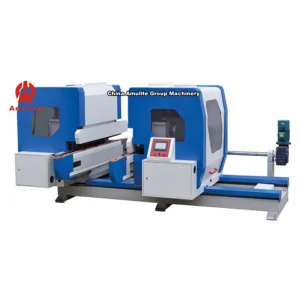
Best AM806BH-10 Technical Parameters Manufacturer, Products

AM806BH-10 Board Forming Machine Unit

Precision hydraulic and servo-driven forming station delivering consistent thickness tolerances for high-speed plasterboard manufacturing lines.

Check Technical Data
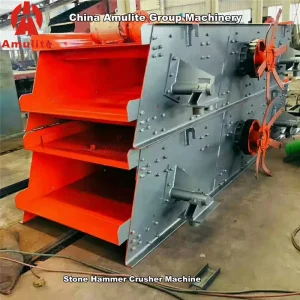
OEM Stone Hammer Crusher Machine Suppliers, Factory

Heavy Stone Hammer Crusher for Gypsum Rock

High-crushing-ratio primary hammer mills engineered to crush raw natural gypsum boulders into granular feed stock for calcination kettles.

View Crusher Specs
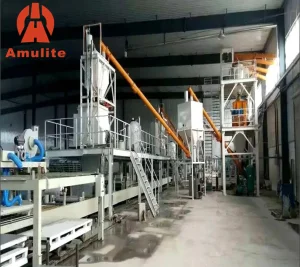
Best XPS Insulation Tile Backer Production Line Supplier, Companies

XPS Insulation Tile Backer Board Line

Extruded polystyrene foam board production machinery coated with cementitious mortar for waterproof wet-room construction panels.

Explore XPS Lines
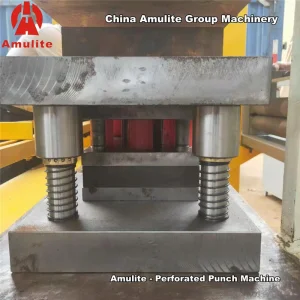
High-Quality Amulite Perforated Punch Machine System Technical Data Manufacturer, Suppliers

Acoustic Perforated Board Punching System

High-speed CNC punch machinery for producing sound-absorbing acoustic gypsum ceiling tiles with decorative hole patterns.

View Punch Systems
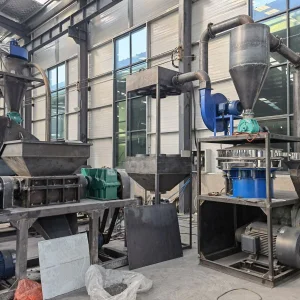
OEM Lithium Battery Recycling Equipment Factory, Company

Lithium Battery Recycling & Processing Line

Advanced mechanical crushing, inert shredding, and black mass separation plants designed for high-efficiency battery recycling operations.

Inspect Battery Recycling
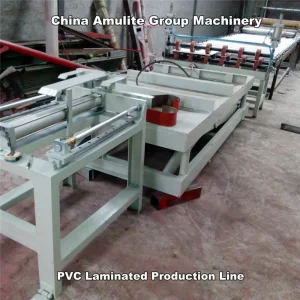
China PVC Laminated Production Line Factories, Products

PVC Laminated Gypsum Ceiling Tile Line

Automatic foil laminating, edge banding, and precision cutting machines for converting standard plasterboard into decorative ceiling tiles.

Discover PVC Lamination
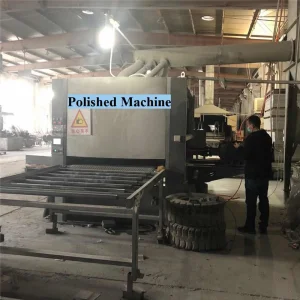
China Single Face Polished Machine Manufacturers, Suppliers

Heavy Single-Face Board Polishing Machine

Surface calibration and precision sanding machinery designed to produce ultra-smooth panel surfaces for premium decorative board lines.

View Polishing Specs
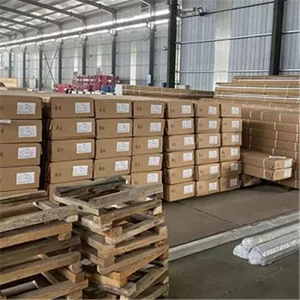
High-Quality Embossed Metal Composite Exterior Panels Production Line Manufacturers, Company

Embossed Metal Composite Exterior Panel Line

Continuous insulation siding panel machinery manufacturing PU-core embossed metal cladding for modern exterior architecture.

Inspect Metal Panel Tech

Partner with China Amulite Group for Your Nigerian Project

Whether you are planning a greenfield gypsum board plant in Ogun State, evaluating raw gypsum mineral samples from Northern Nigeria, or upgrading an existing line, our senior engineering team is ready to deliver full project feasibility proposals within 24 hours.

Send Inquiry Now