Industrial-grade machinery configured for Pacific Northwest offsite construction requirements
The global construction sector is undergoing a structural transition from legacy cast-in-place concrete toward high-performance expanded polystyrene (EPS) sandwich cement wall panels. Driven by global decarbonization mandates, severe labor shortages, and stringent structural thermal performance codes, EPS Sandwich Cement Wall Panels Production Lines have emerged as critical capital assets for building material manufacturers.
In the Seattle Metropolitan Area and across the broader Pacific Northwest (PNW), this shift is further accelerated by specific regional dynamics:
Compliance with the Washington State Energy Code (WSEC) requires continuous insulation envelope values that traditional drywall and stud assemblies struggle to reach cost-effectively.
The Puget Sound region demands lightweight structural elements (core density 450–650 kg/m³) capable of dissipating lateral seismic loads while maintaining structural diaphragm integrity.
With Seattle metro construction trade wages standing among the highest in North America, pre-engineered EPS panels reduce onsite frame assembly time by up to 40% compared to traditional framing.
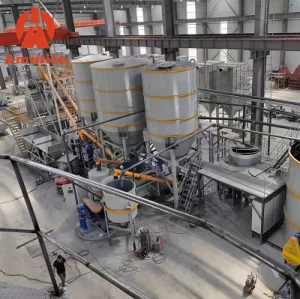
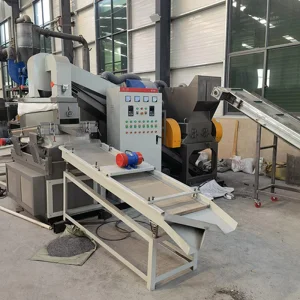
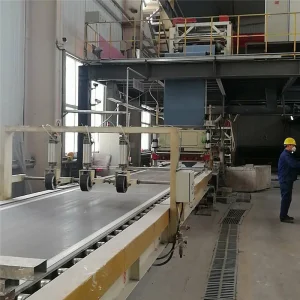
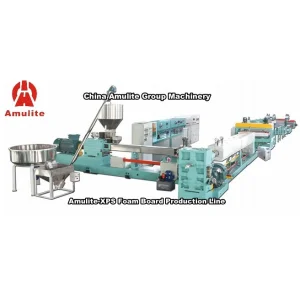
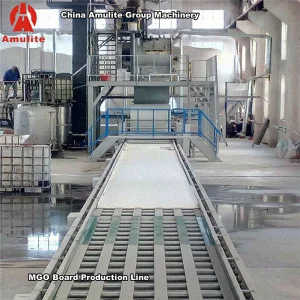
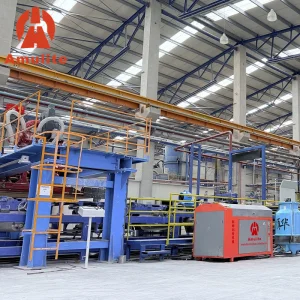
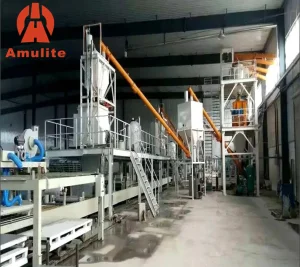
Modern EPS Sandwich Cement Wall Panel Production Lines operate on a fully integrated, automated closed-loop manufacturing cycle. The production facility integrates raw material batching, bead pre-expansion, core slurry mixing, automated vertical mold car battery injection, and continuous thermal curing systems.
The process begins with raw polystyrene granules expanded via controlled steam injection. High-precision pressure regulators ensureuniform bead density (typically 12–18 kg/m³). Fluidized bed drying and automated pneumatic conveying systems transfer expanded beads into multi-chamber curing silos for stabilization, eliminating residual internal vacuum pressure.
Portland cement (OPC/PPC), fly ash, quartz sand, chemical foaming agents, and water are metered via loss-in-weight gravimetric feeders into a dual-shaft high-shear continuous mixer. Advanced viscosity sensors automatically trim water-to-cement ratios to guarantee complete wetting of EPS beads without core segregation or phase separation during vertical pouring.
Calcium silicate or fiber cement face boards (4mm–6mm thickness) are placed on dual sides of high-tensile steel vertical mold cars. Precision hydraulic clamping mechanisms lock the mold plates under dynamic pressure up to 15 MPa, maintaining dimensional tolerances within ±0.5mm across panel lengths up to 3000mm.
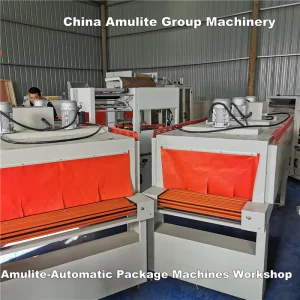
Loaded mold cars pass through thermal curing tunnels maintained at 50°C–65°C for accelerated hydration. Microprocessor-controlled automatic demolders extract cured panels, passing them through automated edge profiling, panel turning, trimming, and stretch-wrapping stations ready for jobsite transport.
Manufacturers supplying the Seattle market must tailor panel formulations and production lines to satisfy local environmental conditions and regulatory compliance frameworks. The table below outlines localized engineering challenges and our automated equipment solutions:
Seattle's annual rainfall demands elevated water impermeability. Production lines integrate hydrophobic silane additives into core slurry batching, yielding a panel moisture absorption rate of less than 3.5% after 24-hour immersion tests (ASTM C1185 compliant).
For high-density mid-rise developments along Seattle’s Light Rail corridors (e.g., Capitol Hill, Bellevue), lines produce dual-core acoustic EPS panels achieving STC 48–52 ratings, exceeding HUD urban noise guidelines.
Panel core formulations engineered by our equipment meet ASTM E119 fire standards, retaining load-bearing capacity for over 240 minutes at core temperatures exceeding 1000°C.
The manufacturing technology for lightweight cement wall panel equipment is rapidly converging with industrial digitalization and zero-carbon material science. Below is the multi-stage technology development curve driving next-generation production lines:
Integration of inline nuclear mass density meters and real-time rheology sensors along slurry injection manifolds to auto-correct EPS bead distribution dynamically, eliminating density variance across large format panels.
Adapting high-shear mixers to process alkali-activated slag and pozzolanic volcanic ash, reducing embodied carbon of panels by up to 60% while maintaining 28-day compressive strengths above 5.0 MPa.
Capturing high-enthalpy flash steam from EPS expansion cycles to pre-heat mold curing tunnels, achieving a net energy reduction of 28 kWh per cubic meter of finished panel output.
Establishing a greenfield or brownfield EPS wall panel manufacturing facility in King County or Snohomish County requires more than equipment delivery. It requires an end-to-end engineering roadmap designed to pass local city permitting, environmental review, and operational efficiency benchmarks.
Our macro solution ecosystem encompasses:
Technical and commercial clarity for investors, plant managers, and structural engineers
Full spectrum industrial machinery solutions available for global export and local regional installation
Consult with our lead process engineering teams today to receive custom plant CAD drawings, raw material cost analyses, and ROI performance projections for your target market.
Send Inquiry Now