High-capacity, automated manufacturing lines engineered for optimal performance under Sri Lanka's tropical climate conditions.
An in-depth analysis of construction growth, lightweight building material transitions, and macroeconomic drivers across the Western Province, Hambantota, and Central Regions.
Sri Lanka's construction sector is undergoing a structural paradigm shift. Driven by urban expansion initiatives in Colombo, Gampaha, Kalutara, and the ongoing modernization of Hambantota Port City's economic zone, property developers and civil infrastructure firms are rapidly pivoting away from traditional burnt-clay bricks and solid masonry units. The traditional construction methodology—heavily reliant on energy-intensive brick kilns and labor-heavy plastering—is proving economically unsustainable amidst rising fuel costs, strict environmental regulations on topsoil extraction, and a growing shortage of skilled masonry labor.
In response, Expandable Polystyrene (EPS) Sandwich Cement Wall Panels have emerged as the premier structural alternative for high-rise commercial partition walls, low-cost modular housing initiatives, resort infrastructure along the southern coastal line, and industrial warehousing projects. The core technical advantage lies in the compound composite architecture: calcium silicate or fiber-cement board facings encapsulating a lightweight core composed of expanded polystyrene beads, high-grade Ordinary Portland Cement (OPC), silica sand, and specialized foaming agents.
Strategic Economic Imperative: Implementing localized EPS sandwich panel production inside Sri Lanka drastically reduces the import burden of finished wall systems. By utilizing locally available OPC cement and river/sea-washed silica sand combined with imported EPS resin beads, factory operators achieve unmatched gross profit margins while satisfying strict local Sri Lanka Standards Institution (SLSI) quality benchmarks.
End-to-end technical deep dive into automated batching, foaming, core matrix mixing, mould car casting, and controlled thermal curing.
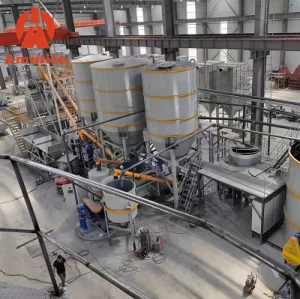
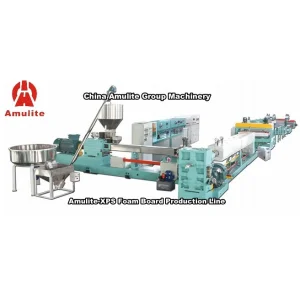
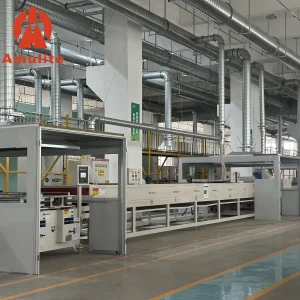
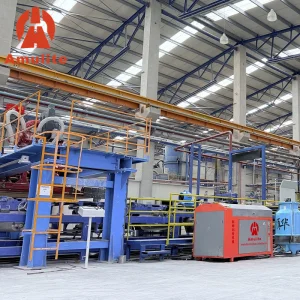
A modern turnkey EPS sandwich cement wall panel production facility designed by China Amulite Group integrates multi-stage automation controlled by centralized Siemens PLC SCADA architectures. The complete production cycle comprises five interconnected engineering sub-systems:
Includes primary steam pre-expander, fluid bed dryer, and aging silos. Raw EPS beads are expanded with controlled density (12–15 kg/m³) utilizing precision pressure sensors to prevent micro-cell collapse during high-ambient-humidity storage in tropical environments.
Computerized load-cell weighing hoppers for cement, silica sand, and water ratio calculation. Features automated liquid chemical additive dosers to control viscosity, slump performance, and early-stage green strength development of the core matrix.
High-torque planetary twin-shaft mixers ensure uniform distribution of ultra-lightweight EPS beads within the heavy cementitious slurry without crushing the cellular structure, preventing phase separation during mould injection.
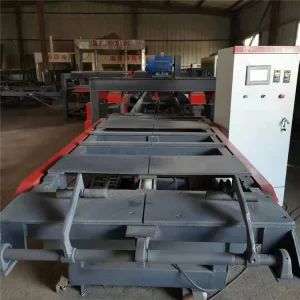
High-precision structural steel mould cars with double-sided fiber cement board positioning rails. Mechanical locking bars and anti-deformation stiffeners guarantee wall panel thickness tolerances within ±0.5 mm.
Heat-conserving curing tunnels utilizing waste heat capture systems. Optimized for Sri Lanka's high relative humidity, reducing total hydration time to 8–10 hours before initial stripping and stacking.
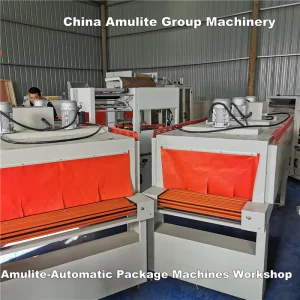
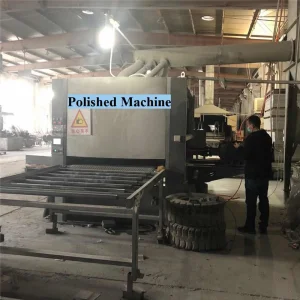
Automatic demoulding manipulators, 90-degree panel turners, four-side edge trimming saws, and automated stretch wrapping systems for immediate shipping yard transport.
Our plant setups are engineered to produce high-performance wall panels compliant with ISO, CE, and SLS international building standards:
| Parameter Property | Standard EPS Core Panel | High-Density Structural Panel | Testing Methodology |
|---|---|---|---|
| Panel Thickness Range | 60mm, 75mm, 90mm, 100mm | 120mm, 150mm, 200mm | GB/T 30100 / ISO 9001 |
| Dry Density (kg/m³) | 450 - 550 kg/m³ | 650 - 800 kg/m³ | ASTM C569 |
| Compressive Strength (MPa) | ≥ 3.5 MPa | ≥ 5.0 MPa | SLS / BS EN 12390 |
| Thermal Conductivity (W/m·K) | 0.058 - 0.065 W/m·K | 0.075 - 0.088 W/m·K | ASTM C177 |
| Airborne Sound Insulation (dB) | 38 - 45 dB | 48 - 55 dB | ISO 140-3 |
| Fire Resistance Rating | 2 to 4 Hours (1000°C) | 4 Hours Non-Combustible | BS 476 Part 22 / A1 Grade |
| Moisture Absorption (%) | < 6.5% | < 4.0% | ASTM C1185 |
How Amulite Group tailors core slurry recipes to local aggregate chemistry, cement grades, and atmospheric conditions.
One of the critical failure points for turnkey panel machinery buyers in South Asia is the uncritical application of generic raw material formulas. Sri Lanka presents unique geological and climatic variables: high coastal air salinity, varying moisture content in river sand from the Kelani and Maha Oya basins, and localized cement hydration properties from suppliers such as Tokyo Cement (Tokyo Super) and Insee Cement (Sanstha).
Amulite Group’s senior process chemical engineers provide comprehensive laboratory analysis of your locally sourced raw materials before line fabrication. We optimize your batch mix ratio to achieve maximum flexural strength while minimizing raw material costs:
Calibration for 42.5N and 52.5N Ordinary Portland Cement with modified setting accelerators to handle high ambient heat (30°C+).
Screening and grading of local sand to fine mesh (60–120 mesh) to ensure dense adhesion surrounding EPS beads without voids.
Precision pentane gas control during steam expansion to yield uniform 1.5–2.5mm bead diameter with closed spherical cell walls.
Custom water-reducing agents, anti-cracking synthetic micro-fibers, and hydrophobic air-entraining agents formulated in-house.
Surface priming chemical matrix ensuring inter-layer shear bond strength exceeding 1.2 MPa between core and silicate face sheets.
Receive a complete customized feasibility study, plant CAD layout layout design, utility consumption analysis, and ROI calculation tailored to your target production capacity.
Send Inquiry NowSeamless project execution from China Amulite Group’s 100,000 m² manufacturing plant to your factory site in Sri Lanka.
Exporting heavy industrial machinery to Sri Lanka requires precise logistical planning, customs compliance awareness, and robust post-arrival technical support. China Amulite Group provides end-to-end EPC (Engineering, Procurement, and Construction) project management:
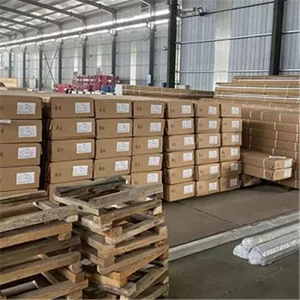
Direct ocean freight shipping from Tianjin or Qingdao Port directly to Port of Colombo or Hambantota International Port. Equipment is packed in heavy-duty open-top containers and anti-corrosion vacuum packaging.
All motors, control cabinets, and PLC systems are factory-configured to Sri Lanka’s national industrial grid standard: 400V / 230V, 50Hz, 3-Phase, featuring Siemens electrical protection against local grid fluctuations.
We supply full technical dossiers, environmental safety certificates, and test reporting to assist factory owners in acquiring local Construction Industry Development Authority (CIDA) approvals and Sri Lanka Standards (SLS) certification.
Direct engineering answers to common procurement, operational, and technical questions regarding EPS wall panel lines in Sri Lanka.
Explore our full range of non-metallic board machinery, processing units, and recycling systems for Sri Lankan industrial operators.
Contact our senior project managers and machinery engineering experts today to receive technical consultation, customized equipment pricing, and site layout designs.
Send Inquiry Now