



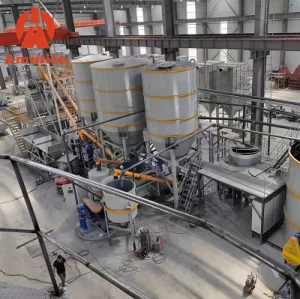
OEM EPS Sandwich Cement Wall Panels Production Line for Bangladesh
Fully automated vertical and horizontal mold system for core EPS lightweight cement partition panel manufacturing.
Explore Equipment Specs →Engineered to deliver exceptional thermal insulation, structural integrity, and rapid installation speed tailored for Bangladeshi climate conditions and urban building demands.
Fully automated vertical and horizontal mold system for core EPS lightweight cement partition panel manufacturing.
Explore Equipment Specs →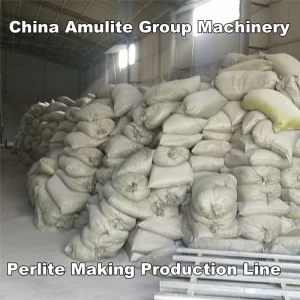
Industrial perlite expansion technology supplying lightweight fireproof aggregate fillers for cementitious panel mixtures.
Explore Equipment Specs →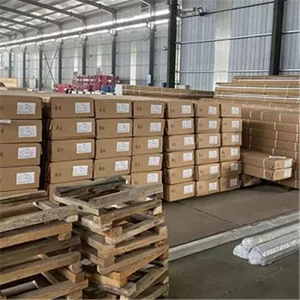
Advanced embossing and PU core laminating equipment for modern, weather-resistant exterior architectural cladding.
Explore Equipment Specs →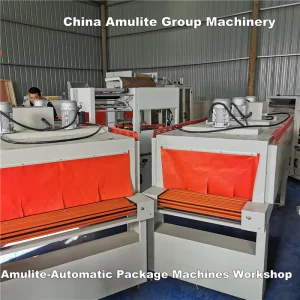
End-of-line robotics, film wrapping, and automated palettization lines designed to streamline factory logistics.
Explore Equipment Specs →Bangladesh is experiencing an unprecedented urban expansion and industrial infrastructure growth spree. Cities like Dhaka, Chittagong, Gazipur, and Narayanganj are facing critical pressure to deliver residential housing, commercial structures, and ready-made garment (RMG) factory extensions at accelerated speeds while complying with stringent sustainability standards.
Traditional masonry reliant on topsoil-consuming red clay bricks is facing regulatory phase-outs by the Bangladesh Department of Environment (DoE). The strategic transition toward EPS (Expanded Polystyrene) Sandwich Cement Wall Panels provides a lightweight, earthquake-resistant, thermal-insulated, and fire-retardant alternative that slashes structural dead loads by up to 60% and speeds up construction by 400%.
Aligned with Bangladesh’s mandatory shift away from topsoil-depleting traditional brick kilns, EPS wall panel plants enable 100% eco-friendly, green-certified wall production using sand, OPC cement, fly ash, and EPS beads.
A high-output production plant relies on interconnected, automated subsystems engineered to maintain consistent density, core-to-surface adhesion strength, and zero-defect geometric tolerances.
High-precision fluidized bed pre-expanders control EPS raw bead foaming densities down to 8–15 kg/m³. Automated secondary expansion and stainless-steel aging silos optimize bead elasticity and moisture release for uniform cement bonding.
Computerized gravimetric batching feeds Ordinary Portland Cement (OPC), river sand, fly ash, chemical additives, and EPS beads into twin-shaft planetary mixers, maintaining homogeneous wet density without bead crushing.
Equipped with double-sided fiber cement or calcium silicate face board positioning, automatic side clamping, and integrated steam/hot-water heating circuits to accelerate early strength gain and achieve fast mold turnover.
Analyzing key structural drivers in the South Asian market, raw material accessibility along the Padma and Jamuna river basins, and global green building benchmarks.
The Government of Bangladesh, under the directive of the Ministry of Environment, Forest and Climate Change, has instituted aggressive targets to phase out traditional soil-fired bricks in public and private works. With topsoil erosion threatening agricultural yield across major divisions such as Dhaka, Rajshahi, and Chittagong, precast lightweight cementitious wall technology has emerged as the premier green building alternative approved by the Housing and Building Research Institute (HBRI).
Bangladesh sits on active tectonic fault margins (such as the Dauki Fault system) and experiences extreme tropical humidity, monsoon rainfall, and coastal cyclonic pressures. EPS sandwich panels utilize tongue-and-groove interlocking edge joints bonded with polymer-modified adhesive mortar. This engineered joint configuration absorbs lateral shear forces during seismic events while providing complete water impermeability, preventing mold, efflorescence, and wall dampness.
In the competitive apparel and textile export domain, factory construction speed directly dictates operational ROI. EPS cement sandwich wall panels allow industrial developers in Gazipur, Ashulia, and Narayanganj to build multi-story factory partitions, cleanrooms, and worker dormitories in weeks rather than months. Furthermore, the high thermal resistance (R-value) slashes air conditioning and cooling electricity overheads by up to 35%.
A detailed comparison of standard EPS sandwich wall panel dimensions, performance standards, and plant utility requirements tailored for local industrial setups in Bangladesh.
| Parameter / Specification | Standard EPS Panel (60mm) | Medium EPS Panel (90mm / 100mm) | Heavy-Duty EPS Panel (120mm / 150mm) |
|---|---|---|---|
| Primary Application | Internal Office Partitioning, Dormitories | Interior Load-Bearing & Exterior Walls | External Boundary Walls, Cold Storage, Facades |
| Weight Range (kg/m²) | 38 – 42 kg/m² | 55 – 65 kg/m² | 75 – 90 kg/m² |
| Compressive Strength | ≥ 3.5 MPa | ≥ 5.0 MPa | ≥ 7.5 MPa |
| Acoustic Insulation (STC) | 38 dB | 44 dB | 48 dB |
| Surface Board Facing | 4.5mm Calcium Silicate / Fiber Cement Board | 5mm High-Density Fiber Cement Board | 6mm Reinforced Fiber Cement Board |
| Daily Plant Yield (8-hr Shift) | 1,200 – 3,000 m² / day | 1,000 – 2,500 m² / day | 800 – 2,000 m² / day |
| Raw Material Sourcing (Bangladesh) | Local OPC, Sylhet Sand, Fly Ash, EPS | Local OPC, River Sand, Fly Ash, EPS | Local OPC, Standard Fine Sand, Fly Ash, EPS |
From site evaluation along regional industrial corridors to initial raw material mix optimization and long-term operator certification.
Evaluation of factory floor space (minimum 2,500 m² recommended), transformer power capacity (150-300 kW), and laboratory analysis of local Portland cement grades and sand fineness modulus (FM) from local rivers.
Precision fabrication of high-tensile mold cars, stainless steel foaming chambers, slurry batching stations, and automatic rail transfer cars engineered for heavy continuous operation.
Deployment of senior mechanical and automation engineers to Bangladesh for foundation layout verification, mechanical erection, PLC electrical wiring, trial batch casting, and local workforce training.
Addressing critical commercial, technological, and operational queries raised by structural engineers, building contractors, and industrial project developers.
Given the strong local market demand, high profit margins per square meter compared to traditional brickwork, and rapid installation velocity favored by RMG developers, most clients in Bangladesh reach full capital payback within 8 to 14 months of stable commercial production.
Yes. Ordinary Portland Cement (OPC) is abundantly supplied by domestic cement producers. Fine sand from Sylhet or local river dredgings, water, and fly ash from power utilities are locally accessible. Raw EPS resin beads are readily imported via Chittagong Port and expanded locally using our system.
The facing materials (fiber cement board or calcium silicate board) combined with polymer-sealed cement slurry create a zero-capillary absorption layer. Unlike traditional hollow blocks or clay bricks, EPS cement panels do not absorb ground dampness, avoiding paint peeling and mold propagation during Bangladesh's monsoon season.
A standard production line yielding 300,000 to 500,000 m² per year typically requires a covered workshop area of 2,000 to 3,500 m², plus curing yard space. Total installed electrical power requirement ranges from 120 kW to 220 kW, easily supported by industrial power drops.
Yes. EPS cement sandwich wall panels manufactured via high-density compaction meet BNBC requirements for non-load bearing interior partition walls, perimeter curtain walls, and thermal insulation envelopes, passing standard fire-resistance and flexural loading tests.
We generally recommend a semi-automated vertical mold line for first-time plant operators in Bangladesh. This configuration balances competitive capital expenditure with high operational reliability, reduced manual labor dependencies, and smooth expansion capabilities.
Providing end-to-end industrial manufacturing technology for lightweight panels, insulation boards, precast concrete components, and automated packaging systems for global buyers.
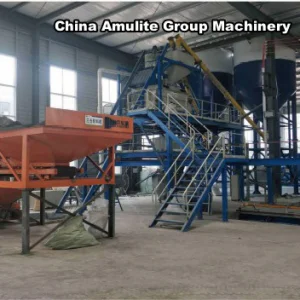
Extrusion and slipformer machinery producing lightweight hollow core concrete and gypsum partition panels.
Explore Equipment Specs →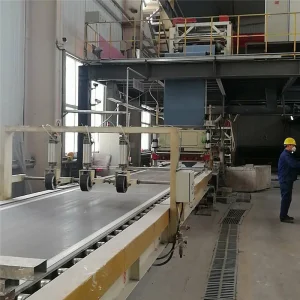
High-speed paper-faced drywall plasterboard manufacturing lines with automated drying and edge profiling.
Explore Equipment Specs →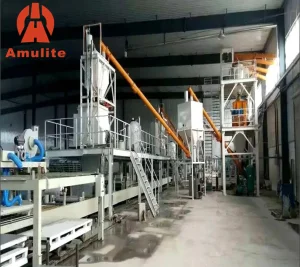
Waterproof extruded polystyrene insulation board equipment laminated with fiberglass mesh and polymer mortar skin.
Explore Equipment Specs →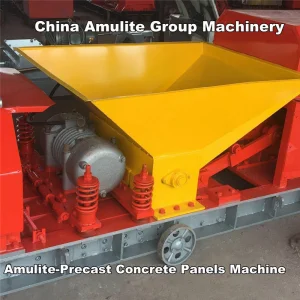
Industrial batching, molding, and curing solutions for structural precast beams, columns, and solid boundary walls.
Explore Equipment Specs →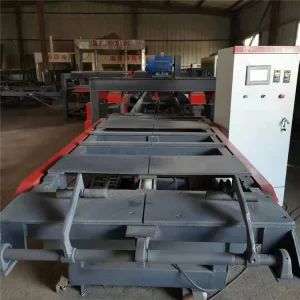
High-precision diamond saw cutting line for automated trimming of fiber cement and sandwich panel edges.
Explore Equipment Specs →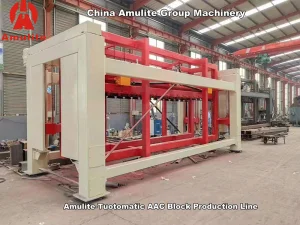
Autoclaved Aerated Concrete manufacturing technology featuring precision wire cutting and steam curing chambers.
Explore Equipment Specs →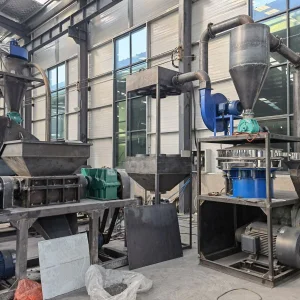
Eco-friendly crushing, dry sorting, and precious metal recovery plants for spent energy storage batteries.
Explore Equipment Specs →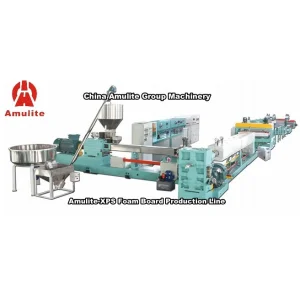
Green blowing agent extruded polystyrene board extrusion machinery delivering zero-ODP insulation panels.
Explore Equipment Specs →Partner with a proven global machinery manufacturer. Get tailored plant engineering drawings, raw material mix designs, utility loading breakdowns, and comprehensive equipment quotes within 24 hours.
Send Inquiry Now