



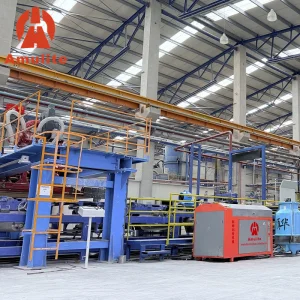
Engineered for Southern California's High-Spec Commercial and Wildfire-Resilient Residential Infrastructure
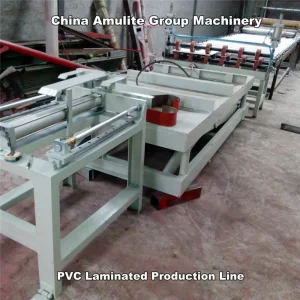
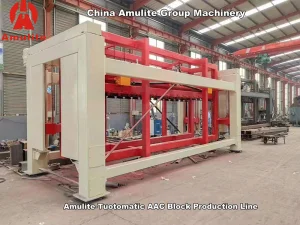
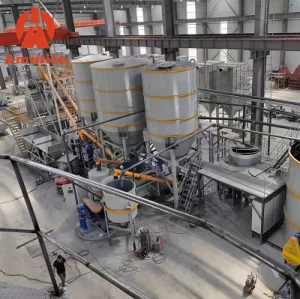
The Greater Los Angeles metropolitan area, encompassing Los Angeles County, Orange County, and the Inland Empire, represents one of North America's most demanding regional construction sectors. Operating under stringent regulatory pressures—most notably California Code of Regulations Title 24, strict seismic building codes from the Los Angeles Department of Building and Safety (LADBS), and severe Wildland-Urban Interface (WUI) fire safety standards—the local market has rapidly shifted toward high-performance, non-combustible structural materials.
To meet the relentless demand for ASTM E136 non-combustible exterior cladding, interior fire-rated partitions, and moisture-resistant tile backing, building material manufacturers and investors in the Los Angeles market require high-yield, fully automated Fiber Cement Board (FCB) and Calcium Silicate Board (CSB) production lines. Establishing local production facilities or securing direct supply partnerships with world-class machinery original equipment manufacturers (OEMs) allows regional producers to drastically mitigate overseas freight volatility at the Ports of Los Angeles and Long Beach while fulfilling California's zero-net-energy and decarbonization mandates.
Engineered for high throughput, low raw material consumption, and long-term operational uptime.
Understanding the Crystalline Matrix Evolution in Fiber Cement and Calcium Silicate Board Manufacturing
The core of modern high-speed board production. Utilizes multi-vat rotating mesh cylinders (3 to 6 vats) to continuously filter diluted cement-silica-pulp slurries, transferring ultra-thin micro-layers (0.2–0.3mm) onto a felt belt to build homogenous sheet thickness with exceptional tensile strength.
Operated at high temperatures (170°C–190°C) and saturated steam pressures (1.0–1.3 MPa) for 8 to 12 hours. This process converts reactive quartz sand and lime slurry into a highly stable Tobermorite Crystalline Structure ($5CaO \cdot 6SiO_2 \cdot 5H_2O$), guaranteeing zero moisture expansion and superior dimensional stability.
Modern production lines replace hazardous asbestos entirely with high-grade unbleached Kraft cellulose pulp, alkali-resistant (AR) glass fibers, and synthetic Polyvinyl Alcohol (PVA) fibers, satisfying all US EPA and California Proposition 65 toxicity mandates.
| Property Parameter | Autoclaved Calcium Silicate Board (CSB) | Non-Autoclaved Fiber Cement Board (FCB) | Autoclaved Fiber Cement Board (High Density) |
|---|---|---|---|
| Primary Raw Materials | Lime ($CaO$), Quartz Sand ($SiO_2$), Cellulose Fiber | Ordinary Portland Cement (OPC), Fly Ash, Cellulose, PVA | OPC, Quartz Powder, Micro-Silica, Cellulose Pulp |
| Density Range (g/cm³) | 0.8 – 1.25 | 1.2 – 1.45 | 1.45 – 1.75 |
| Flexural Strength (Cross/Parallel) | ≥ 10 – 14 MPa | ≥ 12 – 16 MPa | ≥ 18 – 28 MPa |
| Thermal Conductivity (W/m·K) | 0.09 – 0.15 (High Insulation) | 0.20 – 0.28 | 0.25 – 0.35 |
| Fire Resistance Class | ASTM E136 Class A1 (Incombustible) | ASTM E136 Class A1 | ASTM E136 Class A1 |
| Linear Moisture Expansion | ≤ 0.08% (Ultra-Stable) | ≤ 0.20% | ≤ 0.12% |
| Primary LA Application | Fireproof Ceiling, Passive Fire Protection, Ductwork | Tile Backer Board, Interior Drywall, Underlayment | Heavy-Duty Architectural Exterior Cladding & Facades |
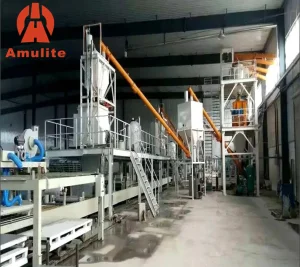
Setting up a state-of-the-art board manufacturing plant requires seamless synchronization between automated raw material dosing, high-shear slurry mixing, precision sheet forming, structural pressing, and environmental control units.
Our turnkey engineering solutions integrate Siemens S7-1500 PLC control architecture with SCADA real-time monitoring, ensuring that slurry consistency, layer adhesion, and board thickness tolerances are held within ±0.1mm. This eliminates material waste and optimizes chemical reaction rates during steam curing.
How Fiber Cement and Calcium Silicate Products Fulfill Specific Local Engineering & Regulatory Demand
In fire-prone foothill communities such as Malibu, Pasadena, Santa Clarita, and Calabasas, building authorities mandate non-combustible exterior siding. Autoclaved fiber cement lap siding manufactured on high-density production lines delivers authentic wood-grain aesthetics without rot, termite, or flame vulnerability.
Downtown Los Angeles (DTLA) and Century City high-rises utilize 6mm to 12mm calcium silicate boards for ductwork enclosures, fire-rated shaftwalls, and interior smoke barrier partitions. Their low thermal conductivity and non-efflorescing chemical matrix ensure 2-to-4-hour passive fire endurance under UL 263 / ASTM E119 testing.
Modern luxury residential developments in Santa Monica, Irvine, and Beverly Hills demand water-impermeable tile backer boards. Heavy-duty non-autoclaved fiber cement underlayment boards provide rigid structural shear support for heavy porcelain tile installation without swelling or structural delamination.
The next decade of fiber cement machinery engineering focuses on deep digitalization, energy reduction, and alternative low-carbon binder chemistries. As California enforces stricter carbon accounting on industrial emissions, plant operators must adopt cutting-edge automation to maintain profitability.
Our R&D engineering teams are pioneering full-suite smart factory solutions designed to integrate seamlessly into North American manufacturing infrastructures.
Optical sensors and ultrasonic transducers measure real-time slurry density and fiber dispersion inside the Hatschek vats, automatically adjusting water-cement ratios without manual operator intervention.
Captures residual heat from autoclave blowdown cycles to pre-heat boiler feedwater, cutting natural gas consumption by up to 22% per ton of finished product.
Injects industrial CO2 during initial pre-curing stages to permanently sequester carbon into calcium carbonate micro-crystals within the board matrix, lowering the overall embodied carbon footprint.
Detailed Technical Insights for Plant Investors, EPC Contractors, and Factory Managers
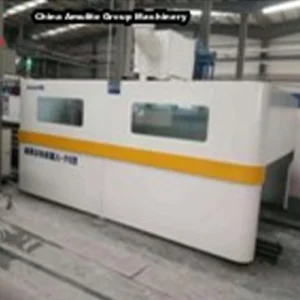
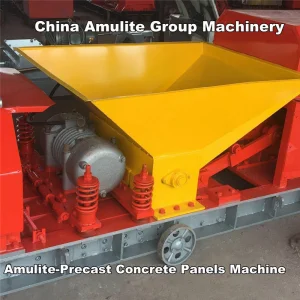
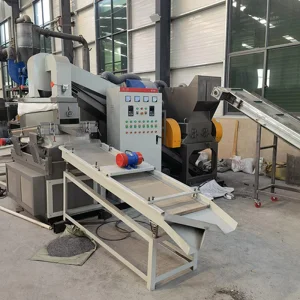
Complementary Production Machinery & Specialized Equipment for Full-Scale Factory Automation
Connect directly with our senior process engineers. Get customized plant layout proposals, raw material formulation audits, complete machinery quotes, and ROI calculations.