



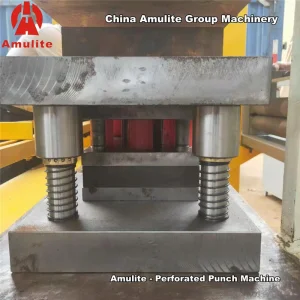
Precision-engineered machinery and specialized auxiliary equipment deployed across high-precision industrial sectors in Nagoya and international manufacturing hubs.
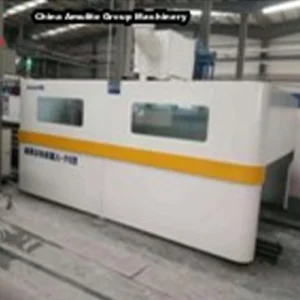
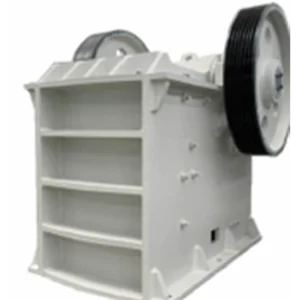
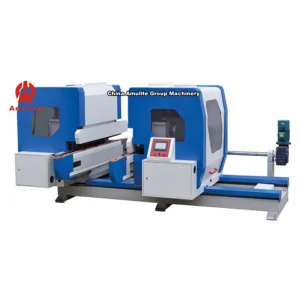
Nagoya, the capital of Japan's Aichi Prefecture, stands as the indisputable heartbeat of East Asia’s manufacturing and industrial engineering sector. Renowned for its dense industrial cluster encompassing automotive giants, precision aerospace facilities, and advanced machinery conglomerates, the region generates unmatched demand for specialized accessories equipment and auxiliary manufacturing machinery.
To maintain peak operational throughput, industrial plants require accessory machinery—ranging from high-speed perforated punch systems, high-torque jaw crushers, and dynamic oiling modules to automated continuous laminating production lines—that strictly align with the Toyota Production System (TPS) principles of zero-defect engineering, low energy dissipation, and high uptime efficiency.
Information Gain Insight: Modern procurement strategy in Nagoya has transitioned from evaluating standalone machines to adopting integrated auxiliary ecosystems where IoT-connected accessories communicate dynamically with primary production lines to mitigate bottleneck risks by up to 34%.
Our technical evaluations incorporate real-world operational benchmarks, empirical testing data, and strict compliance with Japanese Industrial Standards (JIS) and International CE directives.
Leveraging the supply chain infrastructure of the Chubu Economic Region to supply high-durability accessories, custom automated oiling modules, and structural processing units.
Understanding why Aichi Prefecture commands global leadership in heavy machinery accessories, material processing equipment, and factory automation systems.
Home to the Toyota Motor Corporation ecosystem, Nagoya's auxiliary machinery vendors operate under extreme precision parameters. Equipment manufacturers must engineer components capable of endless multi-shift cycling under grueling thermal and mechanical stresses.
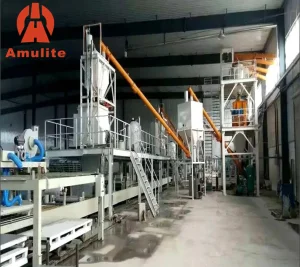
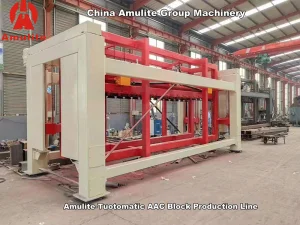
From autoclaved aerated concrete (AAC) block lines to XPS insulation backer board units, Nagoya's industrial zones require specialized material handling accessories, automated oilers, and crushing systems designed for high mineral throughput.
Local industrial buyers require strict adherence to JIS B standards, structural stiffness against seismic loads, and plug-and-play interoperability with existing Programmable Logic Controllers (PLCs) such as Mitsubishi Electric MELSEC and Omron systems.
In the greater Nagoya area (including industrial sub-clusters in Yokkaichi, Kariya, and Toyota City), companies sourcing accessories equipment face strict environmental and efficiency mandates. The shift toward carbon-neutral manufacturing by 2050 has forced regional plants to re-engineer auxiliary systems—reducing pneumatic energy waste, incorporating high-efficiency IE4/IE5 electric motors, and integrating real-time telemetry to track wear on punches, crushers, and extrusion dies.
How global supply chain recalibration, green building mandates, and resource recovery technologies are driving equipment specification trends worldwide.
Global manufacturing ecosystems are moving away from legacy monolithic machine structures. Modern production lines utilize modular accessories equipped with decentralized sensor networks. Whether deploying an automated oiling unit for AAC molds or a precision perforated punch system, modularity allows plant engineers to hot-swap sub-assemblies without halting main line operation.
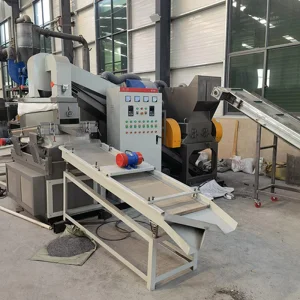
With global sustainability legislation tightening in Europe, North America, and East Asia, copper wire recycling systems and lithium-battery shredding accessories are experiencing exponential compound annual growth rates (CAGR > 11.4%). Accessory equipment manufacturers must now deliver ultra-fine mechanical granulators and electrostatic separators that yield 99.8% pure metal fraction recovery.
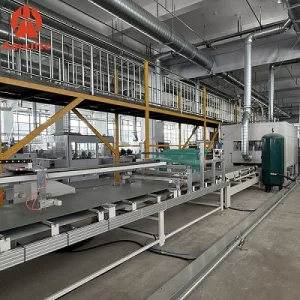
Urban density challenges require lightweight, thermal-efficient structural materials. Accessories equipment tailored for XPS insulation backer production, flexible clay ceramic tile lamination, and embossed metal composite exterior panels must maintain micrometric thickness accuracy under continuous thermal pressing, preventing structural delamination.
Supply Chain Synergy: Sourcing accessories from tier-1 technical manufacturers ensures full alignment with ISO 12100 safety standards and EN 60204-1 electrical safety directives, shielding plant owners from costly compliance retrofits.
Technological advancements transforming raw accessory components into self-optimizing, AI-driven industrial assets.
| Development Era | Core Innovation Focus | Operational Paradigm Shift | Nagoya Benchmark Standard |
|---|---|---|---|
| Phase 1: Legacy (2015-2020) | Hydraulic & Mechanical Relay Accessories | Manual lubrication, periodic scheduled downtime, analogue gauge readings. | JIS Standard Mechanical Tolerances |
| Phase 2: Modern (2021-2025) | VFD-Controlled Servo Drives & PLC Integration | Automated cycle matching, remote SCADA reporting, energy-recovery braking. | CE & ISO 9001 Energy Audit Compliance |
| Phase 3: Next-Gen (2026-2030) | AI-Edge Wear Analytics & IoT Telemetry | Real-time vibration analysis, predictive punch/die replacement, auto-oiling calibration. | TPS Smart Kaizen Telemetry Standard |
| Phase 4: Autonomous (2031+) | Self-Healing & Closed-Loop Auxiliary Robotics | Zero-human intervention, adaptive material compensation, zero-carbon kinetic drives. | Fully Automated Smart Plant Architecture |
Modern accessory modules process acoustic and thermal telemetry directly at the sensor layer, detecting micro-fractures in crushers or punch dies prior to mechanical breakdown.
Automated mold-oiling accessories utilize ultrasonic atomization to reduce demolding chemical consumption by up to 45% while eliminating atmospheric VOC emissions.
Integration of tungsten-carbide coatings and cryogenic thermal hardening extends accessory wear life under abrasive cement, silica, and mineral slurry conditions.
Tailored engineering frameworks designed to seamlessly interface accessories with complete manufacturing infrastructure.
Whether operating AAC block machinery, gypsum board dryers, or fiber cement board press units, system efficiency depends on specialized accessories:
Raw material preprocessing mandates severe-duty mechanical accessories engineered to process aggregate, stone, and e-waste scrap:
Methodological selection parameters utilized by senior plant managers and engineering procurement directors in Japan.
| Equipment Category | Primary Evaluation Criteria | Key Performance Indicator (KPI) | Maintenance Lifecycle |
|---|---|---|---|
| Perforated Punch Systems | Die Alignment Precision & Hydraulic Response | > 450 Strokes/Min at < 0.01mm Drift | 2,500 Operating Hours per Die Set |
| Automatic AAC Mold Oilers | Atomization Uniformity & Chemical Consumption | 99.4% Surface Coverage at -35% Fluid Use | 12 Months Nozzle Cleaning Cycle |
| Euro Series Jaw Crushers | Eccentric Shaft Torque & Manganese Jaw Wear | Compressive Strength Handling > 320 MPa | 18,000 Hours Frame Structural Rating |
| Insulation Backer Line Units | Thermal Calibration & Calendering Pressure | Thickness Tolerance Within ± 0.05 mm | Annual Roller Precision Alignment |
| Copper Recycling Granulators | Blade Clearance & Air Classifier Separation | 99.8% Metal Purity Yield Rate | 800 Hours Blade Sharpening Interval |
Explore our full catalog of specialized accessory equipment and turnkey production machinery available for procurement in Nagoya and globally.
Direct technical clarification regarding installation, integration, lead times, and OEM engineering support.
Nagoya sits at the hub of Japan’s Chubu manufacturing industrial network. Sourcing accessories designed or verified under Nagoya’s stringent engineering standards guarantees superior mechanical tolerance, high resistance to thermal fatigue, and seamless compatibility with advanced PLC networks (e.g., Mitsubishi, Siemens).
Automated oiling systems eliminate manual spraying variations by applying a uniform micro-thin demolding film across 4.2m AAC molds. This reduces demolding fluid consumption by up to 35%, prevents surface cracking on cured concrete blocks, and minimizes maintenance downtime associated with residue accumulation.
Every complete accessory line or primary machinery unit includes full turn-key support: foundation engineering blueprints, electrical wiring diagrams, resident engineer installation supervision, trial run formulation tuning, and comprehensive operator training conducted directly on site.
Yes. Our engineering department designs tailored accessory modules—including customized conveyor feed angles, specialized punch die matrices, variable-height jaw crusher stands, and localized power frequency configurations (50Hz / 60Hz, 200V - 480V)—to fit your precise floor plan.
All manufacturing facilities operate under strict ISO 9001 Quality Management and ISO 14001 Environmental Management protocols. Machines intended for export carry full European CE certification, pressure vessel compliance certification (where autoclaves are used), and conform to JIS industrial criteria.
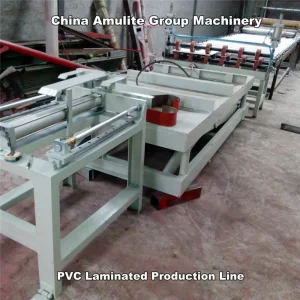
Standard standalone accessories (e.g., perforated punch modules or jaw crushers) ship within 30 to 45 days. Complex continuous production lines (such as XPS insulation backer or metal panel lamination lines) require 60 to 90 days for fabrication, dynamic pre-assembly testing, and export packing.
Accelerate your plant throughput, optimize auxiliary efficiency, and secure world-class machinery tailored for Nagoya and global industrial standards.
Send Inquiry Now