



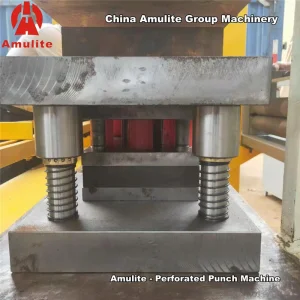
Engineered for high-volume building material production, metal sheet fabrication, and mining screen manufacturing in Sub-Saharan Africa.
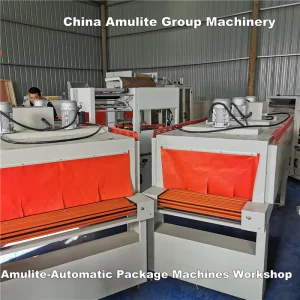
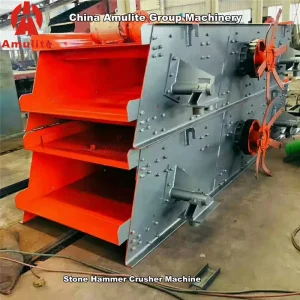
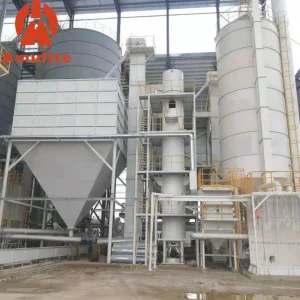
Quantifiable benchmarks established across modern manufacturing facilities in Johannesburg, Cape Town, and international manufacturing hubs.
The industrial landscape for perforated punch machines has undergone a seismic shift over the past decade. Driven by the global push toward micro-perforated acoustic building panels, architectural solar shielding, and high-durability mining screen media, modern perforation equipment has evolved far beyond traditional mechanical presses. Today's industrial buyers require CNC-driven, high-speed, multi-axis punch systems capable of high stroke frequencies while maintaining strict dimensional accuracy across varied material substrates—including fiber cement boards, calcium silicate sheets, aluminum cladding, stainless steel plates, and gypsum plasterboards.
On a global scale, the market for industrial perforation machinery is expanding rapidly. Manufacturing enterprises in Germany, Japan, China, and North America have spearheaded innovations in servo-electric drive mechanisms, automated pin indexing, dynamic tool lubrication, and integrated optical vision inspection. The conversion from hydraulic punching to full servo-electric actuation has yielded up to 45% reductions in total electrical consumption, while simultaneously eliminating hydraulic thermal dissipation issues and oil degradation risks—an essential consideration for high-duty-cycle industrial operations in warmer climates.
Modern perforated punch systems must accommodate non-homogeneous abrasive substrates (such as fiber cement containing silica sand and cellulose fibers) alongside high-tensile metal alloys. Failure to match pin hardness (Cr12MoV/D2 vs Tungsten Carbide) with substrate abrasion leads to premature tool wear, edge burring, and costly line stoppage.
South Africa represents the most sophisticated industrial and mining equipment market in Sub-Saharan Africa. The demand for industrial perforated punch machines in South Africa is driven by four primary regional macroeconomic hubs, each with distinct intent vectors and technical specifications:
The manufacturing heartland of SA. Primary demand centers on heavy-duty sheet metal punching, structural building panel perforation, and commercial acoustic ceiling panel manufacturing under strict SABS building standards.
Focused heavily on high-end architectural facade punching, sunshade louver manufacturing, ventilated rainscreen systems, and coastal-grade anti-corrosive stainless steel perforated screens.
Driven by port logistics, agricultural processing screens (maize/sugar filtration), maritime container modifications, and industrial drying rack fabrication for agricultural exports.
A critical engineering consideration for any equipment manufacturer targeting the South African market is power stability. Given historical loadshedding challenges managed by Eskom, modern perforated punch machines deployed in South Africa must incorporate robust electrical safety layers. Amulite punch machines designed for the SA market feature dual-layer power protection modules:
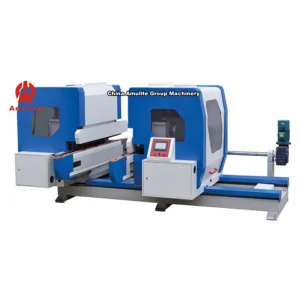
Achieving absolute registration accuracy across sheet dimensions up to 1,500 mm x 3,000 mm requires heavy mechanical frame rigidity and advanced numerical control. The Amulite technical framework prioritizes four mechanical and automation pillars:
The main machine frame is fabricated from high-tensile Q355B structural steel, subjected to thermal stress-relief annealing at 650°C to eliminate residual welding stress. Under maximum punching loads (ranging from 600 kN to 2,500 kN depending on machine tonnage), frame deflection is maintained below 0.08 mm per meter, preventing pin-to-die misalignment and accelerating tool longevity.
Workpieces are guided along precision linear motion guide rails (HIWIN/THK) powered by Yaskawa or Siemens AC servo drives. Position feedback is captured via absolute optical encoders with a resolution of 0.001 mm. The high-speed sheet clamp assembly utilizes pneumatic cushion pads that prevent surface scratching on coated fiber cement sheets or polished metal panels.
To support high-mix, low-volume production runs common in South African job shops, tool replacement time must be minimized. The Amulite punch system incorporates a standardized hydraulic quick-clamp tooling block. Operators can swap complete punch pin matrix plates within 8 to 12 minutes. Tool steel selection is customized based on operational intent:
Understanding user intent requires matching specific machinery capabilities with regional industrial applications across South Africa:
South African green building regulations (Green Star SA) heavily emphasize acoustic performance and natural indoor environmental quality. Perforated fiber cement ceiling tiles (600mm x 600mm or 1200mm x 600mm) with 1.5mm to 3.0mm micro-hole arrays require uniform hole spacing to achieve optimal NRC (Noise Reduction Coefficient) ratings of 0.65 to 0.85. Amulite perforated punch systems deliver rapid grid punching at up to 800 strokes per minute, producing perfectly deburred acoustic tiles ready for sound-absorptive fleece lamination.
In the platinum, gold, and coal mining sectors of the North West and Mpumalanga provinces, vibrating screen plates endure extreme impact and abrasive wear. Heavy-duty Amulite punch machines punch thick manganese steel plates (6mm to 16mm thickness) with tapered hole geometries to prevent screen blinding during wet slurry classification.
In high-wind coastal environments like Cape Town and Durban, perforated aluminum and fiber cement facade panels provide solar shading while resisting dynamic wind loads. The machine's multi-pattern CNC programming allows architects to generate variable porosity facade designs (staggered hole patterns, corporate logo perforation, and gradient hole sizes) within a single continuous automation program.
The industrial manufacturing domain is undergoing rapid digitalization. Over the next five years, the development of perforated punch machines will focus on three key technological advancements:
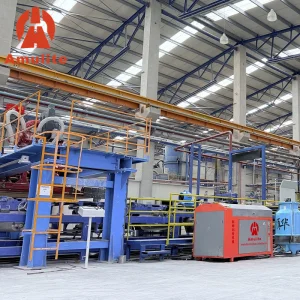
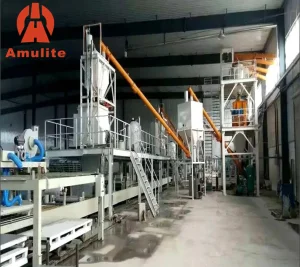
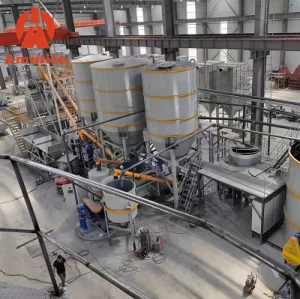
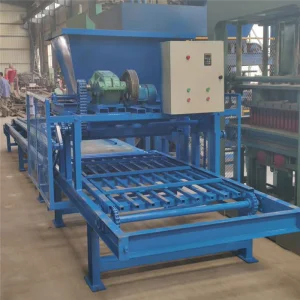
A perforated punch machine rarely operates as a standalone unit in a high-yield factory. Amulite specializes in designing fully integrated, turnkey processing lines that unite board forming, trimming, punching, coating, and automated stacking:
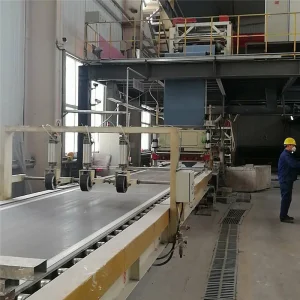
In an automated Amulite line, autoclaved fiber cement boards pass directly from the thickness calibrator into the continuous CNC perforated punch station. Vacuum loading arms move boards into position, multi-pin die blocks execute the perforation layout, and automatic dust extraction shrouds capture silica dust at source—maintaining clean room air quality standards and protecting linear guide rails.
Direct answers covering power specs, import procedures, tooling life, and local operational support.
All Amulite machinery destined for South Africa is standard-built to match the local power grid specification: 380V/400V, 3-Phase, 50Hz. Electrical cabinets feature Schneider and Siemens switchgear with built-in phase rotation protection and surge suppression to withstand grid voltage fluctuations.
For fiber cement and calcium silicate substrates, we equip the punch head with specialized ultra-fine grain Tungsten Carbide (WC) punch pins and hardened D2 die bushings. Additionally, an integrated micro-mist lubrication system coats the pin tips, extending tool life up to 1,500,000 punch cycles between resharpening runs.
Standard manufacturing lead time is 45 to 60 days. Ocean freight from main supply ports to Durban or Cape Town typically takes 22 to 28 days. Amulite provides on-site installation engineers or remote augmented-reality commissioning guidance to ensure fast factory handover.
Yes. The automated CNC controller features an intuitive graphical touch interface that natively parses standard DXF/DWG vector files. Operators can load complex hole pattern matrices, decorative layouts, or acoustic grid configurations directly via USB or secure Ethernet network connectivity.
When punching dry fiber cement or gypsum boards, fine dust is emitted. Amulite machines come equipped with a high-velocity enclosed suction shroud connected to a pulse-jet baghouse dust collector, capturing over 99.5% of airborne particulates and maintaining OSHA/SABS workplace air safety standards.
Explore our full line of specialized perforated punch systems, board production lines, and raw material processing machinery.
Request detailed equipment quotes, custom tooling proposals, technical CAD drawings, and factory performance data tailored for your South African production facility.
Send Inquiry Now