Pre-engineered production units optimized for Russian mineral processing standards and sub-zero operational environments.
The Russian Federation represents one of the world's most dynamic and demanding markets for gypsum-based building materials. Driven by large-scale urban development in the Central Federal District, infrastructure expansion across the Volga and Ural regions, and aggressive residential housing programs nationwide, the demand for high-grade calcined gypsum powder ($\beta$-hemihydrate and $\alpha$-hemihydrate) has escalated rapidly.
Strategic Economic Shift: Current Russian construction policies strongly emphasize domestic production localization. Building material producers are rapidly moving away from importing finished plaster products toward constructing heavy-duty, locally integrated gypsum processing facilities to ensure long-term supply resilience.
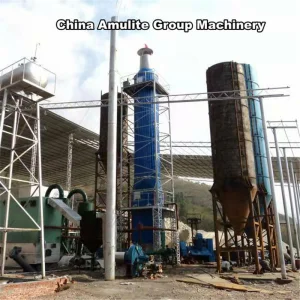
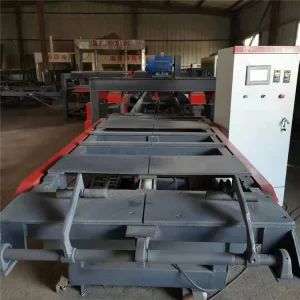
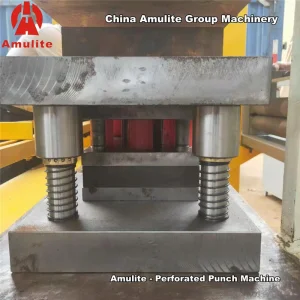
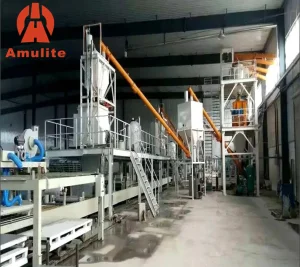
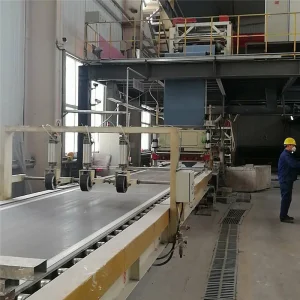
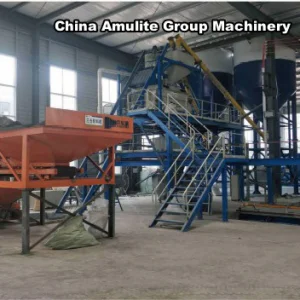
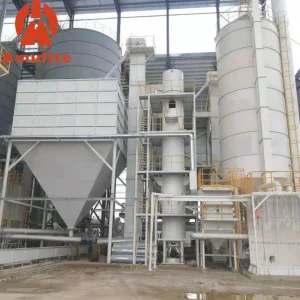
Our complete gypsum powder plant integrates continuous crushing, precision grinding, fluidized-bed boiling kiln calcination, and automated aging to achieve precise phase composition control.
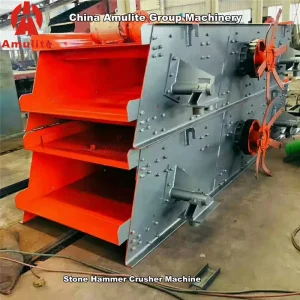
Utilizes two-stage jaw and heavy-duty hammer crushers to reduce natural rock to <25mm. High-efficiency Raymond mills or vertical roller mills grind the mineral to an controllable fineness ranging from 80 to 200 mesh, optimized for plasterboard or dry mortar applications.
The heart of our technology: a fluid-bed boiling furnace utilizing thermal oil heat exchange coils. Operating at a uniform temperature of 140°C–190°C, it ensures complete and homogeneous conversion of dihydrate ($\text{CaSO}_4 \cdot 2\text{H}_2\text{O}$) into stable $\beta$-hemihydrate ($\text{CaSO}_4 \cdot 0.5\text{H}_2\text{O}$).
Freshly calcined powder passes into insulated aging silos to equalize phase properties and stabilize water-to-plaster ratios. Integrated cyclone collectors and heat exchangers capture high-temperature exhaust gas to pre-heat incoming raw materials, lowering fuel usage by up to 35%.
| Capacity Range (Annual) | Calcination Technology | Heat Source Options | Power Consumption | Finished Product Strength | GOST Grade Compliance |
|---|---|---|---|---|---|
| 30,000 – 50,000 Tons | Fluidized Bed Boiling Kiln | Natural Gas / Coal / Diesel / Thermal Oil | ≤ 28 kWh / Ton | Flexural: ≥ 2.5 MPa, Compressive: ≥ 4.5 MPa | GOST 125-79 (G-4 to G-7) |
| 100,000 – 150,000 Tons | Boiling Kiln + Rotary Dryer | Natural Gas / Heavy Oil / Steam | ≤ 24 kWh / Ton | Flexural: ≥ 3.0 MPa, Compressive: ≥ 5.5 MPa | GOST 125-79 (G-6 to G-10) |
| 200,000 – 300,000+ Tons | Continuous Automated Fluidized System | Natural Gas / Waste Steam / Combined Heat | ≤ 21 kWh / Ton | Flexural: ≥ 3.5 MPa, Compressive: ≥ 7.0 MPa | GOST 125-79 (G-7 to G-16+) |
Deploying heavy machinery in the Russian Federation requires strict adherence to technical regulations, electrical safety codes, and pressure vessel certifications enforced across the Eurasian Customs Union (EAC).
Our production lines are engineered and certified to meet key Technical Regulations of the Customs Union:
Our intelligent PLC control system allows real-time adjustments of calcination residence time, temperature curves, and moisture levels to consistently hit GOST binder targets:
All control panels, human-machine interfaces (HMI), PLC diagnostics, and electrical schematic documentation are supplied with native Russian translation. Powered by Siemens S7-1500 or Schneider Electric PLCs, the control system enables remote diagnostics, continuous data logging of thermal energy consumption, and automated warning systems for uninterrupted plant operation.
Compared to legacy European equipment vendors (such as German or Italian machinery brands), China Amulite Group offers a highly competitive balance of world-class structural metallurgy, rapid manufacturing cycle times, and robust supply chain resilience.
Total Cost of Ownership (TCO) Impact: Amulite gypsum powder lines deliver up to a 45% reduction in initial capital expenditure (CAPEX) while maintaining equivalent operational lifespan and thermal output efficiency compared to Western European alternatives.
Explore our complete machinery portfolio, engineered for high-throughput wallboard, structural panel, insulation, and mineral processing applications.
As carbon reduction directives and energy efficiency standards tighten across Eurasia, the technological development of gypsum calcination machinery focuses on three critical frontiers:
Expanding beyond conventional $\beta$-gypsum, our next-gen pressure autoclaves produce high-strength $\alpha$-gypsum (crystal strength > 30-50 MPa). This high-value binder is required for self-leveling floor screeds, dental plasters, and high-precision casting molds under GOST 31358.
Future-proofing Russian plants against regional energy fluctuations. Our fluid-bed heat exchangers support dual-fuel natural gas and light oil burners, alongside hybrid waste-heat integration systems taking excess steam from adjacent thermal power units.
Integrating NIR (Near-Infrared) inline phase sensors and AI control algorithms. The system continuously measures free water and combined water content in real-time, automatically tuning boiling kiln thermal input to guarantee zero batch variability.
Direct responses from Amulite process engineers on plant sizing, energy consumption, and on-site support.
Contact China Amulite Group's senior process engineering team today for custom layout drawings, mass-energy balance calculations, and technical equipment proposals tailored to your local raw materials.
Send Inquiry Now