High-capacity automated equipment engineered for the Seoul Metropolitan Area (SMA), complying with South Korean Green Building Standards, K-Safety codes, and high-density urban site constraints.
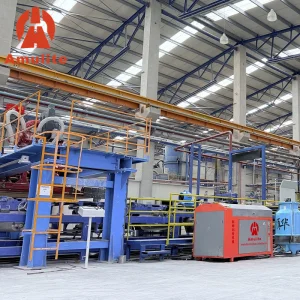
Fully automated multi-vat Hatschek sheet forming system configured for non-asbestos, A1 fire-rated ceiling and exterior facade production meeting Korean KS F 3201 specifications.
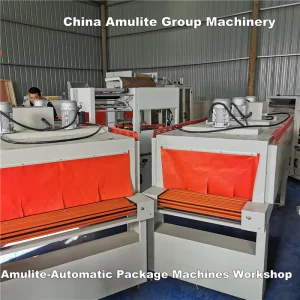
Robotic palletizing, shrink wrapping, and smart strapping workshops engineered for logistics integration across Seoul-Incheon industrial hubs.
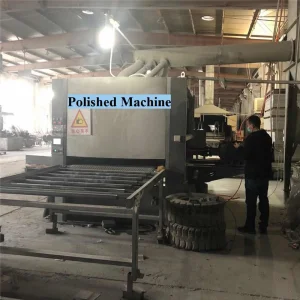
Micron-accuracy single-face calibrating and polishing machine designed for high-end decorative wall panels installed in Seoul commercial towers.
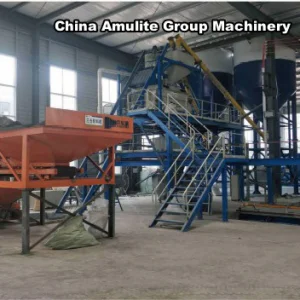
Extrusion-based lightweight hollow core concrete wall panel equipment tailored for rapid prefabricated apartment construction in Gyeonggi urban developments.
The Seoul Metropolitan Area represents one of East Asia’s most demanding industrial and construction equipment markets, driven by aggressive decarbonization mandates and high-density urban transformation.
Under the Seoul 2040 Comprehensive Plan, the Seoul Metropolitan Government (SMG) is actively remodeling aged industrial districts such as Seongsu-dong, Gasan Digital Complex, and Magok into eco-friendly smart clusters. Heavy manufacturing machinery must comply with stringent indoor air quality (IAQ) emissions, zero-sludge water recycling systems, and ultra-low noise thresholds (<65 dB at site perimeters) to secure municipal building permits.
South Korea’s Ministry of Land, Infrastructure and Transport (MOLIT) enforces strict Zero Energy Building (ZEB) Grade 5 certifications for all private and public constructions exceeding 1,000 m². Consequently, local board manufacturers require high-precision autoclaved calcium silicate lines and XPS insulation backing machinery capable of delivering thermal conductivity ratings below 0.024 W/m·K.
Industrial machinery deployed across Gyeonggi-do and Seoul must adhere to Korean Occupational Safety and Health Agency (K-OSHA) certifications. Equipment accessories—from hydraulic manifolds to safety interlocking light curtains—are integrated with Siemens PLC and Schneider controls to guarantee fault-tolerant operations and zero un-scheduled downtime.
| Performance Standard | Standard Export Configuration | Seoul Metropolitan Optimized Model (Amulite) | Strategic Value for Seoul Operators |
|---|---|---|---|
| Acoustic & Vibration Control | Base dampening, 78-85 dB operational noise | Active dynamic vibration isolation, <62 dB rating | Allows 24/7 industrial production in urban zones |
| Energy Efficiency Metric | Standard thermal insulation (Steam autoclave) | Multi-stage heat exchanger system (Recovers 35% steam) | Directly aligns with K-RE100 & South Korea ZEB mandates |
| Hydraulic Pressing Precision | ±0.5 mm sheet thickness tolerance | Servo-hydraulic micro-metering (±0.08 mm tolerance) | Eliminates post-sanding waste; reduces raw material cost |
| Dust Capture Efficiency | Standard cyclone dust collection (88-92%) | Closed-loop HEPA filtration with pulse-jet cleaning (>99.7%) | Complies with Seoul Clean Air Conservation Act regulations |
Backing every single component with verified industrial empirical data, proprietary metallurgy, and over 15 years of turnkey engineering success across global markets.
Our specialized process lab customizes slurry mixing ratios based on locally accessible South Korean raw materials—such as domestic fly ash from Yeongheung Power Station, domestic OPC cement, silica quartz powder, and eco-pulp—reducing binder costs by up to 18% while guaranteeing flexural breaking strength above 16 MPa.
Unlike standard OEMs who outsource structural fabrication, Amulite processes all forming cylinders, heavy hydraulic platens, and autoclave pressure vessels in-house using 5-axis CNC machining centers and automated submerged arc welding, inspected via ultrasonic non-destructive testing (NDT).
Engineered to power diverse civil infrastructure, high-density vertical real estate, and industrial modernizations across key district hubs in the Seoul Metropolitan Region.
High-rise commercial developments in Gangnam-gu and Yeouido Financial District require ultra-lightweight EPS sandwich cement panels and fireproof fiber cement curtain wall backings. Amulite's equipment produces panels engineered for seismic structural displacement performance up to 1/100 rad drift limits.
Hyperscale data centers in Hanam and Pangyo Techno Valley utilize non-combustible A1-class calcium silicate boards manufactured on our 1,600 mm wide Hatschek lines for cable ducting, thermal insulation, and electromagnetic interference (EMI) containment partitions.
Our turnkey OEM Lithium Battery Recycling Equipment processes spent EV batteries from nearby automotive manufacturing networks, extracting high-purity black mass (Nickel-Cobalt-Manganese) with zero hazardous emissions, powering South Korea's secondary raw material closed-loop strategy.
Anticipating South Korea’s industrial evolution toward Autonomous Manufacturing, Carbon-Negative Construction Materials, and AI-Driven Quality Assurance.
Deploying IoT vibration sensors and micro-thermal telemetry on forming vats, cutters, and press rams. Real-time diagnostic feeds prevent gear backlash and hydraulic pump failures before micro-cracks develop in board substrates.
Commercializing direct carbon-capture autoclaving systems for calcium silicate board lines. Flue gases are injected during high-pressure steam cycles, permanently sequestering CO2 into calcium carbonate crystals within the board matrix.
Introducing non-contact high-pressure waterjet and ultrasonic diamond cutting heads on our 1300 II Four-Side Trimming Machinery, generating zero respirable crystalline silica (RCS) dust during high-speed board sizing.
Full SCADA cloud integration with autonomous guided vehicles (AGVs) managing automatic green-sheet stacking, autoclave tray feeding, optical surface defect sorting, and robotic stretch wrapping with zero human intervention.
Explore our expanded suite of specialized production machinery, crushing lines, recycling systems, and finishing plants designed for maximum operational longevity and low total cost of ownership (TCO).
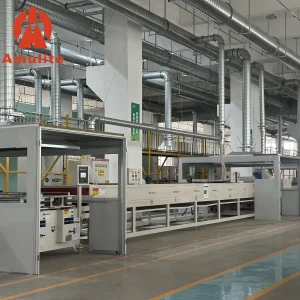
High-efficiency UV roller coater and curing tunnel system engineered to apply scratch-resistant, anti-bacterial architectural finishes on fiber cement boards.
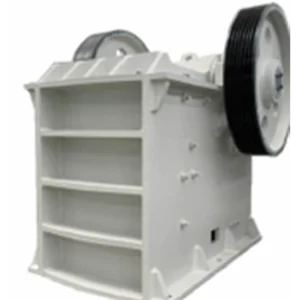
Heavy-duty aggregate and raw material crushing system featuring high-manganese jaw plates designed for low vibration aggregate processing.
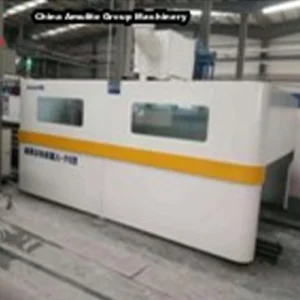
Precision 4.2-meter block cutting complex with automatic oiling, tilting demoulding, and high-pressure steam autoclave curing carts.
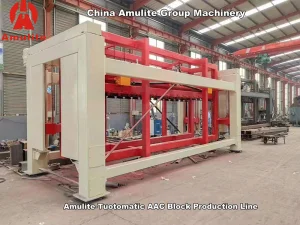
Turnkey autoclaved aerated concrete plant configured for 100,000 to 400,000 m³/year capacities with automated dosing and SCADA control.
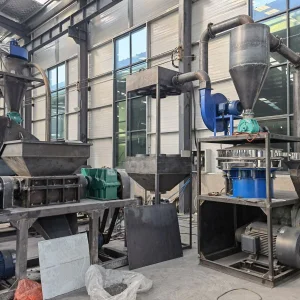
Closed-loop inert atmosphere shredding and dry mechanical sorting system for recovering high-grade lithium, cobalt, and nickel black mass.
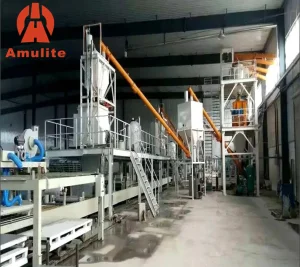
Continuous extrusion line producing waterproof, cementitious glass-fiber reinforced XPS foam backer boards for wet-room construction.
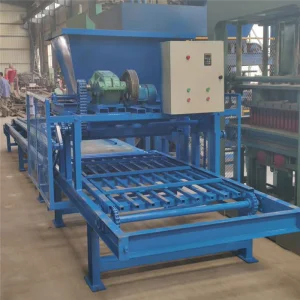
High-frequency vibration compaction block forming system producing permeable urban paving bricks, interlocking blocks, and heavy masonry units.
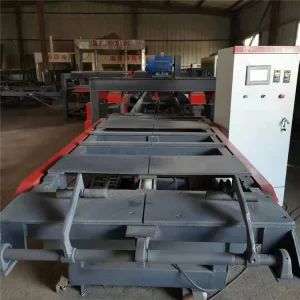
Dual-shaft high-speed precision saw line delivering square, chip-free edge profiles on calcium silicate, fiber cement, and MGO boards.
From raw material geological sampling to final Korean KS certification, our step-by-step project delivery model minimizes investor risk and accelerates time-to-revenue.
We perform laboratory analysis on local Korean cements, silica quartz sand, cellulose pulps, and industrial byproducts. Our process engineers adjust formulation recipes to minimize costly binder additives while exceeding flexural breaking strength and water absorption criteria.
Using BIM and AutoCAD engineering platforms, we map equipment footprints directly into client factory boundaries in Gyeonggi or Incheon industrial zones, accounting for floor loading dynamics, transformer sizing, steam boiler capacity, and zero-discharge water recycling piping.
Core components—forming cylinders, hydraulic presses, autoclaves, cutting lines—are manufactured in our 100,000 m² plant, subjected to 72-hour mechanical dry runs under simulated load, and packaged in corrosion-resistant sea freight containers for rapid transit to Busan or Incheon ports.
Resident Amulite electrical and mechanical commissioning engineers supervise site assembly, PLC loop testing, trial production runs, and hands-on staff training until target daily output and zero-defect yield rates are achieved.
Detailed answers to technical, regulatory, and operational questions commonly raised by plant operators, project contractors, and machinery buyers in South Korea.
Contact our senior process engineers today to receive a customized technical proposal, plant layout drawing, raw material evaluation, and turnkey ROI analysis tailored for your project in South Korea.
Send Inquiry Now