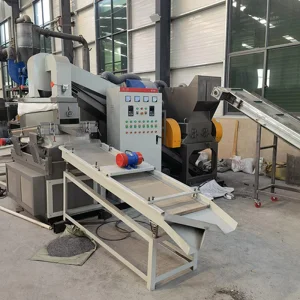
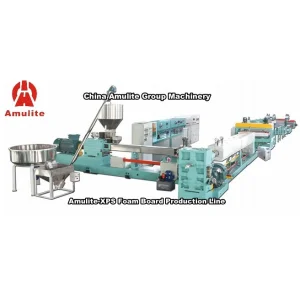
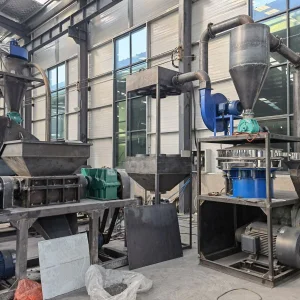
High-precision forming machinery engineered for scalable building material production lines.
Strategic analysis of modern OEM manufacturing lines, core material chemistry, and structural laminating mechanics.
The global construction industry is undergoing a structural paradigm shift toward energy-efficient, pre-engineered structural envelopes and modular building components. At the center of this transformation lies the OEM Sandwich Panel Forming Line—a highly complex, automated manufacturing plant capable of integrating metal profiling, chemical core metering, pressure lamination, and automated precision cutting into a continuous, high-speed production stream. Modern sandwich panels, composed of metallic facings (galvanized steel, aluminum, or stainless steel) bonded to rigid thermal core materials such as Polyisocyanurate (PIR), Polyurethane (PUR), Mineral Rockwool, or Expanded Polystyrene (EPS), represent the pinnacle of thermal resistance, structural rigidity, and fire safety in industrial architecture.
Selecting an OEM supplier or custom machinery builder for continuous panel production lines requires deep technical evaluation. Industrial buyers, EPC contractors, and building material manufacturers must look beyond basic mechanical assembly to examine roll profile linear tolerance, double-caterpillar conveyor length, chemical high-pressure dosing precision, and overall PLC servo-synchronization. As global energy building codes (such as EU NZEB and US ASHRAE 90.1) mandate stricter U-value ratings for commercial envelopes, sandwich panel manufacturing lines have evolved into sophisticated Mechatronic Systems operating under Industry 4.0 standards.
Information Gain Insight: Modern continuous PIR/PUR sandwich panel forming lines operating with 30-meter double-caterpillar conveyors achieve a thermal conductivity rating ($\lambda$) as low as $0.019\text{ W/m}\cdot\text{K}$, outperforming traditional discontinuous block-molded EPS systems by over 100% in thermal efficiency while delivering Class B-s1, d0 fire compliance under EN 13501-1 standards.
Detailed breakdown of mechanical, chemical, and thermal subsystems forming a continuous production line.
Hydraulic twin-head uncoiler units equipped with automatic tension management, optical edge alignment sensors, and protective PE film lamination rollers to shield coil coatings during profiling.
Multi-stage independent profiling stations featuring hard-chrome plated forged steel rollers. Capable of switching between roof corrugated profiles, wall micro-ribbed, and architectural flat profiles.
Multi-component chemical injection units (Polyol, Isocyanate, Pentane blowing agent, catalysts) operating up to 200 bar, driving oscillating mixing heads for uniform cream-time distribution across steel facings.
A 24 to 36-meter precision caterpillar conveyor featuring temperature-controlled heating plates ($60^\circ\text{C}-70^\circ\text{C}$) that provide uniform curing pressure to ensure flat, warp-free panel surfaces.
High-speed servo-driven tracking flying saws equipped with dust extraction units. Precise length cutting occurs dynamically without interrupting continuous line speeds up to 35 meters per minute.
Cooling cooling towers (paternoster systems) allow foam polymerization to complete before automated vacuum suction stackers bundle and shrink-wrap final panel packs for shipment.
| Performance Parameter | PIR / PUR Continuous Line | Mineral Rockwool Continuous Line | EPS / XPS Panel Line |
|---|---|---|---|
| Line Operating Speed | 6 – 35 m/min (Variable Servo Drive) | 4 – 12 m/min (Lamella Turning System) | 4 – 15 m/min (Discontinuous/Continuous) |
| Panel Thickness Range | 30 mm – 250 mm | 50 mm – 250 mm | 40 mm – 300 mm |
| Core Material Density | 38 – 45 kg/m³ (PIR Rigid Foam) | 100 – 140 kg/m³ (Staggered Lamella) | 15 – 25 kg/m³ (Bead Board) |
| Fire Resistance Rating | B-s1, d0 (PIR) / B-s2, d0 (PUR) | Class A1 / A2 Non-combustible | Class B1 / B2 Standard Flame Retardant |
| Double Belt Length | 24m / 30m / 36m (High-precision plates) | 18m / 24m Curing Chamber | 12m / 18m Pressure Conveyor |
| Control & Automation | Siemens S7-1500 PLC + SCADA IoT | Siemens / Schneider CNC Axis Control | Omron / Delta Automation Suite |
Analyzing the total cost of ownership, modular engineering scalability, and industrial supply chain advantages.
China's heavy industrial clusters allow OEM machine builders to integrate top-tier metallurgy, heavy-duty CNC machining, and specialized high-pressure chemical metering pumps under one roof. This minimizes component lead times and reduces capital investment by 40% to 60% compared to Western European alternatives.
Leading Chinese OEM factories excel at modular engineering. Whether adapting roll former cassette stands for unique joint lock geometries (such as hidden-screw architectural joints or cold-room cam-lock profiles), custom voltage matching, or pentane explosion-proof plant safety conversions, lines are fully tailored to client specifications.
Premier machinery enterprises mandate rigorous Factory Acceptance Testing (FAT). Full-line dry runs, hydraulic pressure testing, PLC diagnostic checks, and roller alignment verifications are completed prior to ocean dispatch, ensuring rapid installation and commissioning within 30 to 45 days of arrival on site.
Innovations in green blowing agents, hybrid core flexibility, and smart digital factory integration.
Environmental regulations banning HFCs have accelerated the shift toward Cyclopentane, n-Pentane, and Isopentane blowing technologies. OEM line builders now embed advanced gas detection, explosion-proof nitrogen purging systems, and localized exhaust hoods, achieving Zero Ozone Depleting Potential (ODP) and negligible Global Warming Potential (GWP).
Flexibility is paramount for modern factory operators. Next-generation sandwich panel lines incorporate quick-change modular stations capable of switching between Polyurethane (PUR/PIR) liquid foaming and Mineral Rockwool/Glasswool slab feeding within 30 minutes, allowing plant operators to capture diverse commercial and fire-rated market segments on a single production asset.
Integration of continuous inline laser thickness measuring gauges, non-contact infrared thermal scanners, and automated foam density feedback loops ensures zero-defect manufacturing. Real-time SCADA dashboards track raw material yield ($kg/\text{m}^2$), energy consumption, and blade wear, syncing operational data directly with corporate ERP systems.
Aesthetic building facades demand complex interlocking joint geometries. Modern OEM roll formers feature quick-change cassette tooling with up to 36 forming stations, crafting tongue-and-groove side joints with integrated weather-stripping grooves and concealed fastener pockets that eliminate external water penetration risk.
Deployment of engineered sandwich panels across global cold chain, cleanroom, and structural sectors.
Cold storage facilities require thick (150mm to 220mm) PIR panels equipped with deep labyrinth joints to prevent thermal bridging and frost heave. OEM lines engineered for cold room applications deliver extra-long double-belt curing to guarantee dimensional stability down to $-40^\circ\text{C}$ operating temperatures.
Semiconductor cleanrooms and pharmaceutical facilities demand ultra-flat panel surfaces with anti-static, chemical-resistant coatings. OEM forming lines integrate specialized film lamination, flush joint forming, and non-outgassing core formulations (Class 100 cleanroom rating compliant).
High-speed roof and wall panel production for large-scale steel structure complexes requires continuous operation at 25+ meters per minute. OEM lines integrate automatic overlap punching, end-lapping notchers, and bundle stackers to streamline job-site assembly.
Strategic roadmap for evaluating machinery builders, technical parameters, and lifetime operational expenses.
When investing in an OEM Sandwich Panel Forming Line, forward-thinking buyers must look beyond the initial purchase price (CapEx) to analyze the lifetime operational cost (OpEx). Raw material efficiency—specifically chemical foam yield and coil scrap rates—accounts for up to 80% of total panel manufacturing costs over a 10-year operating horizon.
Verify that roll forming dies are CNC-turned from high-grade Cr12MoV (D2 equivalent) alloy tool steel, vacuum heat-treated to HRC 58-62, and hard-chrome plated to $\ge 0.05\text{mm}$. Substandard tooling leads to surface scratching and profile distortion under continuous high tension.
The caterpillar conveyor is the heaviest component of the line. High-quality Chinese OEM builders utilize precision-machined structural cast iron or heavy steel plates with ground track guide rails to maintain flat parallel alignment across temperature cycles, preventing thermal warping.
Demand high-pressure metering pumps sourced from proven global manufacturers (such as Rexroth or KraussMaffei) alongside dynamic mixing heads. Precise chemical ratio control ($\pm 0.5\%$) prevents unreacted chemical pockets, density voids, and panel delamination.
Direct technical answers from senior machinery design engineers regarding sandwich panel line procurement.
Comprehensive equipment options for building material manufacturing plants worldwide.