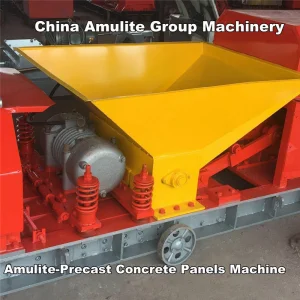
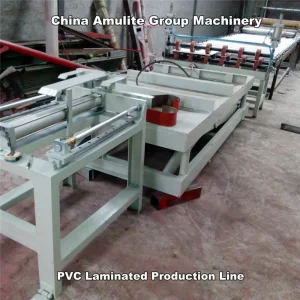
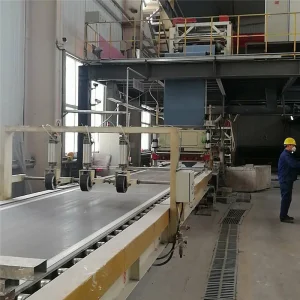
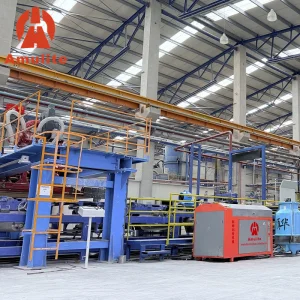
Explore our primary machinery lines and structural panel equipment engineered for ultra-high output and structural precision.
Modern architectural engineering demands continuous innovation in envelope thermal efficiency, structural integrity, and life-safety compliance. As global building codes enforce strict net-zero carbon targets and stringent fire safety standards (such as EN 13501-1 and ASTM E84), OEM sandwich panel factories have evolved from simple manual fabricators into highly automated, technology-driven industrial hubs.
An OEM Sandwich Panel Factory operates at the intersection of material science, structural engineering, and continuous roll-forming technology. By utilizing advanced cores—including Polyisocyanurate (PIR), Polyurethane (PUR), High-Density Rock Wool, Expanded Polystyrene (EPS), and inorganic Fiber Cement/MGO formulations—OEM manufacturers supply customized building envelopes tailored to harsh ambient conditions, extreme fire barriers, and ultra-clean pharmaceutical environments.
Key performance indicators that separate world-class OEM panel production facilities from commodity suppliers:
OEM customization requires rigorous engineering matching of insulation core media with exterior structural skins based on operational environment.
| Insulation Core Type | Density Range (kg/m³) | Thermal Conductivity (W/m·K) | Fire Classification | Primary Industrial Application |
|---|---|---|---|---|
| PIR (Polyisocyanurate) | 38 – 45 kg/m³ | 0.018 – 0.022 W/m·K | B-s1,d0 (EN 13501-1) / Class 1 | Cold Storage (-40°C), Logistics Warehouses, Commercial Facades |
| Structural Rock Wool | 100 – 140 kg/m³ | 0.038 – 0.044 W/m·K | Class A1 Non-Combustible | High-Risk Industrial Facilities, Power Plants, Acoustic Enclosures |
| PUR (Polyurethane) | 35 – 42 kg/m³ | 0.022 – 0.025 W/m·K | B2 / B3 Standard | Agricultural Sheds, Prefab Housing, Light Commercial Roofs |
| EPS / XPS Composite | 15 – 30 kg/m³ | 0.032 – 0.036 W/m·K | B1 Flame Retardant | Cost-Effective Wall Partitions, Temporary Site Offices |
| Fiber Cement / MGO Core | 800 – 1200 kg/m³ | 0.15 – 0.25 W/m·K | Class A1 Non-Combustible | Cleanroom Internal Walls, Heavy Modular Housing, Tunnel Lining |
OEM factories leverage multi-pass computerized roll formers capable of handling pre-painted galvanized steel (PPGI), Galvalume (AZ150), stainless steel 304/316, and aluminum alloys. Rib profiles include micro-rib, trapezoidal, flat architectural, and concealed fastener cam-lock geometries.
Utilizing cyclopentane eco-friendly blowing agents with zero Ozone Depletion Potential (ODP=0) and low Global Warming Potential (GWP<1). High-pressure 6-component mixing heads ensure uniform cell structure distribution and superior bond adhesion.
Advanced OEM joint design features double tongue-and-groove configurations, labyrinth air-seals, integrated thermal breaks, and anti-capillary drainage grooves that prevent water ingress under 1000 Pa wind-driven rain tests.
Why global EPC firms, industrial developers, and building material distributors partner with leading Chinese OEMs.
Chinese OEM manufacturing hubs are positioned at the center of the world's most comprehensive industrial ecosystem. From raw steel coiling, zinc-aluminum galvanizing, and chemical polymer synthesis to continuous automated line manufacturing, local sourcing minimizes lead times by 40% compared to Western manufacturers. This enables rapid scaling for multi-million-square-meter megaprojects.
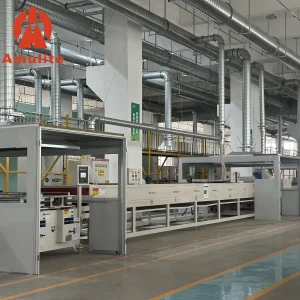
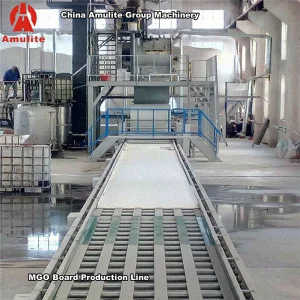
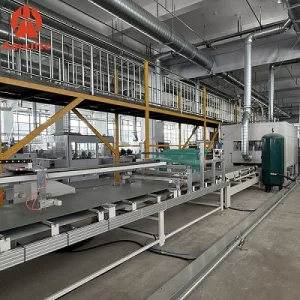
Modern Chinese factories operate 200-meter-long continuous double-rubber track laminating machines equipped with automated heating, precision caterpillar pressure beds, and real-time flying band-saws. This engineering capability delivers planar tolerances within ±0.5mm over a 12-meter panel length, preventing surface waviness and blistering.
Unlike rigid off-the-shelf catalog suppliers, Chinese OEM manufacturers excel in custom tool engineering. Whether adjusting skin thickness (0.3mm to 1.2mm), applying specialized anti-bacterial PVC/PVDF coatings for medical cleanrooms, or fabricating non-standard width panels (such as 950mm, 1000mm, 1150mm), custom orders are integrated with minimal tooling changeover time.
Leading Chinese sandwich panel manufacturers maintain ISO9001 quality, ISO14001 environmental management, and CE certifications. Products undergo third-party structural and fire testing verified by SGS, Intertek, and TUV—meeting FM Global (Factory Mutual) structural wind uplift and ASTM E84 flame spread index standards required for North American and European installation.
Engineering specialized building envelopes tailored to high-stress operational environments.
Utilizing 150mm–200mm thick PIR continuous panels with labyrinth pressure joints. Prevents thermal bridging and moisture ingress in deep-freeze environments (-40°C), reducing compressor energy loads by up to 35%.
Smooth, anti-static, anti-bacterial coated stainless steel or aluminum facings bonded to rigid rock wool or paper honeycomb cores. Flush structural joints maintain positive air pressure and withstand intense chemical sterilization.
Trapezoidal 3-rib / 5-rib exterior steel profiles paired with high-density PIR/Rock Wool. Engineered for long-span purlin clearance, high snow load ratings, and seamless integration with solar PV mounting brackets.
Lightweight EPS/PIR or Fiber Cement sandwich panels designed for rapid-assembly container buildings and modular construction. Combines lightweight structural rigidity with rapid bolt-together job site erection.
For EPC contractors and international buyers, validating supplier technical capability is crucial for long-term project warranty security.
When sourcing custom sandwich panels, technical procurement teams must audit five critical operational checkpoints:
Maximizing cube utilization in 40ft High Cube (40HC) containers reduces freight cost per square meter by up to 22%:
How next-generation material science and digital technology are reshaping structural sandwich panels.
Leading OEM factories are transitioning from petroleum-derived polymers to bio-based polyols derived from agricultural waste and recycled PET flakes. This lowers the embodied carbon footprint of PIR panels by over 30% while retaining superior fire resistance.
Building-Integrated Photovoltaics (BIPV) merge standing-seam sandwich panels directly with thin-film solar modules. Factory-installed electrical raceways allow seamless roof panel installation while serving as an active clean power generator.
By implementing vision-based AI camera systems over continuous double-belt lines, modern OEMs inspect surface flatness, paint micro-cracks, and dimension variances at full line speed with 0.1mm detection accuracy.
Technical clarity on structural design, fire codes, manufacturing lead times, and OEM ordering processes.
Partner directly with a world-class OEM manufacturer for custom panel configurations, structural engineering calculations, and competitive project estimates.
Contact Engineering TeamExplore our full ecosystem of non-metallic mineral processing, board production lines, and recycling equipment.