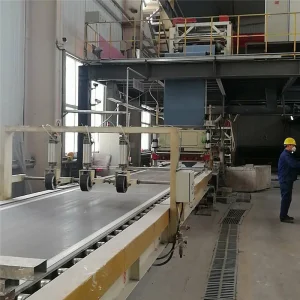
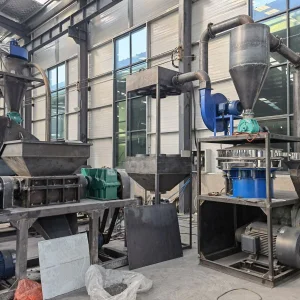
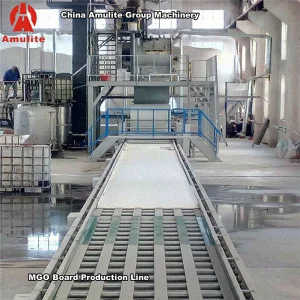
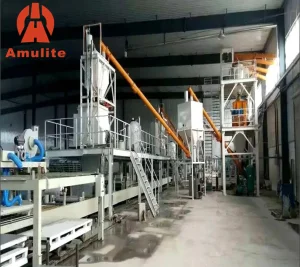
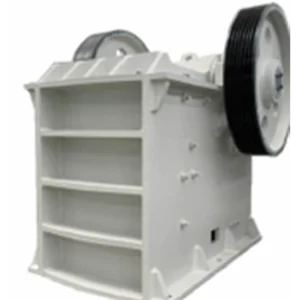
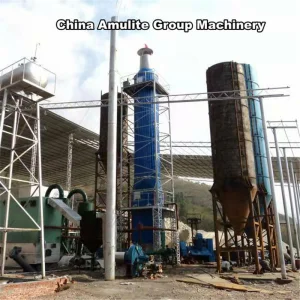
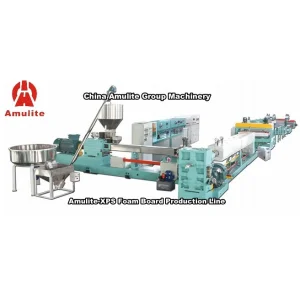
Explore our core machinery lineup engineered for high-density structural panels, lightweight insulation boards, and automated recycling systems.
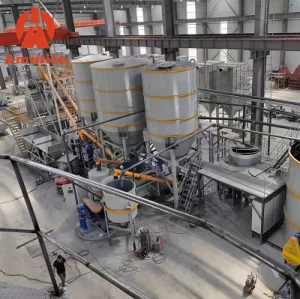
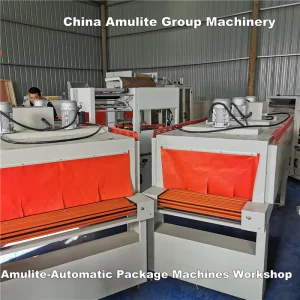
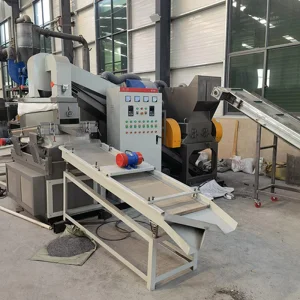
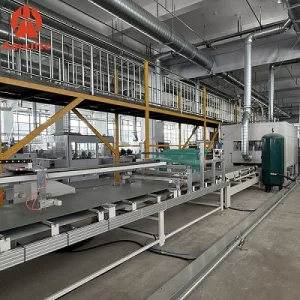
Analyzing macro market drivers, raw material supply dynamics, and capital expenditure optimization for high-capacity non-asbestos fiber cement plant installations worldwide.
The global construction materials industry is experiencing an unprecedented structural shift toward prefabricated, energy-efficient, and fire-resistant dry walling systems. At the forefront of this industrial transformation is the Fibre Cement Board (FCB) and Calcium Silicate Board (CSB) manufacturing sector. Demand is driven by strict global building safety codes requiring EN 13501-1 Class A1 non-combustible ratings, coupled with aggressive urban development in Asia-Pacific, the Middle East, Africa, and Latin America.
Navigating the procurement of a complete Fibre Cement Board Machine requires a deep understanding of process thermodynamics, slurry rheology, mechanical dewatering physics, and high-pressure hydrothermal curing dynamics. As a specialized OEM Fibre Cement Board Machine Manufacturer, China Amulite Group delivers end-to-end industrial plants tailored to local raw material availability—such as ordinary Portland cement (OPC 42.5/52.5), quartz sand (silica flour), fly ash, and bleached softwood kraft cellulose pulp.
Unlike standard machinery traders, an authentic OEM (Original Equipment Manufacturer) provides customized wet-end agitator geometries, vat slurry overflow hydraulics, and custom autoclave steam-pressure curves tailored specifically to the silica mesh size (200 mesh vs 325 mesh) and cellulose freeness (°SR) available in your target region.
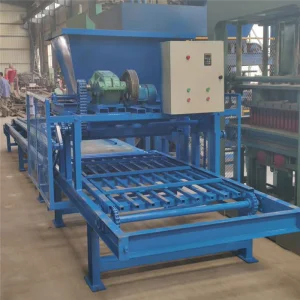
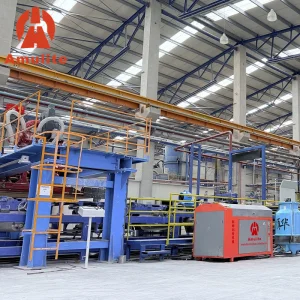
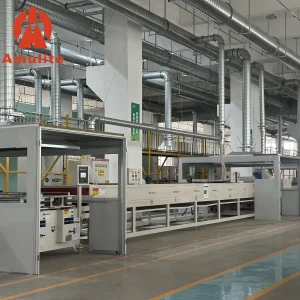
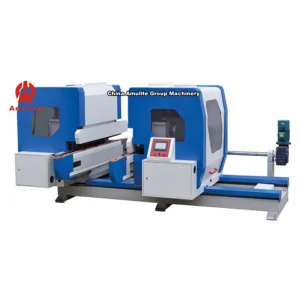
A step-by-step technical breakdown of the 4 key stages in modern Hatschek wet-process fiber cement board production lines.
| Process Parameter | Standard Hatschek Method | High-Density Autoclaved (Amulite OEM) | Air-Cured Non-Autoclaved |
|---|---|---|---|
| Target Board Density | 1.15 – 1.30 g/cm³ | 1.45 – 1.70 g/cm³ | 1.20 – 1.40 g/cm³ |
| Curing Chemistry | Hydration (C-S-H Gel) | Tobermorite Crystalline Phase | Atmospheric Hydration |
| Autoclave Requirement | Optional / Low Pressure | 12–14 Bar (185°C – 195°C) | None (Moisture Rooms) |
| Flexural Strength (Bending) | 9 – 13 MPa | 16 – 28+ MPa | 10 – 14 MPa |
| Linear Moisture Movement | < 0.25% | < 0.12% (Ultra-Stable) | < 0.20% |
| Primary Applications | Ceiling Tiles, Interior Walls | Exterior Cladding, Heavy Subfloor, Tunnel Panels | Partition Walls, Soffits |
Cellulose pulp is fiberized in a high-consistency hydrapulper and refined through double-disc refiners to reach 40–60°SR freeness. Simultaneously, quartz sand is wet-milled in a ball mill to a fine slurry (85% passing 325 mesh). Ingredients—cement, quartz flour, refined cellulose, and silica—are accurately metered into high-shear mixers via weight-loss dosing feeders, ensuring a homogeneous suspension at 15–20% solid concentration.
The homogenized slurry is continuously fed into 3 to 8 forming vats equipped with rotating mesh cylinders (sieves). A thin film of cement-fiber matrix (0.2–0.3 mm) is picked up by a continuous synthetic felt belt. As the belt passes over high-vacuum dewatering boxes (delta-P ranging from -0.04 to -0.07 MPa), moisture content drops rapidly. The film is wrapped around a precision-ground format roller (making cylinder) until the target green thickness (4 mm to 30 mm) is achieved.
The green board sheet is stripped from the format roller and cut to target dimensions (e.g., 1220x2440 mm or 1220x3050 mm) by a high-speed water-jet or mechanical rotary cutter. Automated vacuum stackers stack green sheets onto steel templates. For high-density exterior boards, the stack undergoes high-pressure consolidation under a 10,000-ton hydraulic press for 30–45 minutes, reducing micro-voids and increasing density up to 1.65 g/cm³.
After a pre-curing phase (8–12 hours at 45°C), green boards are loaded into massive industrial autoclaves. Subjected to saturated steam at 1.2–1.4 MPa (185–195°C) for 10–12 hours, a critical hydrothermal chemical reaction takes place: free calcium hydroxide from cement reacts with fine silica flour to synthesize crystalline 1.1 nm Tobermorite ($C_5S_6H_5$). The cured boards undergo edge profiling, sanding, dust extraction, hydrophobic sealing, and automatic pallet packaging.
Evaluating Capital Expenditure (CapEx), Operational Expenditure (OpEx), and utility loading parameters for global infrastructure investors.
Initial machine investment correlates directly with vat quantity (3-vat vs 6-vat), level of PLC automation (Siemens S7-1500 / Schneider SCADA), press tonnage (3000T to 10000T), and autoclave volume. A standard 5-million m²/year line requires approximately 8,000 to 12,000 m² of factory floor space.
Typical raw material cost distribution: Portland Cement (35–45%), Silica Flour/Sand (30–40%), Cellulose Fiber Pulp (10–15%), Wollastonite/Additives (5–10%). Optimizing cellulose refining and silica fineness significantly reduces pulp consumption without compromising flexural strength.
Electric Connected Load: 800 kW to 2200 kW (depending on refiners, ball mills, and press pumps). Thermal Energy: Saturated steam consumption averages 1.2 to 1.8 tons of steam per 1,000 m² of 6mm board. Closed-loop water recycling reduces process fresh water demand to <0.5 m³/m³ of board.
Ensuring machinery and produced boards comply with strict international building standards and environmental directives.
Purchasing an OEM Fibre Cement Board Machine requires strict adherence to localized engineering and safety mandates. China Amulite Group integrates international mechanical, electrical, and pressure vessel certifications directly into the equipment build protocol:
Finished boards meet EN 12467 (Fibre-cement flat sheets), ASTM C1186 (Standard Specification for Flat Fiber-Cement Sheets), and ISO 8336. Fire classification achieves Class A1 non-combustibility under EN 13501-1 and BS 476 Part 4.
Autoclaves comply with ASME Section VIII Div 1, PED 2014/68/EU, or SELO (China Special Equipment License). Complete production line electrical systems comply with CE Directive 2006/42/EC and UL/CSA component standards for North American markets.
In-depth engineering answers to common queries raised by plant investors and operational directors.
The Hatschek wet-process uses multi-vat wire mesh cylinders to film-laminate individual 0.2mm layers of slurry under vacuum dewatering, making it ideal for thin, high-density, ultra-high-flexural-strength boards (4mm–30mm). The Flow-On process pours slurry directly onto a moving wire belt, suitable for thicker panels, but offers less control over multi-layer cross-directional tensile strength and fiber orientation.
Autoclaved lines process silica flour ($SiO_2$) and cement under high-pressure steam (1.2–1.4 MPa at 190°C), triggering a chemical reaction that forms Tobermorite crystals. This gives the board exceptional dimensional stability, zero moisture shrinkage, and high strength within 24 hours. Air-cured lines rely solely on cement hydration, requiring 28 days of wet curing and producing boards with higher linear moisture expansion.
Bleached kraft cellulose pulp acts both as a structural reinforcing matrix and a filtering medium that holds cement particles on the mesh cylinder. While 100% waste paper (OCC/recycled newsprint) reduces costs, its short fiber length degrades flexural strength. We recommend a hybrid formulation: 70–80% virgin kraft pulp blended with 20–30% processed recycled pulp to optimize OpEx without dropping below EN 12467 strength classes.
Delamination is caused by trapped air micro-pockets or excessive free water between green layers. Amulite OEM machinery solves this via multi-stage vacuum dewatering boxes with real-time pressure differential control, precise nip-roll pressure calibration on the format roller, and a computerized pre-pressing degassing cycle prior to full 10,000-ton hydraulic compression.
Depending on local cement/pulp prices and regional market selling prices for exterior cladding boards, typical payback ranges between 2.2 to 3.5 years. OEM customization allows using local fly ash or blast furnace slag to replace up to 30% of cement, significantly accelerating ROI.
Additional specialized plant equipment for plasterboard, perlite insulation, MGO fireproof panels, XPS tile backers, and heavy-duty stone crushing lines.