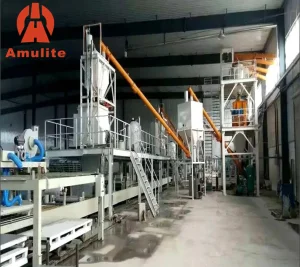
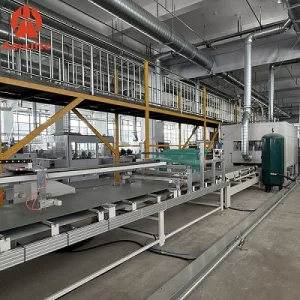
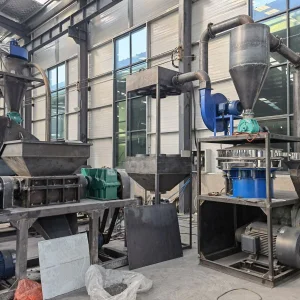
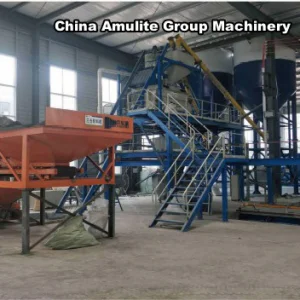
Explore engineered OEM machinery systems designed for high-density fiber cement board processing, calcium silicate board production, and advanced building material manufacturing.
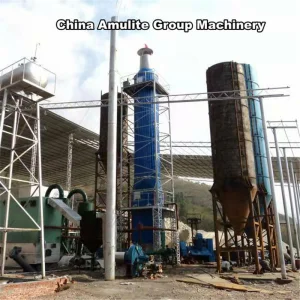
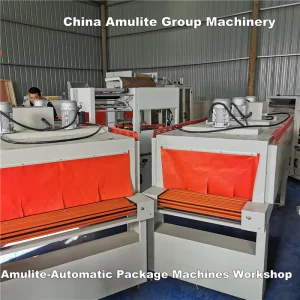
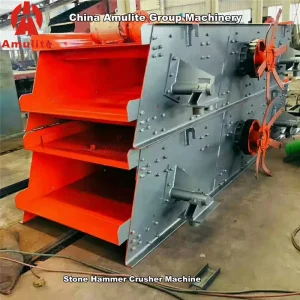
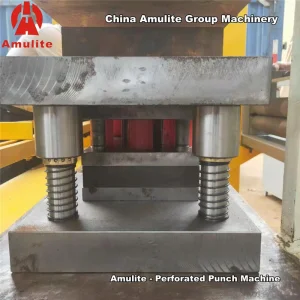
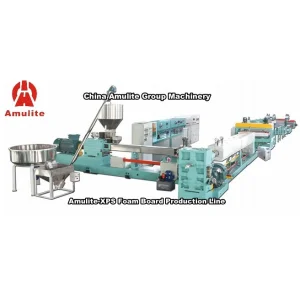
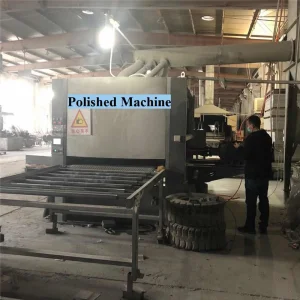
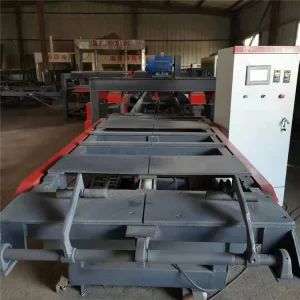
The global construction sector is undergoing a rapid paradigm shift toward lightweight, fire-rated, weather-resistant, and low-carbon structural materials. Fiber cement boards (FCB) and calcium silicate boards have emerged as indispensable non-combustible building envelopes, partition systems, and exterior facade claddings. Modern OEM Fiber Cement Board Making Equipment must satisfy dual demands: delivering micro-precision structural density while maintaining optimal thermal and kinetic efficiency.
Utilizing multi-cylinder slurry vat systems, our equipment deposits ultra-thin fiber-cement films (0.2–0.3mm per layer) onto a continuous felt belt, accumulating sheet thickness with absolute density uniformness.
High-pressure steam curing reactors operate at 1.0–1.2 MPa and 180°C–190°C. This converts raw silica sand and lime into high-strength calcium silicate hydrate, eliminating post-installation shrinking.
Robotic vacuum stackers, automatic pallet handling, and dynamic online edge trimmers reduce manual labor requirements by 75% while boosting line output speeds to over 12 sheets per minute.
Evaluating international suppliers for turnkey building material lines requires balancing initial capital expenditure (CAPEX), long-term operational costs (OPEX), and local raw material adaptability. China has consolidated its standing as the world's primary hub for heavy building material equipment manufacturing through significant supply-chain integration and precision metallurgical advancements.
China-based OEM OEMs leverage localized steel milling, heavy CNC machining centers, and Siemens/Schneider automation integration within unified manufacturing clusters, dramatically cutting machinery fabrication lead-times.
Unlike rigid European machinery configurations, Chinese engineering teams offer customized slurry dosing, non-standard board sizes (e.g., 1220x2440mm, 1200x3000mm, 610x1220mm), and tailor-made hydraulic press tonnage based on customer density specs.
Investing in a Chinese OEM turnkey line allows building material producers to achieve equivalent European industrial throughput at 35% to 50% of the CAPEX, drastically shortening ROI payback windows to under 24 months.
| Parameter / Feature | Amulite China OEM Line | Traditional European Line | Standard Regional Alternatives |
|---|---|---|---|
| Annual Line Output Range | 3 Million – 20 Million m²/Year | 5 Million – 15 Million m²/Year | 1 Million – 3 Million m²/Year |
| Sheet Forming Technology | Multi-Vat Hatschek / Advanced Flow-On | Single/Double Hatschek System | Manual Wet-Molding / Extrusion |
| Autoclave Operating Pressure | 1.0 – 1.3 MPa (Automated Control) | 1.2 MPa (Standard PLC) | Non-Autoclaved Air Cure Only |
| Raw Material Versatility | Fly Ash, Quartz Sand, Slag, Pulp, Cellulose | Refined Silica, Imported Kraft Pulp | Standard Portland Cement & Fiber |
| PLC & Remote Diagnostics | Siemens S7-1500 + IoT Remote Support | Proprietary High-Cost Systems | Basic Relay / Standalone Controllers |
| CAPEX ROI Period | 14 to 22 Months | 36 to 60 Months | 24 to 36 Months |
As global building standards shift toward net-zero emissions, fiber cement board manufacturing equipment must adapt to new chemical formulations, zero-water discharge mandates, and energy reclamation systems.
Modern equipment lines are optimized to utilize industrial waste streams such as pulverized fly ash (PFA), ground granulated blast-furnace slag (GGBS), and silica fume, reducing reliance on energy-intensive Clinker Portland Cement.
Advanced sedimentation tanks, filter presses, and closed-loop process water circuits eliminate toxic wastewater discharge. Water consumption is reduced by up to 92% per metric ton of cured board.
Non-contact gamma-ray or laser scanning arrays continuously measure wet-sheet mass distribution across the width of the felt belt, feeding real-time micro-adjustments back to the slurry dosing valves.
A modern turnkey fiber cement production line produces versatile products capable of replacing traditional drywall, plywood, and natural stone across various structural environments.
Density: 1.4 – 1.7 g/cm³
High-density autoclaved boards with hydrophobic surface treatment. Engineered to withstand high wind loads, freeze-thaw cycles, and prolonged UV radiation on high-rise facades.
Thickness: 6mm – 20mm
100% water-resistant substrates designed for commercial kitchens, bathrooms, and sub-floor underlayment. Maintains mechanical structural integrity even when completely submerged.
Fire Rating: Class A1 Non-Combustible
Calcium silicate boards produced at lower densities (0.8–1.1 g/cm³) provide superior thermal insulation, protecting structural steel framing and elevator shafts for up to 4 hours.
Embossed Surface Finishes
Integrated online embossing rollers apply deeply textured cedar or teak wood grain directly onto the wet sheet before curing, offering low-maintenance siding for residential villas.
Sound Absorption Index: NRC 0.70+
Matched with high-speed automated punching machines to produce decorative acoustic tiles for airport terminals, auditoriums, and corporate offices.
Thickness: 4mm – 6mm
Ultra-thin, high-impact fiber cement faces bonded to EPS or lightweight concrete cores, driving fast-track modular housing construction worldwide.
Procuring heavy industrial equipment requires complete EPC (Engineering, Procurement, and Construction) project management. Our turnkey engineering methodology ensures seamlessly integrated operations across six distinct phases.
Prior to machine fabrication, customer-supplied sand, cement, lime, and cellulose fibers undergo chemical analysis (XRF/XRD) in our laboratory to optimize raw batching formulas.
3D BIM modelling of plant layouts guarantees optimal placement of slurry mixers, sheet formers, pre-curing tunnels, autoclaves, and automatic palletizers within your foundation footprint.
Cylinder molds, vacuum dewatering boxes, and main hydraulic presses are dynamic-tested in our Hebei workshop before export packaging to eliminate on-site alignment delays.
Dedicated mechanical, electrical, and process engineering experts oversee mechanical installation, electrical wiring, PLC loading, and steam line connections at your site.
Our process specialists adjust slurry viscosity, dewatering vacuum levels, stack pressure, and autoclave heating ramps until target sheet strength is achieved.
Operators, electricians, and QC personnel receive comprehensive training in SCADA monitoring, preventative maintenance schedules, and online troubleshooting.
Enterprise buyers must mitigate key procurement risks when investing in foreign capital equipment. Amulite maintains strict international manufacturing and commercial compliance frameworks to ensure smooth project delivery.
All pressure vessels (autoclaves) comply with ASME Section VIII / CE-PED standards. Main electrical cabinets strictly conform to IEC 60204-1 and CE low-voltage safety directives.
Core hydraulic components, PLC processors, and wear parts utilize top-tier global brands (Siemens, Schneider, Parker, Rexroth, SKF) ensuring local spare-part availability worldwide.
Contracts include defined equipment acceptance criteria (FAT & SAT), guaranteed board yield tolerances, and performance-linked payment structures to secure your investment.
Find detailed engineering answers regarding plant footprint, raw materials, energy consumption, and equipment operational requirements.
A standard non-asbestos autoclaved fiber cement formulation consists of Portland Cement (35%–45%), Ground Silica Sand/Quartz Powder (40%–50%), Unbleached Kraft Cellulose Pulp (7%–10%), and process additives/fillers (3%–8%). Non-autoclaved boards substitute silica with fly ash and rely on higher cement ratios.
The Hatschek process uses rotating wire mesh cylinder molds submerged in dilute slurry vats to transfer thin wet films onto a continuous felt belt. It is ideal for producing high-density, high-flexural strength boards (4mm–25mm). The Flow-On process pours slurry directly onto a moving felt, making it suitable for high-speed production of medium-density or thicker boards with higher aggregate content.
A typical 5 million m² annual capacity line requires a plant workshop area of approximately 15,000 to 20,000 square meters (minimum 180m length for continuous layout). Installed electrical power capacity is roughly 1,200 kW to 1,800 kW, along with a 6-ton/hour industrial steam boiler for autoclave curing.
Yes. Amulite lines feature flexible dual-process capabilities. Calcium Silicate Boards utilize higher ratios of lime (CaO) and silica (SiO2) with lower cement content, cured under high pressure in autoclaves. Fiber Cement Boards utilize higher cement ratios. Our automated raw material dosing system allows seamless switching between product recipes.
Equipment manufacturing typically takes 90 to 120 days from contract approval. Overseas ocean freight, civil foundation preparation, mechanical installation, electrical commissioning, and trial production require an additional 60 to 90 days. The complete project timeline from design to commercial production is approximately 6 to 9 months.
Complementary industrial manufacturing units, recycling systems, and specialized board finishing equipment.