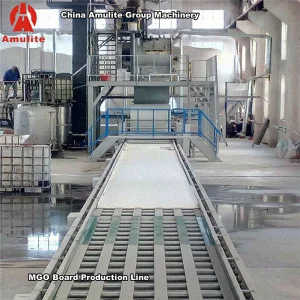
Engineered to deliver high flexural strength, A1 fire rating, and ultra-high speed automation for modern non-metallic building material plants.
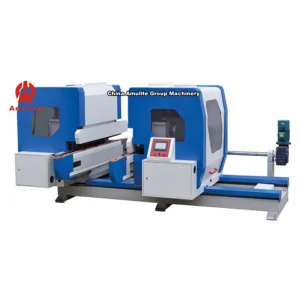
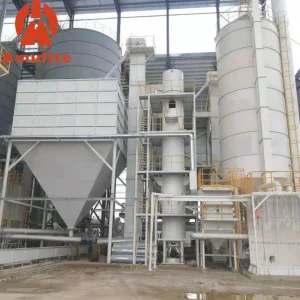
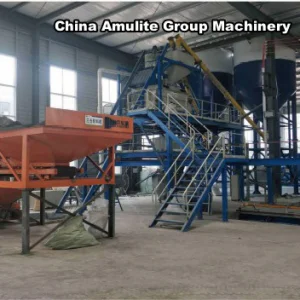
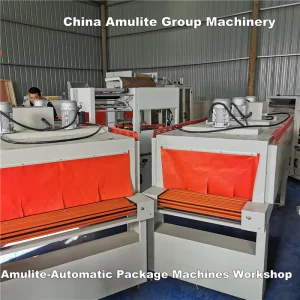
Strategic analysis of fiber cement board machinery deployment, regulatory shifts toward non-asbestos formulations, and global manufacturing capital allocation.
Global building safety directives (ISO 8336, EN 12467 Class A) have accelerated the phase-out of chrysotile fibers. Leading OEM equipment suppliers now design high-yield slurry preparation systems optimized for bleached kraft cellulose pulp, synthetic PVA, and micro-silica reinforcement matrixes.
Global procurement directors require scalable factory engineering. Modern OEM suppliers deliver modular line architectures ranging from entry-level 3-million-m² annual outputs to high-speed 20-million-m² continuous production lines integrated with automated stacking and packaging.
Energy consumption represents up to 35% of operational expenditure in fiber cement production. Advanced engineering incorporates closed-loop autoclave condensate heat exchangers and multi-stage vacuum recovery to cut energy intensity per square meter by up to 22%.
A comprehensive mechanical and chemical engineering overview of modern Hatschek and Pressing production lines designed for OEM industrial implementation.
The manufacturing process begins with high-precision raw material metering. Quartz sand (SiO2 ≥ 85%) is wet-ground in a ball mill to a fineness of 200–320 mesh, creating a reactive silica slurry. Simultaneously, unbleached coniferous kraft pulp is processed through disc refiners to achieve optimal Schopper-Riegler (SR) freeness (45–60°SR).
Ordinary Portland Cement (OPC 42.5/52.5), ground quartz slurry, refined fibers, and functional additives are homogenously blended in slurry agitators at a controlled solid-to-liquid ratio (approx. 1:10), ensuring uniform fiber network distribution.
The homogeneous slurry is fed into multi-vat forming sections (typically 3 to 5 vats). Stainless steel wire cylinders rotate within each vat, forming an ultra-thin film of fiber-cement matrix (0.2–0.3 mm per revolution). This thin film is transferred onto a continuous synthetic felt belt under controlled pneumatic tension.
High-vacuum suction boxes positioned beneath the felt strip excess moisture from the wet sheet. The continuous film is wound around a heavy-duty forming drum until the pre-set board thickness (e.g., 6mm, 9mm, 12mm, 18mm) is reached, at which point an automatic cut-off wire severs the green sheet.
Green sheets are stacked onto stainless steel template plates using automated vacuum stackers. The stacked sheets undergo hydraulic pressing at pressures up to 10,000 metric tons (up to 200–300 kg/cm²). Pressing eliminates residual air pockets, increases inter-layer bonding density, and dramatically elevates ultimate flexural strength (MOR > 16 MPa).
For medium-density boards (1.2–1.4 g/cm³), pressing can be bypassed or adjusted, tailoring output to interior ceiling and partition specifications.
Pre-cured green sheets are transferred into industrial steam pressure vessels (autoclaves) operating at 1.0–1.2 MPa steam pressure and temperatures of 175°C to 190°C for 10–14 hours. Under high enthalpy conditions, reactive silica reacts with calcium hydroxide released by cement hydration, forming crystalline Tobermorite ($5CaO \cdot 6SiO_2 \cdot 5H_2O$).
This mineral crystalline structure yields exceptionally high dimensional stability, near-zero moisture movement, high impact strength, and permanent weatherability.
| Machine Parameter | Standard Density Line | High Density / Heavy Duty Line | OEM Custom Specification |
|---|---|---|---|
| Annual Capacity Range | 3,000,000 – 8,000,000 m² | 10,000,000 – 20,000,000 m² | Fully Tailored to Civil Footprint |
| Finished Board Thickness | 4 mm – 12 mm | 6 mm – 30 mm | Up to 50 mm (Composite Wall Panels) |
| Board Density Range | 1.1 – 1.35 g/cm³ | 1.4 – 1.75 g/cm³ | Configurable via Hydraulic Pressing |
| Forming Speed | 40 – 70 m/min | 70 – 110 m/min | VFD Synchronized Multi-Vat Control |
| Flexural Strength (MOR) | ≥ 12 MPa (Category 2) | ≥ 18 - 24 MPa (Category 4/5) | Compliant with ASTM C1185 / EN 12467 |
| Automation Level | Semi-Automated PLC | Fully Autonomous Smart Factory | Siemens S7-1500 / SCADA Integration |
Essential checklist for industrial procurement directors, factory owners, and EPC contractors evaluating building material equipment suppliers.
Evaluating an OEM supplier requires rigorous verification of machine workshop tooling. Sheet forming cylinder drums must be machined to micro-tolerances (< 0.05mm runout) on dynamic balance lathes to prevent felt wear and board thickness variance across wide sheets.
Top-tier suppliers do not just deliver hardware; they provide process chemistry guarantees. Raw material characteristics (silica quartz purity, cement setting times, local fiber lengths) vary significantly across North America, Southeast Asia, the Middle East, and Europe.
Complete project security requires single-source accountability. From initial civil engineering plant layout design to electrical substation drop sizing, commissioning, and staff training, leading OEM companies eliminate vendor friction.
Next-generation innovations reshaping building material manufacturing efficiency, sustainability, and surface aesthetics.
Infrared camera arrays monitor moisture uniformity across the felt continuous sheet in real time, dynamically adjusting vacuum pump pressure to optimize sheet density before wrapping.
Injecting captured industrial CO2 into pre-curing tunnels accelerates carbonation hardening, permanently sequestering carbon inside the calcium silicate hydrate matrix.
High-speed laser and hydraulic press modules apply deep wood-grain and stone textures inline, bypassing secondary offline stamping operations.
Integrating expanded perlite and ceramic micro-spheres reduces board weight by up to 25% while maintaining structural flexural strength for exterior siding.
Direct technical answers to common queries regarding plant capital expenditure, operational efficiency, and equipment customization.
Complete non-metallic processing solutions, coating lines, crushing equipment, and lightweight panel machinery.