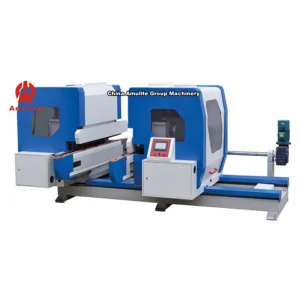
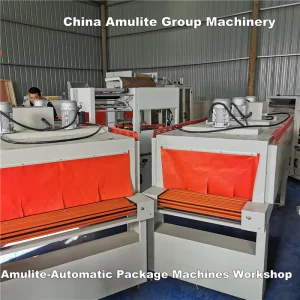
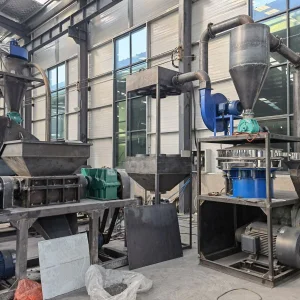
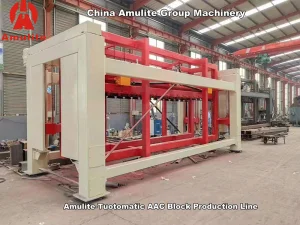
Explore our engineering line-up for modern building material manufacturing.
Strategic Procurement Insights & Technological Architecture for Enterprise Buyers
The global demand for high-efficiency thermal insulation and structural prefabrication has accelerated the transformation of building material machinery. Modern commercial real estate, ultra-clean cold storage logistics centers, and modular architectural frames require insulated structural panels engineered with extreme dimensional tolerance and uniform density distribution.
Sourcing an OEM Automatic Sandwich Panel Making Machine involves evaluating full-lifecycle operational expenditure (OPEX), energy payback ratios, and raw material utilization efficiency. Production engineering is shifting from semi-automated batch pressing to continuous, high-speed automated extrusion and double-belt lamination systems.
Modern automated lines are designed to process diverse core materials with zero system downtime during product shifts:
A granular breakdown of mechanical modules, automation control loops, and precision components.
Uncoiling systems feature dual-head hydraulic mandrels with automatic tension sensing. Continuous multi-stage roll forming stands utilize high-precision chrome-plated alloy steel rollers driven by synchronous servo motors, ensuring stress-free sheet profiling for steel, aluminum, or fiber cement skins without surface micro-fracturing.
Equipped with ultra-high pressure dosing pumps and dynamic mixing heads. The system maintains linear foam dispensing across widths up to 1,200mm. Integrated temperature-controlled chemical pre-heaters guarantee micro-cellular foaming stability under variable ambient plant temperatures.
The core of dimensional stability. Heavy-duty caterpillar slat conveyers spanning up to 36 meters are enclosed within oil or electrical heating chambers. Precise hydraulic pressure application prevents panel bowing, blistering, or skin delamination during chemical reaction curing cycles.
Controlled via high-speed Motion Control Controllers, the flying saw tracks line speed with micro-millimeter precision. Dust-encapsulated diamond saw blade assemblies execute clean cross-cuts without edge fraying or foam core tearing.
Why Tier-1 Global EPC Contractors Partner with Top-Tier Chinese Machinery Manufacturers
China's heavy industrial ecosystem—particularly concentrated in Hebei and Jiangsu—provides an unparalleled manufacturing advantage for sandwich panel machine production. By integrating raw metallurgical processing, precision gear grinding, CNC machining centers, and Siemens/Schneider automation assembly within a centralized geographical radius, equipment build times are reduced by up to 40% compared to European OEM counterparts.
CAPEX Optimization: Procuring an OEM automatic sandwich panel line from China delivers a 30% to 50% capital reduction without sacrificing structural rigidness or electrical reliability. Heavy steel frame weldments undergo ultrasonic testing and thermal stress-relief annealing to ensure zero frame deformation across decades of operation.
No two factory sites share identical operational constraints. Chinese OEM engineering leaders excel at tailoring production machinery to client-defined parameter profiles:
Ensuring Regulatory Compliance, Safety Certifications, and Global Field Support
Full adherence to EU Machinery Directive 2006/42/EC, Low Voltage Directive 2014/35/EU, and ISO 12100 safety risk standards. Emergency safety interlocks, light curtains, and protective enclosure fences are supplied as standard baseline engineering safety features.
Machines engineered to process eco-friendly blowing agents (Pentane, HFO compounds) complying with global fluorinated greenhouse gas protocols. Manufactured panels meet international fire resistance metrics including ASTM E84 Class A, EN 13501-1, and BS 476 Part 4 testing requirements.
Global buyer security via localized field installation support. OEM field engineering crews assist with civil foundation alignment, hydraulic system piping, electrical wiring integration, and local operator technical training across Europe, South America, the Middle East, and Southeast Asia.
Every line incorporates secure Industrial IoT VPN gateways. OEM software teams can perform real-time PLC ladder logic updates, sensor calibrations, fault code analysis, and predictive maintenance diagnostics without requiring physical site intervention.
Evaluating Capital Expenditure, Total Cost of Ownership, and Next-Generation Smart Manufacturing
Enterprise buyers must look beyond initial machine acquisition cost. Sustainable procurement mandates evaluating total operational cost drivers:
1. AI-Assisted Surface Quality Inspection: High-speed machine vision cameras scan incoming metal coils and outgoing cured panels, detecting micro-dents, paint scratches, or foam voids in real-time at 30 meters per minute.
2. Zero-Carbon Sustainable Panel Cores: Modern extrusion systems are adopting bio-based polyols and recycled PET bottle flakes for insulating cores, requiring machinery engineered with broader pressure and temperature operating windows.
3. Full Factory SCADA Integration: Production machinery interfaces directly with enterprise ERP/MES platforms, allowing automated job tracking, raw chemical inventory monitoring, and digital twin operational modeling.
Targeted Structural & Thermal Applications for Modern Civil & Industrial Construction
High-density PIR panels with interlocking labyrinth cam-locks manufactured for temperature-controlled pharmaceutical warehouses, blast freezers, and agricultural distribution centers.
Ultra-flat sandwich panels with anti-static, chemical-resistant steel or aluminum facings designed for semiconductor fabrication plants, medical device suites, and pharmaceutical labs.
High-span trapezoidal roof and wall cladding panels produced with integrated mineral wool core sections for fire-barrier compliance in heavy manufacturing complexes.
EPS lightweight cement composite panels engineered for quick-assembly modular housing, emergency relief shelters, and multi-story commercial facade framing.
Expert Answers for OEM Project Sourcing Teams and Plant Managers
Production line speed depends heavily on panel thickness, core material curing dynamics, and laminator length. For continuous PU/PIR panels, standard working speeds range between 6 m/min and 35 m/min. A standard 24-meter double-belt laminator operating on 8-hour shifts can produce between 1,000,000 m² and 3,500,000 m² of high-quality insulated panel per year.
Yes. We engineer multi-functional 2-in-1 hybrid production lines. These feature dedicated mineral wool block feeding, slitting, and turning machinery integrated directly alongside high-pressure PU/PIR chemical injection heads. The PLC control system handles instant profile switches, allowing manufacturers to adapt to changing commercial project orders.
A standard continuous sandwich panel line requires a factory length ranging from 80 meters to 150 meters, with a minimum width of 12 meters and ceiling height clearance of 6 to 8 meters. Heavy foundations with reinforced industrial concrete (minimum 250mm depth) are required under the double-belt laminator section to prevent structural settling under hydraulic clamping loads.
Our process engineering team provides complete chemical formulation commissioning support. During initial Factory Acceptance Testing (FAT) and final Site Acceptance Testing (SAT), chemical flow rates, polyol-to-isocyanate stoichiometric ratios, catalyst timing, and temperature pre-conditioning units are calibrated specifically to match the chemical viscosity and ambient humidity of your local region.
We maintain global spare parts hubs for high-wear components such as foaming nozzles, saw blades, hydraulic seals, and electrical relays. Every machine sale includes a 12 to 24-month comprehensive mechanical and electrical warranty, backed by 24/7 remote PLC network connectivity and on-site engineering dispatch within 48 hours for emergency technical support.
Explore our complete range of high-efficiency building material machinery.