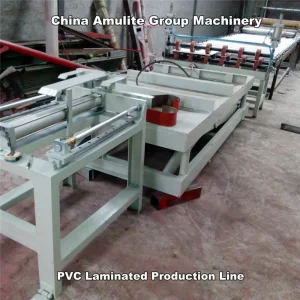
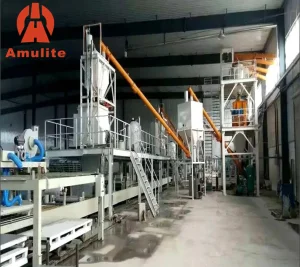
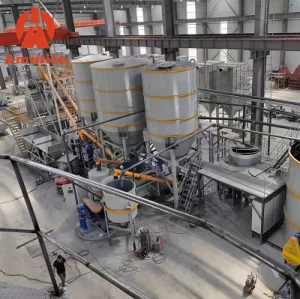
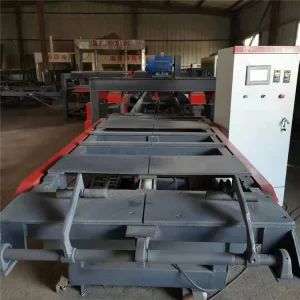
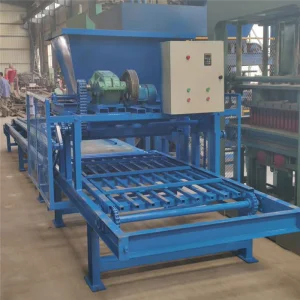
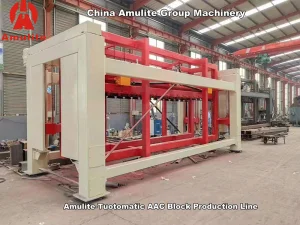
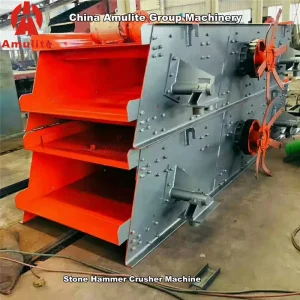
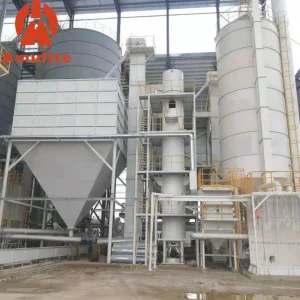
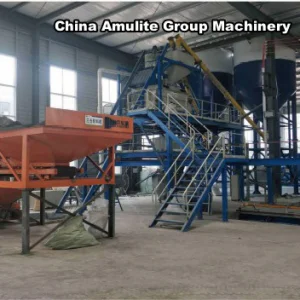
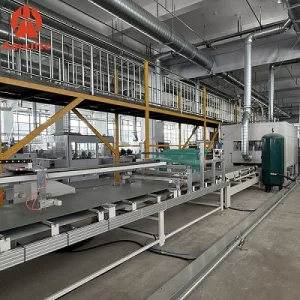
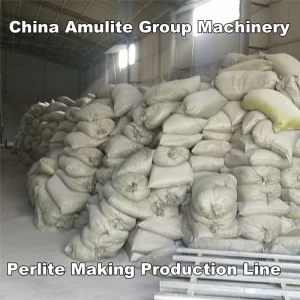
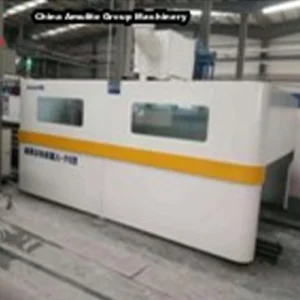
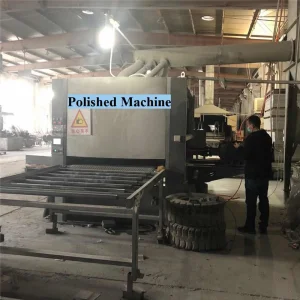
Explore our primary machinery lines designed for high-capacity, low-energy output across automated manufacturing facilities worldwide.
In modern non-metallic building material manufacturing, the 6mm fiber cement board stands out as the single most critical structural benchmark thickness across international commercial markets. Known for its ultra-high mechanical stability, Class A1 non-combustible fire rating, and superior resistance to water damage, 6mm boards serve as essential substrates for tile backing, exterior curtain-wall backing, suspended drop ceilings, and fire-rated drywalls.
Global market research indicates that the global demand for autoclaved fiber cement boards is projected to compound at a CAGR of 5.8% through 2032. This surge is driven by stringent urban fire codes, the worldwide phasing out of asbestos-based cement sheets, and the global transition toward modular pre-fabricated construction systems. Investing in an OEM 6mm plant allows production facilities to capture high-margin commercial and residential contracts.
Modern plant engineering must adapt to localized raw material matrices without sacrificing product density or bending strength. Advanced OEM plants leverage refined unbleached kraft cellulose pulp, high-grade Ordinary Portland Cement (OPC 42.5/52.5), and finely ground silica quartz sand ($\text{SiO}_2 \ge 90\%$).
By controlling slurry rheology and implementing hydrothermal autoclaving at 1.0 to 1.2 MPa saturated steam pressures, the raw silica and lime undergo a solid-state mineral transformation to form high-strength Tobermorite crystal structures ($C_5S_6H_5$). This crystalline matrix provides 6mm boards with structural elasticity, minimal moisture expansion ($<0.12\%$), and exceptional freeze-thaw resistance.
Manufacturing consistent 6mm fiber cement boards requires precise control over slurry concentration, vacuum dewatering, sheet lamination, and automated green-board cutting. The Hatschek process remains the most reliable method for achieving uniform fiber orientation and high flexural density across high-speed lines.
Cellulose pulp is refined through double-disc pulpers to achieve a target Schopper-Riegler ($\text{°SR}$) freeness rating of 22°–28°. The refined pulp is dynamically metered with Portland cement, silica flour, and recycled process water in automated high-shear vertical mixers to maintain a slurry concentration of 7%–10% solid content.
The slurry flows continuously into 3 to 5 inline Hatschek vats equipped with rotating stainless-steel wire mesh cylinders. A synthetic felt belt picks up micro-thin film layers ($0.2\text{mm} - 0.3\text{mm}$ thickness per revolution) and transfers them onto a high-precision accumulation forming drum until exactly 6mm thickness is built up.
The green boards undergo vacuum dewatering followed by entry into a multi-daylight hydraulic press operating up to $100\text{ kg/cm}^2$. Pressed sheets are then transferred into high-pressure autoclaves for 10–12 hours of hydrothermal curing at $180^\circ\text{C}$ to lock in dimensional stability and physical durability.
| Physical & Mechanical Property | Autoclaved 6mm Board (Silica Matrix) | Air-Cured 6mm Board (Cement-Pulp) | Standard Testing Protocol |
|---|---|---|---|
| Dry Density ($\text{g/cm}^3$) | 1.30 – 1.55 g/cm³ | 1.10 – 1.30 g/cm³ | ASTM C1185 / EN 12467 |
| Flexural Bending Strength (EMC) | ≥ 16.0 MPa (Class 4) | ≥ 10.0 MPa (Class 2) | ASTM C1186 / BS EN 12467 |
| Moisture Movement (Saturated to Dry) | ≤ 0.12% | ≤ 0.25% | ISO 8336 |
| Water Absorption Rate | ≤ 28% | ≤ 35% | ASTM C1185 |
| Thermal Conductivity ($\text{W/m}\cdot\text{K}$) | 0.18 – 0.24 W/m·K | 0.22 – 0.28 W/m·K | ASTM C177 |
| Non-Combustibility Performance | Class A1 (Zero Flame / Smoke) | Class A1 (Zero Flame / Smoke) | EN 13501-1 / ASTM E136 |
China's manufacturing ecosystem has reshaped the global market for heavy building machinery. By integrating Industry 4.0 IoT smart control systems directly into fiber cement production equipment, Chinese engineering companies offer international buyers an ideal balance of CapEx optimization and production reliability.
Key operational advantages include centralized SCADA software architecture, automated thickness adjustment using laser sensors, Siemens PLC integrated line synchronization, and real-time slurry viscosity tracking. These features ensure that 6mm boards achieve high thickness accuracy ($\pm 0.2\text{mm}$) across high-speed continuous production runs.
From raw material feasibility studies to custom recipe formulation, an experienced Chinese OEM engineering firm serves as a long-term technology partner. Project lifecycles follow a structured execution pipeline:
Procurement requirements center on strict compliance with ASTM C1186 (Grade II) and EN 12467 standards. Plants serving these markets prioritize automated edge trim profiling, pre-sanding calibration, zero-asbestos certifications, and low operational carbon footprints.
Demand is heavily driven by affordable housing projects and modular construction. Buyers prioritize plants capable of continuous high-volume output (5,000,000+ $\text{m}^2$/year) with robust mechanical components that withstand high-humidity factory environments.
Focused on thermal insulation and high fire resistance for extreme climates. Plants require integrated drying units, automated pallet stacking systems, and raw-material processing modules suited for local silica sand grades.
The financial feasibility analysis below illustrates projected operational costs, utility inputs, and payback schedules for a fully automated modern 6mm autoclaved fiber cement board plant:
| Cost Center / Metric Parameter | Consumption Unit per m² (6mm Sheet) | Estimated Cost Contribution (%) |
|---|---|---|
| Raw Material (Cement, Silica, Cellulose Pulp) | ~7.8 – 8.5 kg / m² | 58% – 64% of total OpEx |
| Thermal Energy (Steam for Autoclaving) | ~1.8 – 2.2 kg steam / m² | 14% – 18% of total OpEx |
| Electrical Power Consumption | ~0.85 – 1.10 kWh / m² | 8% – 12% of total OpEx |
| Labor & Operational Overhead | 12-15 Operators per Shift (Automated Line) | 6% – 9% of total OpEx |
| Estimated Payback Period | 18 to 26 Months (Based on average regional sheet selling prices) | |
In residential and hotel construction, 6mm fiber cement board serves as an ideal tile backer substrate. Unlike gypsum wallboards, 6mm autoclaved fiber cement will not disintegrate, warp, or swell when exposed to continuous moisture. Its high surface bond strength allows direct application of ceramic, porcelain, and stone tiles using standard cementitious adhesives.
6mm boards provide the rigid impact resistance required for high-traffic corridors, schools, hospitals, and commercial offices. Installed on light-gauge steel stud framing, these boards offer superior acoustic dampening and fire partition ratings, protecting building infrastructure while maintaining a flat, paintable surface finish.
Off-site modular construction relies on 6mm board as an exterior sheath backing behind rainscreen facade systems, EIFS insulation wraps, and decorative cladding layers. The board's low thermal movement and high fastener pull-through resistance prevent micro-fissures along joint lines during structural shifting.
When integrated into multi-layer wall assemblies, 6mm fiber cement boards act as flame barriers capable of maintaining structural integrity for 1 to 4 hours under severe thermal exposure. They emit zero toxic smoke or corrosive fumes, meeting stringent municipal life-safety criteria.
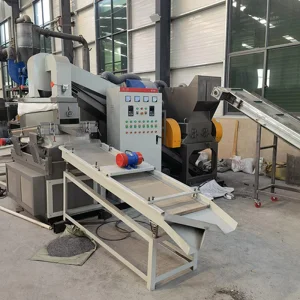
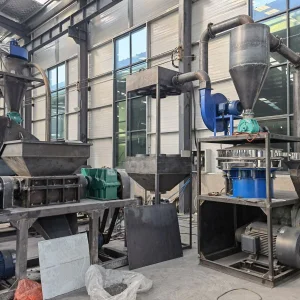
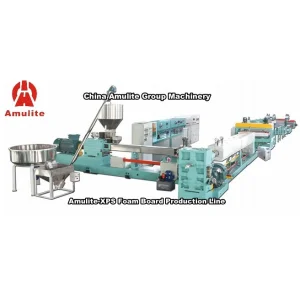
Complement your primary board machinery with high-efficiency recycling, panel formation, and mineral processing auxiliary systems.